
Fashion Trend Shifts in Southeast Asia
Jien Goh at WGSN Mindset
Jien Goh is Associate Director at WGSN Mindset, a bespoke consultancy that works with brands to provide specific, strategic recommendations, based on expert trend forecasting analysis. In this interview, she shares three fashion trend shifts she is observing in Southeast Asia: more climate-first design which positions the region as a leader in such work, heritage reimagined as contemporary design language, and its transition from manufacturing base to creative force.
Read on to find out more about these shifts, as well as Jien’s suggestions for how trend forecasting can become more accessible in the region.

Jien Goh, Associate Director, WGSN Mindset. Image courtesy of Jien Goh.
Hi, Jien! You are a Associate Director at WGSN Mindset. What is WGSN Mindset, and what are your responsibilities as Associate Director?
WGSN Mindset is the consultancy arm of WGSN, where we translate foresight into strategic action for clients. We partner with brands across diverse industries to help them navigate change, from identifying future consumer shifts to unlocking new opportunities for innovation and growth.
As Associate Director, I lead our APAC consultancy work, working closely with clients to shape future-facing strategies across product, brand and experience. My role sits at the intersection of cultural insight and commercial impact, helping businesses not only understand what’s next, but how to act on it in a way that is meaningful for their markets.

Year of Redirection: a photo taken from a WGSN beauty trend briefing for one of Korea's biggest beauty conglomerates. Image courtesy of Jien Goh.
Could you describe the clients and customers who use WGSN services, and how they use them?
WGSN’s roots are in fashion. We have been forecasting trends for close to three decades! Today, our client base spans far beyond that. We work with brands across fashion and additionally beauty, consumer technology, sports and outdoors, food and drink, interiors and retail.
What connects our clients and customers is a shared desire to navigate what’s next in a proactive–not reactive–way. Clients use WGSN to understand macro shifts shaping consumer behaviour, and also to translate that into action, from identifying the right product for development, to knowing who to target and how to connect with them in culturally relevant ways.
In broad strokes, what does a year as a consultant look like? Or if this is too general, what was 2025 like?
No two years are ever the same, and that is exactly what defines the role. Each year is shaped by shifting cultural currents, economic realities and evolving consumer mindsets, which means the challenges we are solving for are constantly changing too.
A large part of the year is spent decoding these shifts. This entails connecting signals across culture, data and behaviour to build a clear picture of where the world is heading. It is more than spotting the coolest trends or fads on TikTok, but about identifying broader level shifts for our clients and crafting strategies or narratives for them that are both commercially actionable and creatively inspiring.
What keeps the role exciting–and demanding–is that the context is always evolving. Whether it is political uncertainty, changing definitions of identity or new subcultural movements, we are continually rethinking how consumers engage with brands, and what that means for the future of industries.
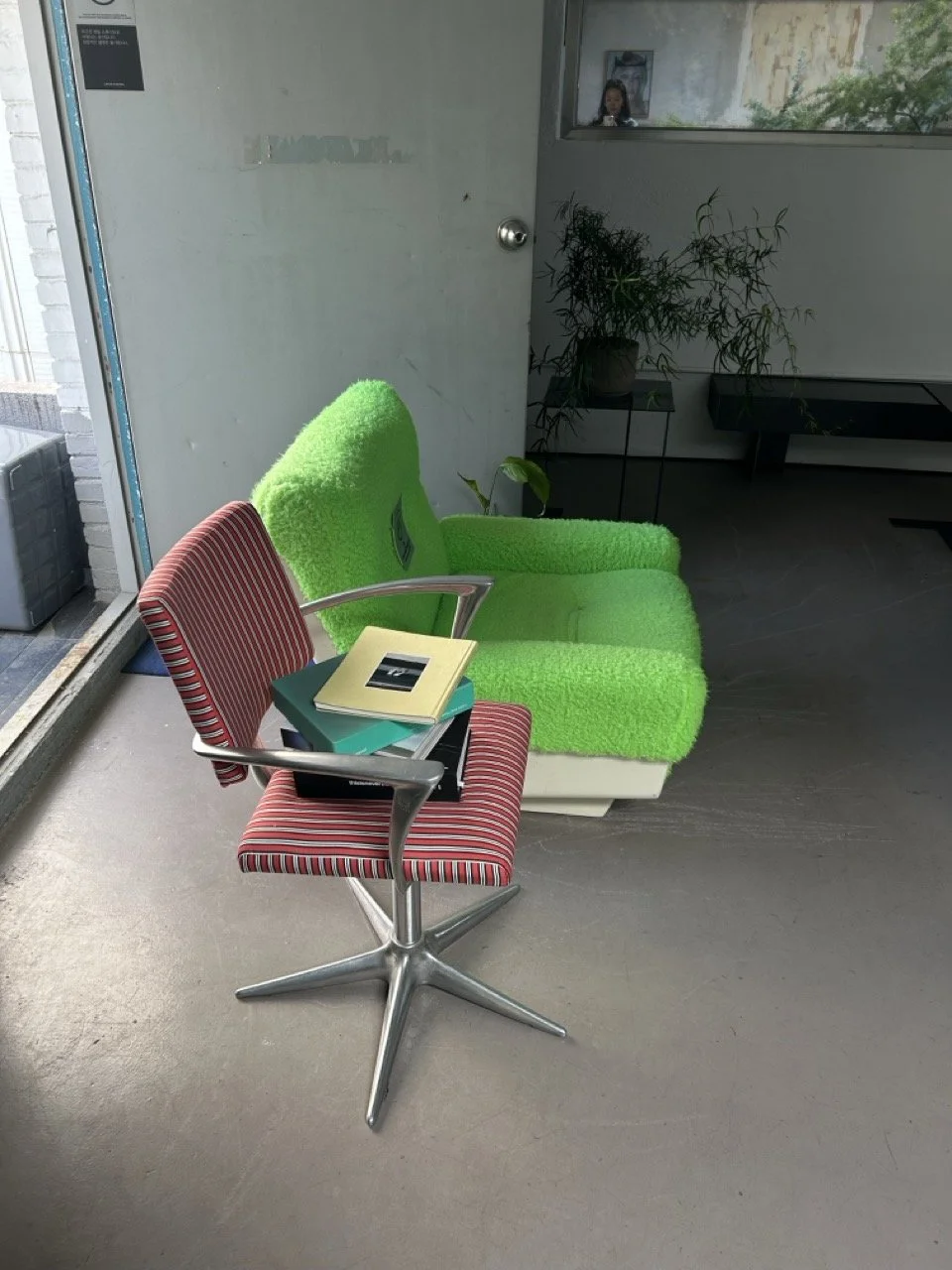

Photos taken while on a cultural & retail safari in Seoul, 2025. Images courtesy of Jien Goh.
What about a typical week or day? Do you spend time in the office doing desk work? What opportunities do you have to do your work outside the physical office as well?
There is no single “typical” day per se, but the rhythm tends to balance between deep research and client-facing moments.
Some days are spent at the desk, diving into research, analysing data, and building out presentations. Other days are far more dynamic, whether that is running workshops with clients, presenting at industry events, or taking clients across key cities in the region to observe retail, and engage with tastemakers and thought-leaders as ways to stay close to cultural shifts on the ground.
What current key fashion trends are you observing in Southeast Asia, or within a particular country, such as Singapore?
I think it is important for fashion brands to acknowledge that Southeast Asia, and Asia at large, is no longer following global fashion. Rather, the region is shaping it. Southeast Asia is shifting from adaptation of “western” trends to authorship, with designs that are grounded in its own cultural and climatic realities.
For me, three shifts stand out. The first is climate-first design, with lightweight, breathable, modular pieces built for heat and humidity. This sounds banal but in reality, with rising global temperatures and extreme weather, is setting the tone for where fashion is headed from both aesthetic and functional points of view.
The second is heritage reimagined as contemporary design language. We are no stranger to the fact that traditional textiles and silhouettes like batik, ikat and the baju kurung are no longer treated as nostalgic references but are being reworked into contemporary wardrobes. We are seeing a wave of designers and independent brands deconstruct and reconstruct these silhouettes or garments into relevant, wardrobe pieces. And educators and thought leaders are also proactively championing this movement now more than ever.
The third is its transition from manufacturing base to creative force. Importantly, Southeast Asia is moving up the value chain in fashion. There is a lot more innovation happening in the region. This includes material innovation and the exploration of bio-based textiles that are native to our natural ecosystems, such as pineapple fibre and mycelium. This is also driven by younger and more culturally fluent fashion consumers who take pride in their Southeast Asian identities and values, fashion brands and retailers who want to succeed must lean into hyper-local narratives and experiences with a lot more cultural depth than before.
“I think it is important for fashion brands to acknowledge that Southeast Asia, and Asia at large, is no longer following global fashion. Rather, the region is shaping it.”
Among these trends, what has been brewing for a while? Conversely, what has been surprising, if anything?
What has been brewing is the reframing of heritage. Southeast Asian designers have long been working with craft, but the shift now is in how it is positioned so that it is not as nostalgia, but as forward-looking design and cultural identity.
What has been surprising is the role of our climate! What has typically been seen as a constraint is actually emerging as a perfect catalyst for innovation. In other words, our region’s designers are uniquely positioned to lead in defining or shaping what climate-responsive fashion means and how it is to design for life in the tropics.

Jien speaking as a panelist at Next In Vogue 2025 panel, “Desire, Identity and the New Consumer Mindset”. Image courtesy of Jien Goh.
What trends should we expect in the coming year, if you could share?
I believe we are seeing a clear shift back towards what feels real, human and meaningful.
First, there is a return to the “real”. There is renewed value in craft, tactility and human skill as a response to artificial intelligence fatigue and burnout.
Next, intentional community-building where brands are creating spaces and experiences that foster genuine connection over shared rituals (hello literary clubs!) and not just transactional environments.
And finally, at WGSN, we keep emphasising the idea of play as a serious strategy rather than mere escapism. Whether that is through interactive retail and product design, or community driven events, it means using joy, creativity and participation to drive well-being and social connection.
Overall, it is a move away from passive consumption towards more grounded, connected and emotionally resonant experiences.
What is the usual length of time for a fashion trend? Is it possible to generalise?
The length of time a fashion trend lasts can vary, but it is possible to generalise that most of them typically follow a lifecycle that spans 12 to 24 months. Fashion trends move through first the Innovators and Early Adopters, before expanding to the Mass Market, and finally reaching the Conservative/Late Majority segment.

The Trend Forecaster’s Handbook by Martin Raymond. Image courtesy of Jien Goh.
How does one do what you do? What training and/or experiences are necessary/helpful to have?
There is no single path into trend forecasting, which is what makes it such an interesting field. My colleagues come from such diverse backgrounds. They were beauty buyers, ethnographers, fashion designers, insight researchers and the list goes on.
Personally, I studied visual communications and journalism, which gave me a foundation in storytelling, research and understanding audiences. I then started my career in branding and design agencies as a creative strategist, where I learned to think from a brand perspective and developed a strong eye for design. This is often underestimated, but incredibly important in my line of work.
My first real exposure to trend forecasting came early in my career at Maison & Objet, where I sat through a presentation on interior trend directions and found myself completely captivated. It was the first time I thought, this is exactly what I want to do. I later enrolled in a summer course at Central Saint Martins, where I began to understand that foresight is more than intuition or abstract thinking. Rather, it is a discipline grounded in rigorous research, scenario planning and analytical thinking.
In Southeast Asia, it is still a relatively niche career with limited formal pathways. For those interested, I would recommend building exposure by reading widely, participating at conferences to immerse in new ways of thinking, and also reaching out to people in the field where possible, to gain hands-on experience through internships or self-initiated projects.
Two books I recommend are The Art of the Long View by Peter Schwartz and The Trend Forecaster’s Handbook by Martin Raymond. Both are great starting points for understanding how to think about the future in a structured way.

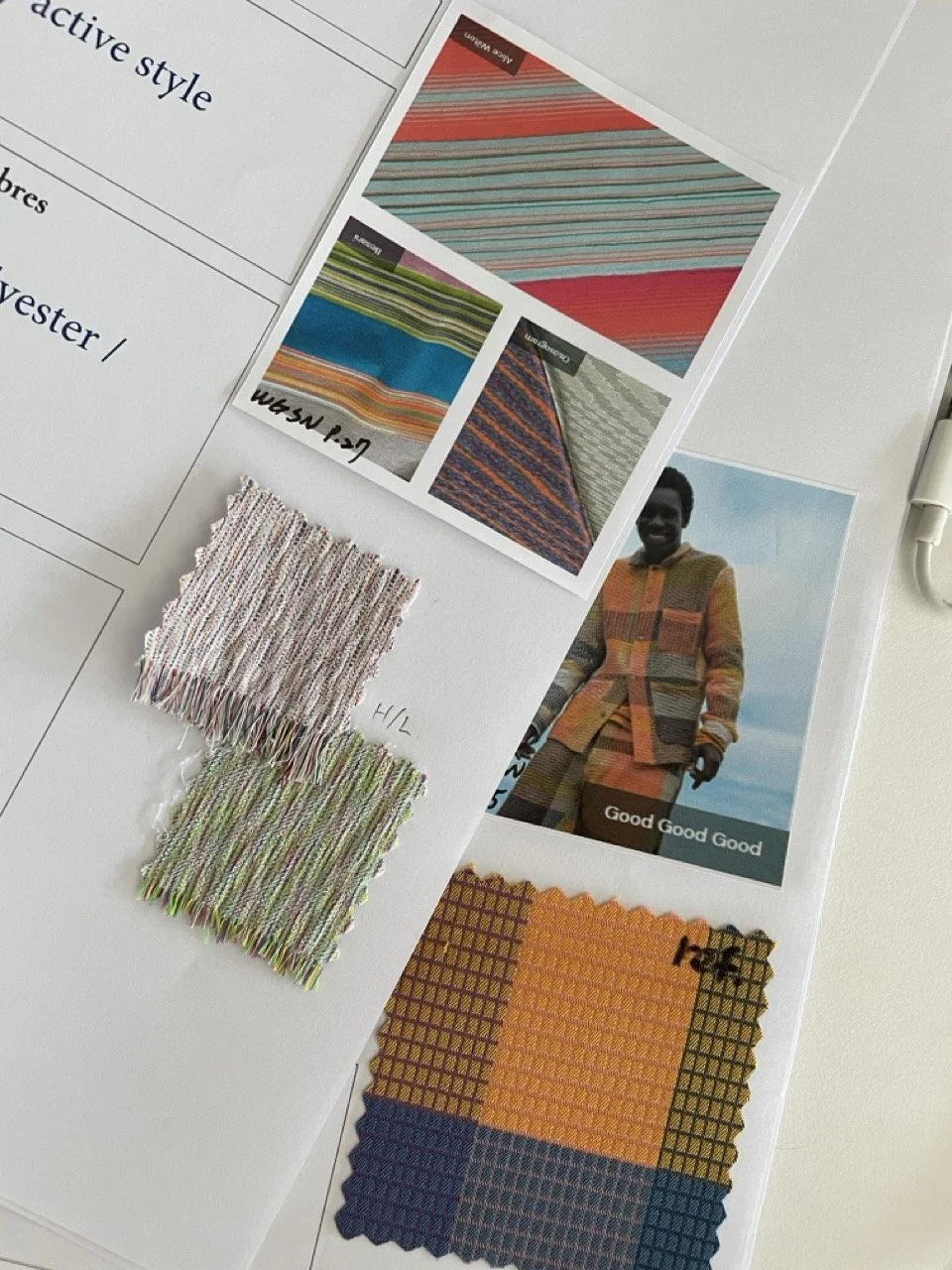
Photos taken at a co-creation workshop with fashion clients to create seasonal trend stories. Images courtesy of Jien Goh.
What are you looking forward to doing in your work in the year to come?
Outside of my day-to-day work, I am interested in creating more opportunities to share knowledge and demystify trend forecasting, whether that is through speaker events, short courses, part-time lecturing in schools or creative workshops.
Ultimately I am thinking about continuity and I see a lot of value in making this discipline or career path more accessible, especially in Southeast Asia where it is still relatively niche. So this feels like a natural next step to not only shape the future through client work, but to help younger talent learn how to shape the future themselves!