
Director of Merdeka Textile Museum in Kuala Lumpur
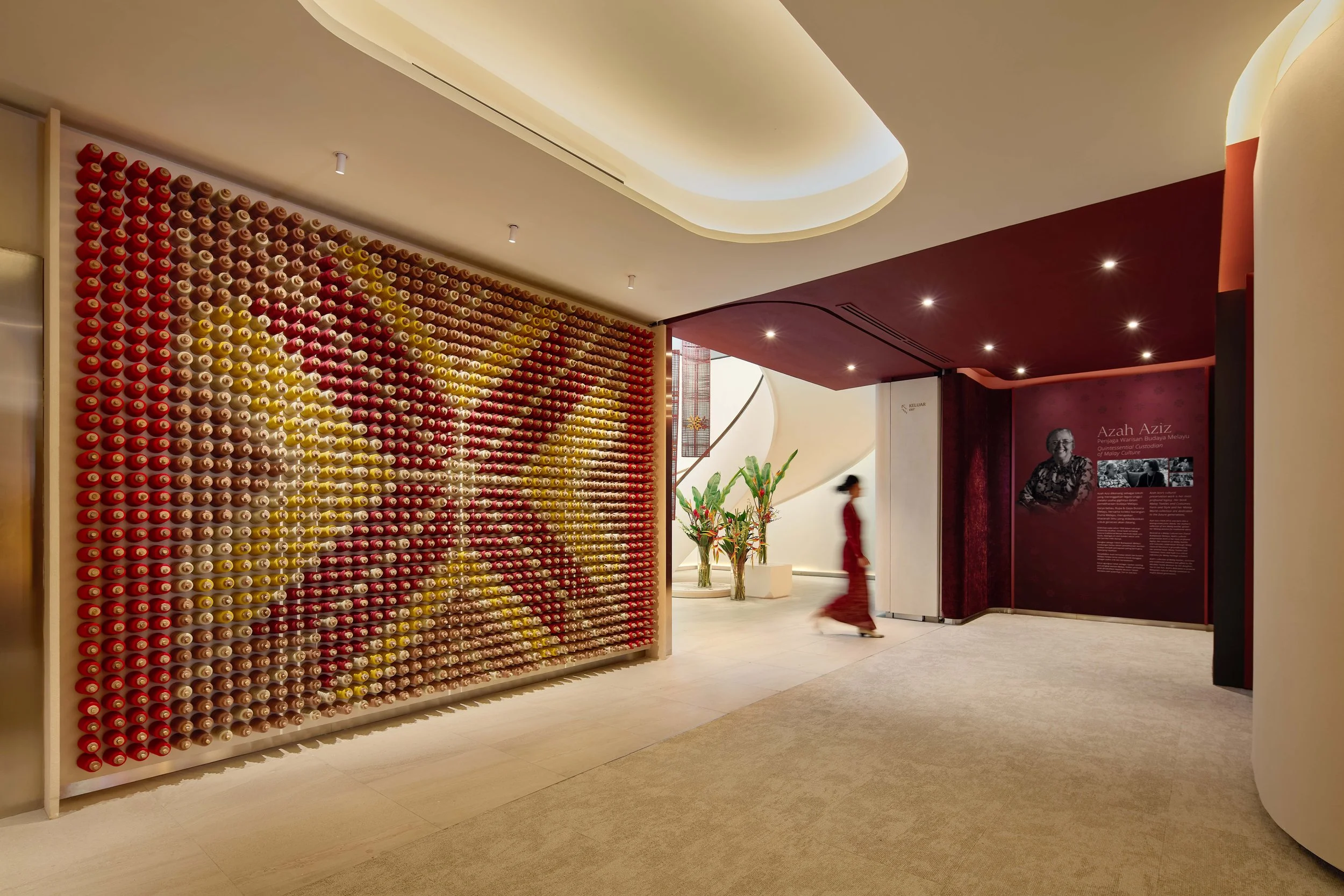
Entrance to the galleries at Merdeka Textile Museum. Image courtesy of PNB Merdeka Ventures.
Located within Kuala Lumpur’s Merdeka 118 precinct, the Merdeka Textile Museum (MTM) opens as a dynamic cultural institution dedicated to illuminating the material heritage, craft lineages, and living traditions of the Malay world. Built around a foundational gift from Tan Sri Zeti Aziz—the personal archive of over 300 heirloom garments, textiles, and artefacts assembled by her late mother, the pioneering cultural champion and author Puan Azah Aziz—the museum translates intimate domestic connoisseurship into a forward-looking civic platform.
MTM approaches dress as an evolving, multi-sensory medium. Across eight distinct galleries structured around the architectural metaphor of lipat empat puluh empat, or the ceremonial 44 folds of traditional cloth presentation, the permanent and rotating spaces chart classical literature, regional natural dyes, trade networks along the Maritime Silk Route, and artisanal techniques such as telepuk, songket, limar, and batik. From sensory scent diffusers evoking traditional wood-smoked silks to contemporary textile commissions by contemporary artists and fashion designers across Southeast Asia, the Merdeka Textile Museum bridges historical scholarship with contemporary craft practice.
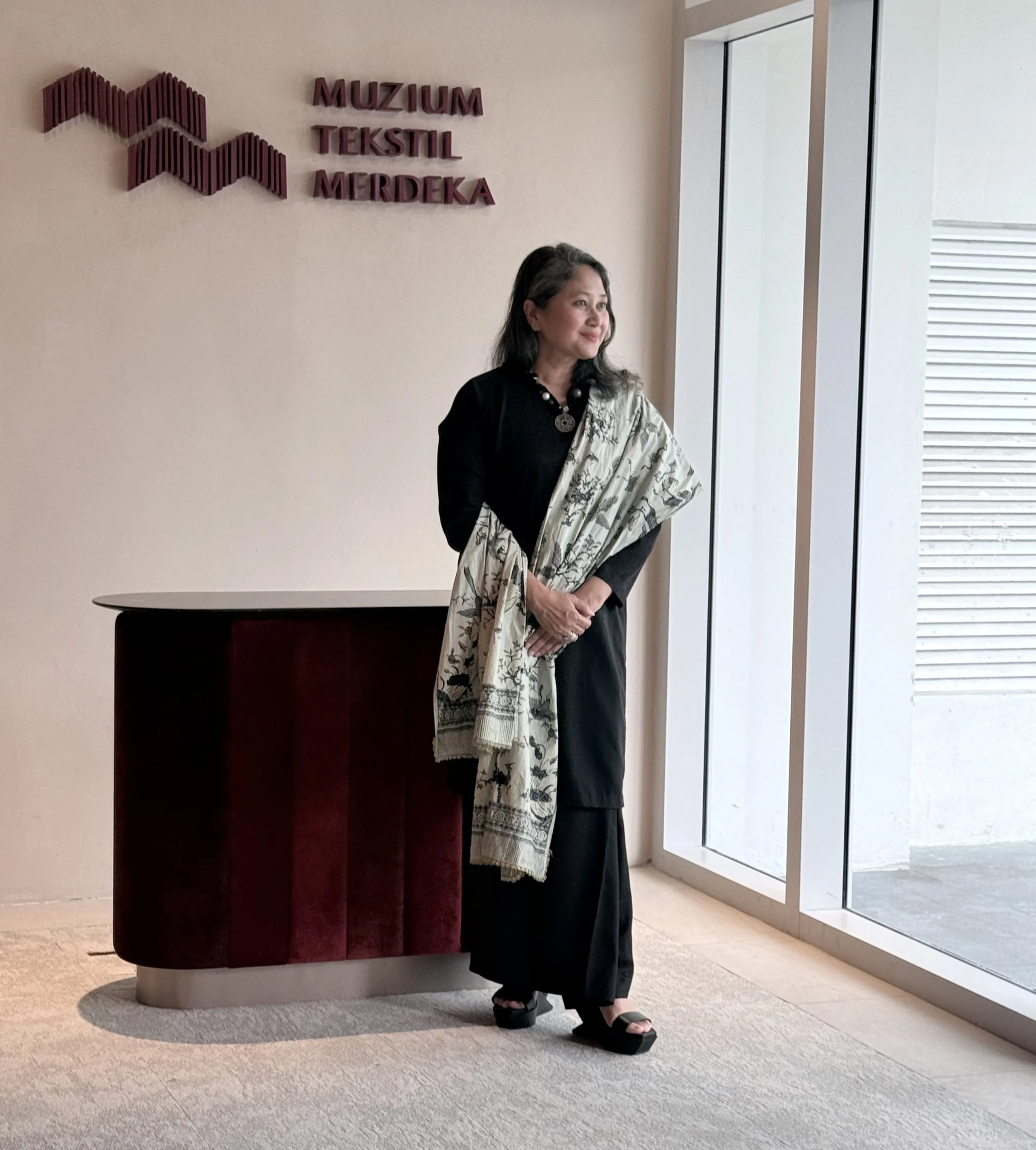
Suryani Senja Alias, Director, Merdeka Textile Museum.
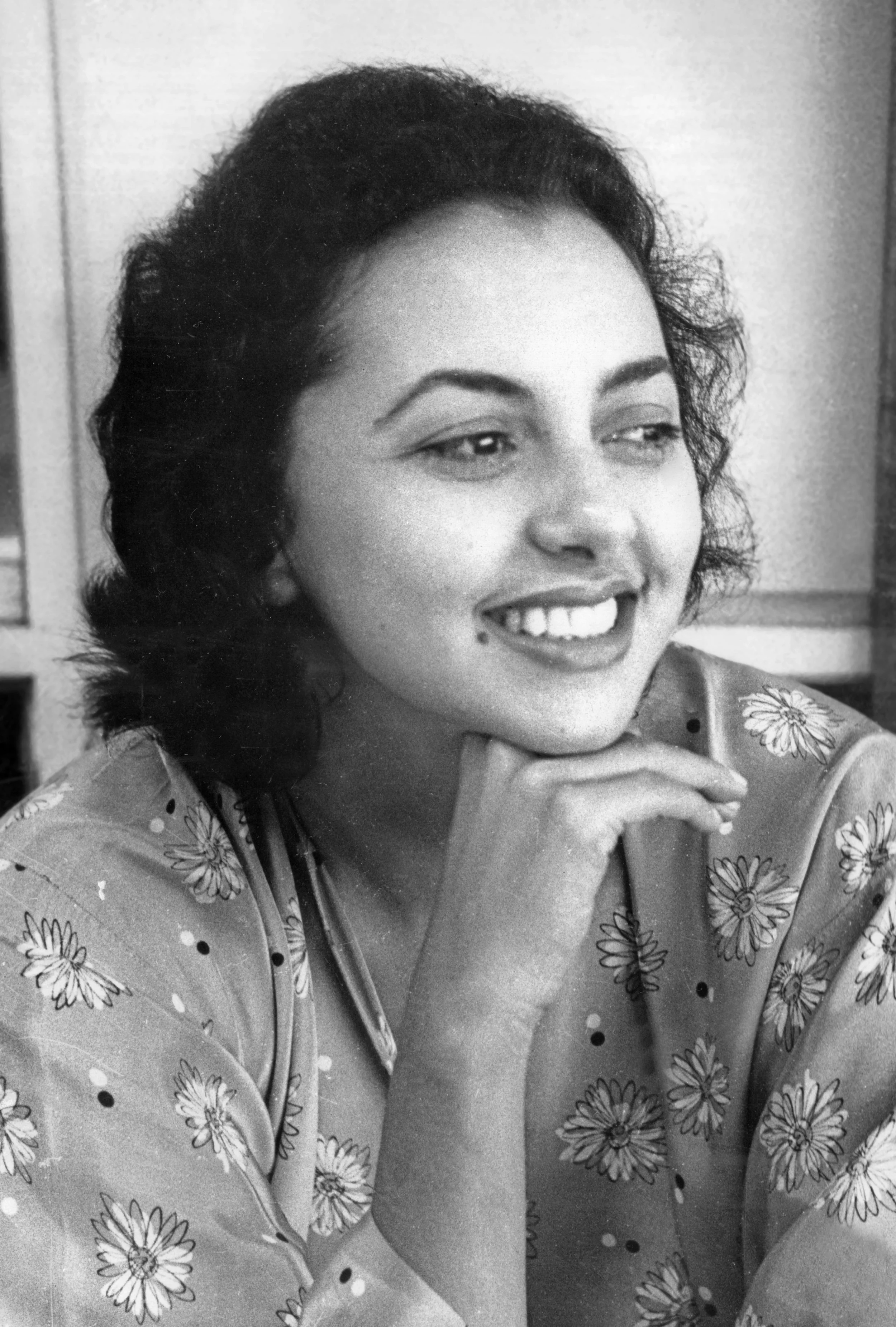
Portrait of Azah Aziz. Image courtesy of Tita Publications.
Before stepping into cultural advocacy, your career spanned corporate law and investment banking. How did your subsequent experiences founding Senijari, advising craft foundations, and establishing CULT Gallery shape your personal motivation to take on the role of conceptualising and leading the Merdeka Textile Museum from its inception?
It was a perfect storm of ideas and convergence of events that drove me to take up the project. The challenge to conceptualise and execute the Museum from scratch was the perfect opportunity to cross-pollinate and fuse different disciplines which I had experienced and practiced in over two decades. The elements of design, craft, textiles, visual art, philanthropy, branding, business and law can be found in the Museum Project.
The thought of working with the best people and organisations to generate a shared, cultural legacy in a public space also excited me. Tan Sri Zeti, PNB, PNB Merdeka Ventures, and a ready network of creative communities I had built up over the years can now be focused on creating a stupendous platform of ideas. The significance of long-term, cultural, social and economic impactful change on the city and country also drove me to take up the challenge.
The core of the Merdeka Textile Museum rests on the 400-plus piece collection accumulated by the late journalist and cultural champion Puan Azah Aziz. How did you and your team approach curating this archive—gifted by Tan Sri Zeti Aziz—to transform a private legacy into a public cultural institution?
Azah Aziz’s book and her collection were the first layer, core references for our curation approach. To share her legacy and do her research justice, I felt that we had to highlight what she thought was important to impart to the future generations about the Malay world, culture, traditions and material culture through her collection. The second layering was contextualising her ideas within the global context and communicating it using international languages that are understood by textile scholars and the public alike.

The Warna Wall on the far left, documenting colours indigenous to the Malay World. On the right, specially dyed textiles by Muni are hanging on the wall. Image courtesy of PNB Merdeka Ventures.
Puan Azah Aziz’s landmark text, Rupa & Gaya: Busana Melayu, analysed Malay attire through the lens of classical literature and poetry. How does the museum bring these literary and historical connections to life for visitors?
We embed the literature that she researched in her book into the narrative texts, storytelling, and wall texts in all eight galleries. In addition, you can listen to poetry being recited by real poets that were recorded through audio with sensors in specific places.
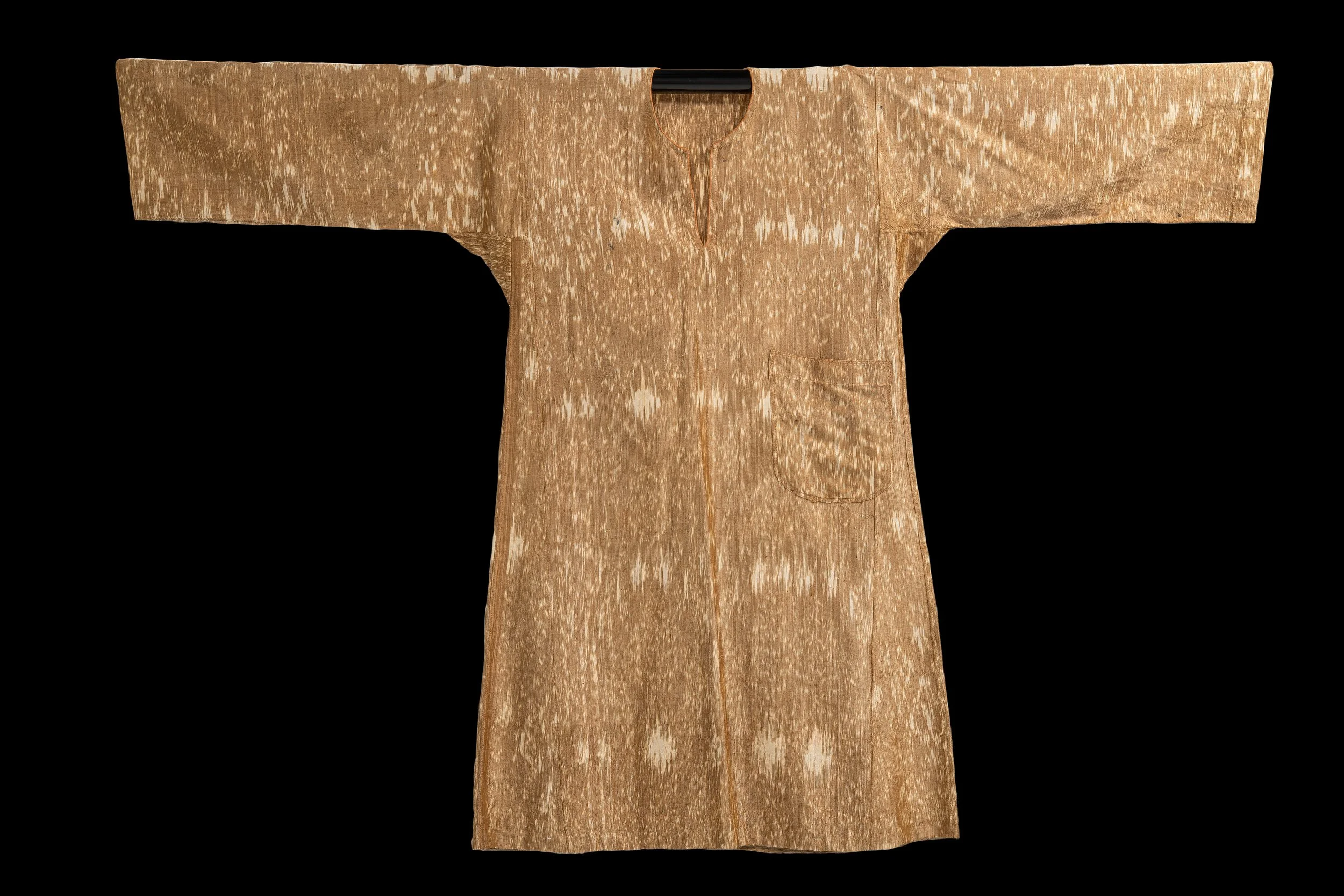
A Baju Kurung from the collection made using the Ikat Loseng technique. Image courtesy of PNB Merdeka Ventures.
Among the garments, textiles, and other artefacts on display, which specific pieces stand out as personal favorites of yours, and what makes them the highlights of the collection?
I love this set of old style Baju Kurung and Sarong made with the technique Ikat Loseng in Gallery 4. It is so charming and quirky that the warp ikat is woven and coloured to resemble a deer coat.
The Sarong Telepuk in deep purple hues and intricate gold motifs and patterns in Gallery 5 is also my favourite. When the woodcarving feature wall in the MTM shop was commissioned by Tan Sri Zeti’s family foundation, I had to choose this sarong as a design inspiration for the feature wall because of the delicate carving required from the woodcarving artisan to produce the blocks to imprint its patterns and motifs, and the masterful artistry required from the Telepuk artisan to create the sophisticated composition of motifs and imprinting using gold leaf with superb consistency. The Terengganu woodcarvers of Bakawali studio did a superb job replicating this sarong as a three-dimensional piece on the wall.
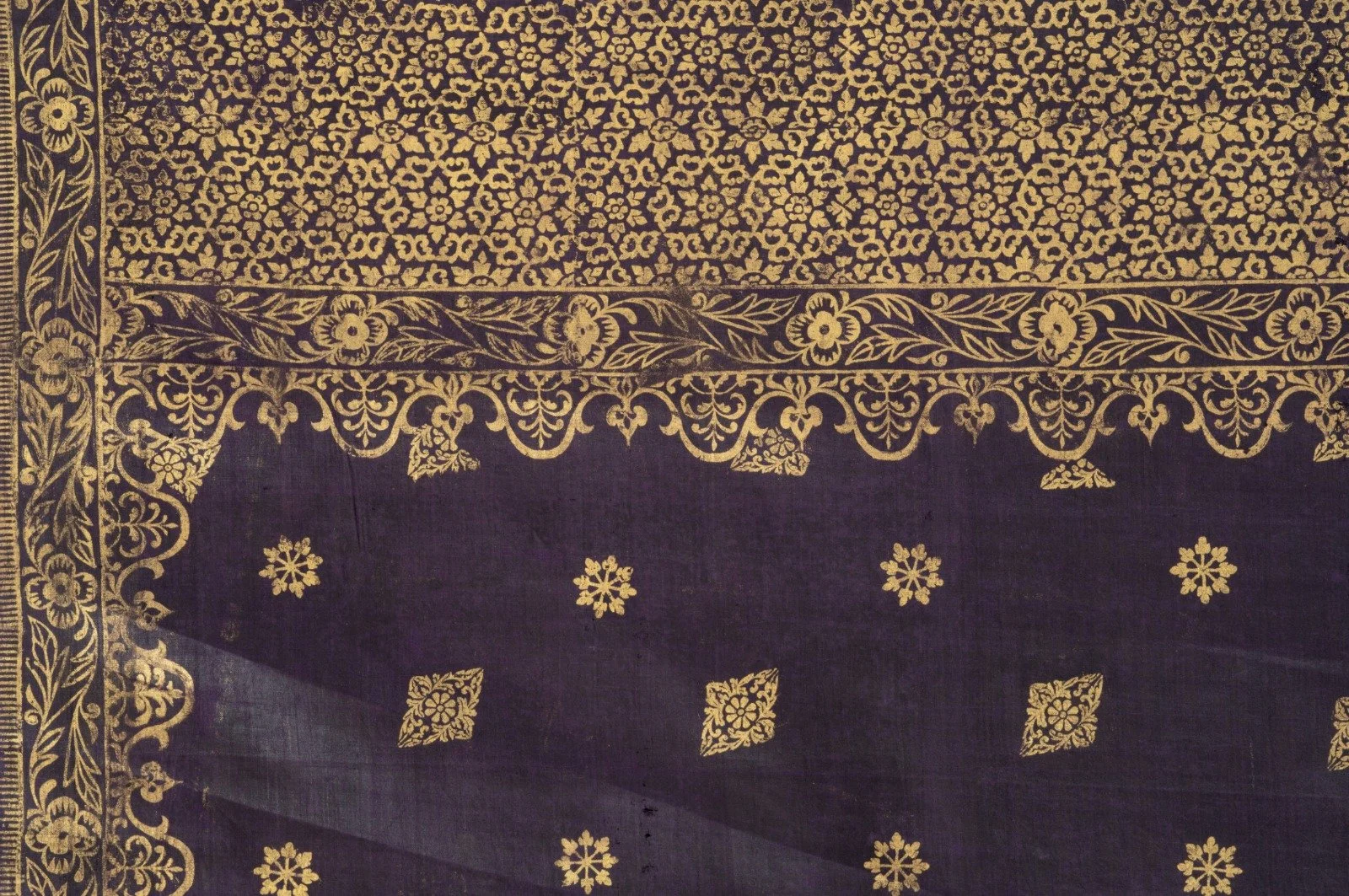
Close-up of the purple Telepuk Textile from the collection. Telepuk is a traditional Malay textile technique that involves embellishing woven silk, cotton or satin with gilded patterns and motifs. Image courtesy of PNB Merdeka Ventures.
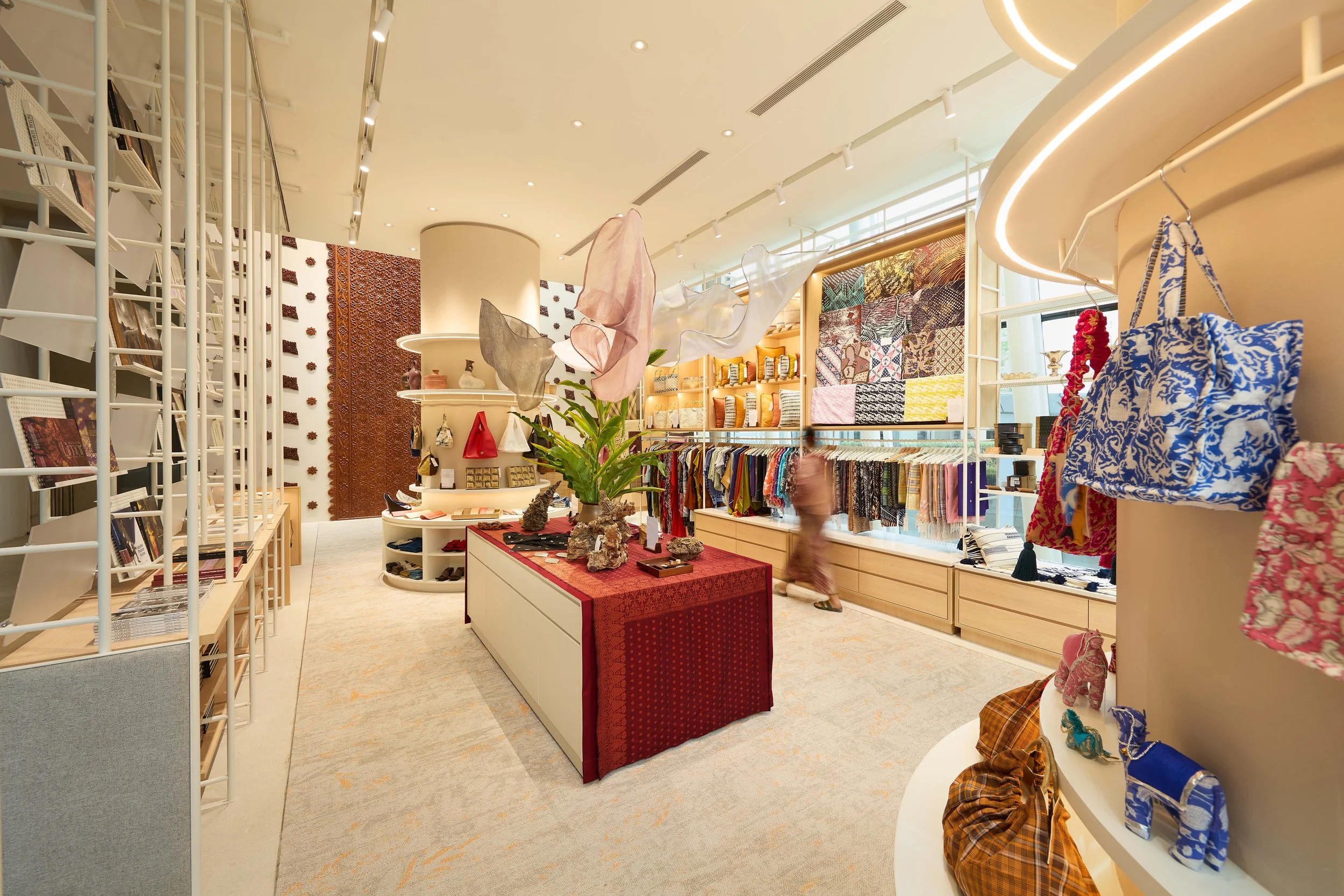
The Merdeka Textile Museum shop. Image courtesy of the PNB Merdeka Ventures.
When designing the physical gallery spaces, what visual or sensory cues were prioritised to give the display pieces an engaging presence within a state-of-the-art museum space?
I worked closely with my creative director Imaya amongst others in the team to create different experiences in each gallery by choosing complementary colour palettes, textures and materials that would be warm, tactile and textile-like as much as possible alongside the more industrial state-of-the-art showcases, interactive screens and lighting. My team also comprises fine art practitioners who helped design more engaging, tactile and imaginative displays like in Gallery 1. We also added archival photos printed on fabric as well as paper to make it more interesting and real for people to engage with people of the past.

The works of contemporary Southeast Asian fashion designers Tangsi Tujuh and TOTON in the foreground, and the work of Malaysian artist Anne Samat in the background. Image courtesy of the PNB Merdeka Ventures.
Textile museums are often tasked with holding fast to the past. How does the museum intend to function not only as an archive of heritage garments, but as an active catalyst for living craft communities and contemporary designers today?
We reach out to artisans, designers, craft practitioners, and creative communities to take part in our exhibitions and co-create programs with us. Our education centre encourages the community and scholars to use our facilities and to share knowledge through various future initiatives like introducing memberships, fellowships and patronage. By building a strong community around us, we will ensure the Museum stays relevant and fresh.
Malay textile heritage is interconnected with broader maritime Southeast Asian trade networks. How does the museum contextualise local heritage within the wider cross-cultural narratives of the region?
Our Gallery 2 is called Global Malay World. We contextualise the wider Malay world or Nusantara as being significant trade exchange and learning centres as well as taking on the role as emporiums of trade for the Maritime Silk Route for centuries, connecting China, India, Europe, Persia and the Middle East through its ports and the long history of being experts in shipbuilding and maritime voyages.
The rich fusion of styles in the Malay World and its material culture came about from these global connections. Its linguistic and learning heritage are also intertwined with its globally connected material culture heritage.
Looking at the museum’s social feed (@merdekatextilemuseum), there is a clean, contemporary approach to showcasing traditional details. How do you balance educational depth with visual appeal when introducing heirloom textiles to younger, digitally native generations?
The contemporary, clean visuals are intentional, as we want to communicate our traditional culture with the new generation using the design language that they are responsive to. We add educational depth through online text or video narratives, and subsequently our exhibitions, programs and physical workshops for experiences and demonstrations for a deeper immersion in culture.

Breathing in the scents, made possible in collaboration with Remedy. Image courtesy of PNB Merdeka Ventures.
During your initial public previews and community engagements, what surprised you most about the emotional or intuitive ways visitors—from local students to international travelers—connected with the exhibits?
They have highlighted how they love the design, storytelling and curation, as well as the new ways to engage in traditional culture through smell, touch and interactive technology. I have been pleasantly surprised that people say 1.5 hours is not enough to be in the Museum, as they want to absorb the content-rich space. Young people have been on social media unpacking the content and narratives including literature really well. I was surprised that they have caught on so quickly that the museum is rich in narratives and experiences, and not just in artefacts.
As the museum establishes its presence in Kuala Lumpur’s cultural landscape, what types of artistic collaborations, research residencies, or temporary exhibitions can we look forward to?
We will share our calendar of programmes soon for the last quarter of 2026 and 2027. You can expect an array of curated experiences such as new curations from the Azah Aziz collection, sharing of traditional textile techniques from the region, textile talks, children’s workshops and community-led programs, literary events, traditional performances, as well as participation of textile collectors and scholars. Art, design and fashion will be interspersed in our programs too, to keep it current and exciting.
More information on Merdeka Textile Museum here, and follow on Instagram @merdekatextilemuseum.