
Fashion & Memory: ANAABU & Ana Abu
A living archive of multicultural fashion
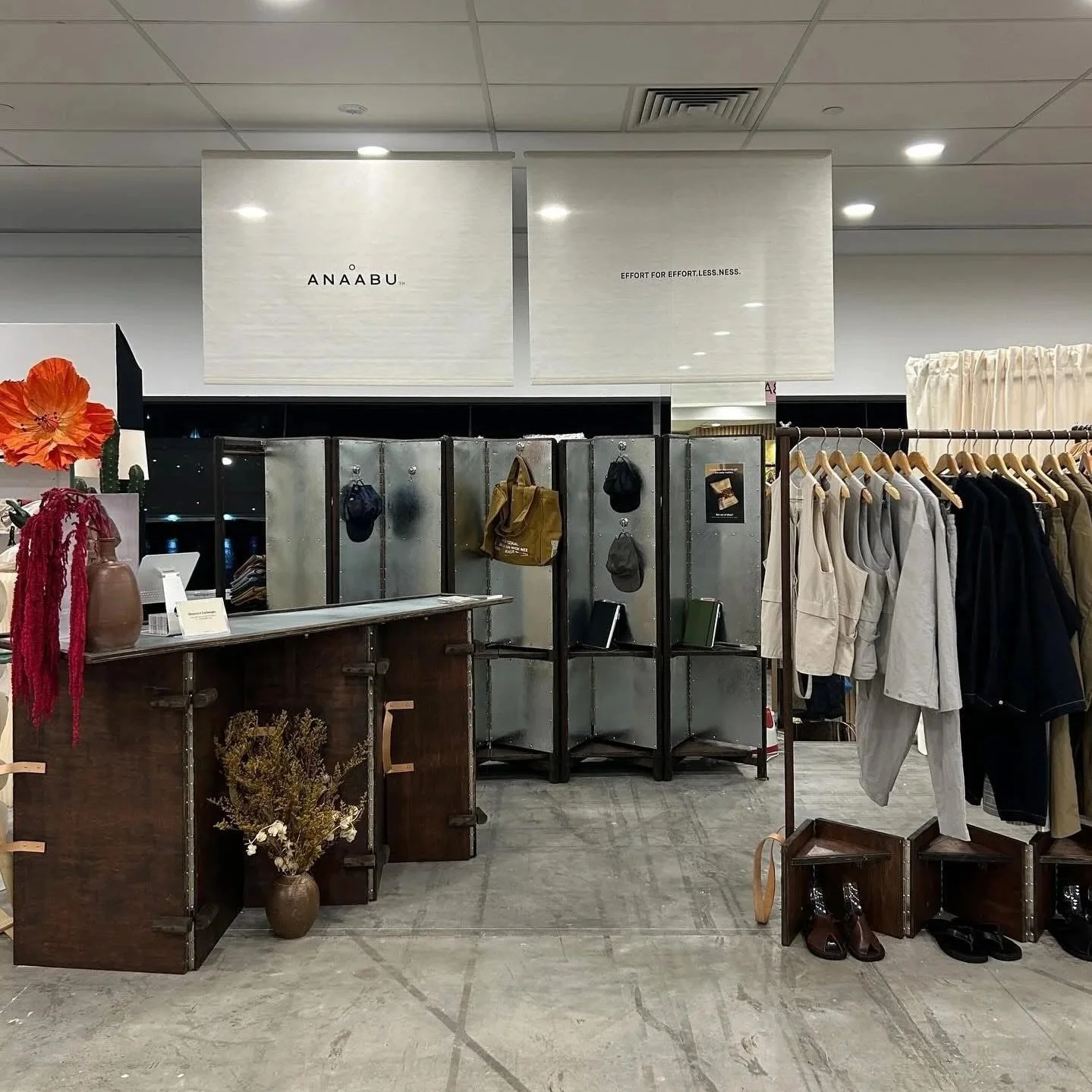
Anaabu at Boutiques Singapore.
Within Malaysia’s vibrant fashion community, ANAABU has carved a distinct niche, not through spectacle or trend-chasing, but through a quiet, steady commitment to cultural depth, lived experience, and thoughtful design. What began modestly in 2010 as a vintage blogshop has evolved into a brand shaped by the emotional landscapes and multicultural influences of its founder Ana Abu.
In this edition of “Fashion & Memory,” I speak with Ana about the foundations of her work. She reflects on how her Malaysian upbringing continues to guide her design philosophy and how reviving cultural heritage enables ANAABU to articulate a contemporary identity through fabric and feeling.
The story of ANAABU is inseparable from the formative years and family experiences that shaped its founder. Ana’s earliest relationship with clothing was not rooted in luxury, but forged in the rhythms of the pasar malam and the everyday realities of her family’s clothing and textile trade. “I grew up surrounded by clothes, but not in a glamorous or curated way,” she reflects. “It was very real and very everyday. Those experiences taught me humility and that clothing is not about status. It is about care, effort, and the stories people bring into it.”
One of the most influential figures of her childhood was her grandmother, who ran a wooden booth measuring 3 metres by 3 metres selling tudung (headscarves) and kain sarung (sarongs). Ana remembers helping to arrange bundles of new stock as suppliers passed through the aisles of the market. Yet, it was her grandmother’s sense of resilience and generosity that left the deepest impression. “Whenever she made a sale, she would quietly thank God and then write the sale amount on the back of a discarded cigarette box,” she recalls. “And on days with no sale, she would still smile and say, ‘tok gori hari ni’, or no sale for today. Yet she would still buy me Milo ais ikat tepi, and we would take a taxi home together.”
Equally influential was her father, a Cambodian immigrant who sold secondhand clothing in night markets across Malaysia. Ana often accompanied him on long journeys in his white Nissan van, memories that remain vivid in her mind. “I remember the smell of old denim, the jumble of colours, the clatter of hangers, and how my father would carefully mend or wash each garment before selling it,” she says.
These multigenerational memories form the emotional bedrock of ANAABU. They taught Ana that clothing carries intimate stories of the makers, wearers, and the labour embedded in their creation. “Maybe this is my way of honouring where I come from,” she says. “A world where clothes were not just things to wear, but things to survive from, to build meaning with, and to share life through.” Today, that sensibility resonates throughout ANAABU’s signature aesthetic, a design philosophy that honours history, foregrounds humility, and treats each garment as a vessel of lived experience.
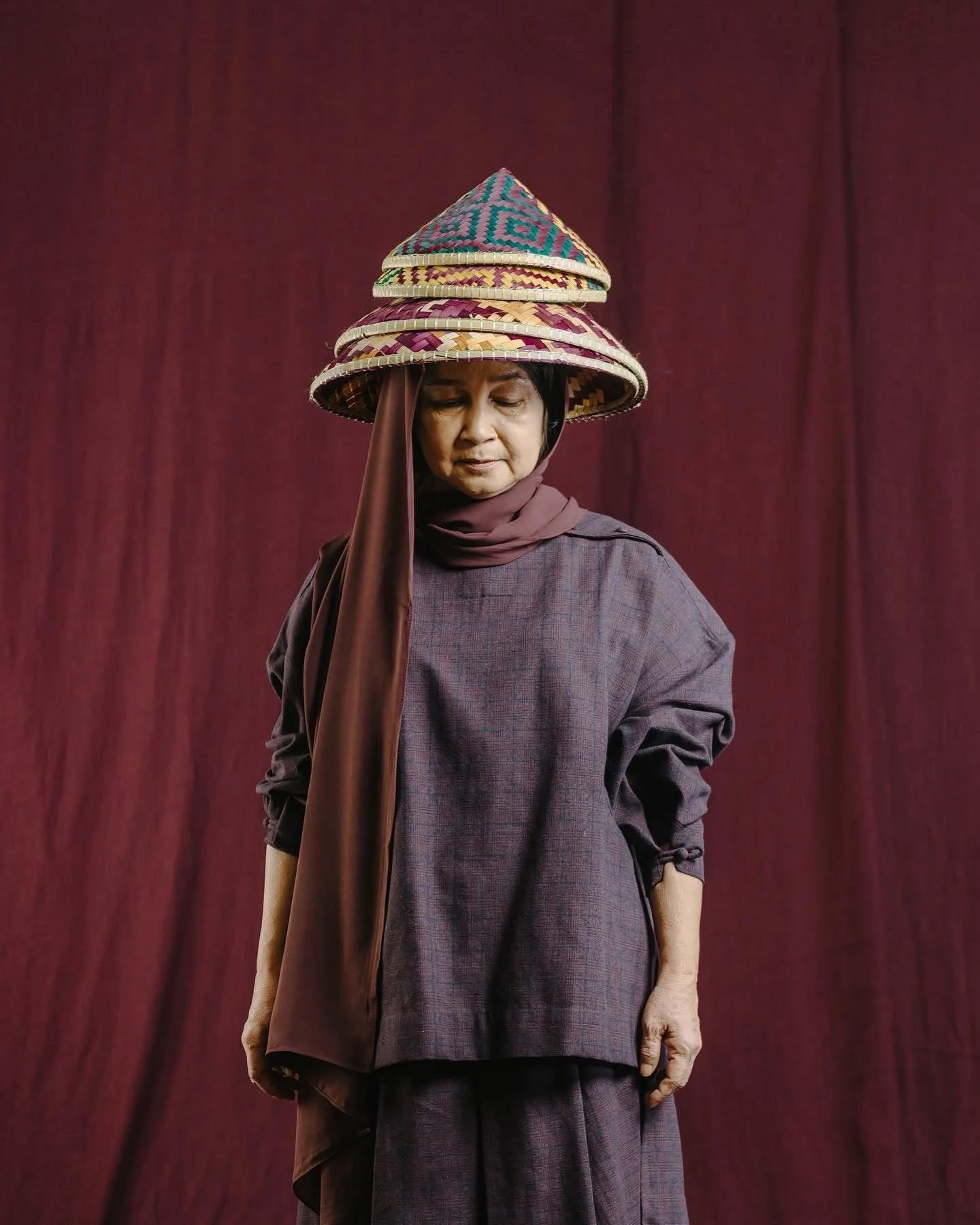
Campaign photo for ‘Kembali’ in 2022. Photo by Amani Azlin.
Growing up with Cambodian and Kelantanese roots, Ana developed an intuitive understanding that textiles are more than materials, but repositories of cultural memory, personal identity, and everyday function. Central to this connection is the krama, an iconic Cambodian gingham cloth her parents carried with them when they fled the Khmer Rouge. Historically recognised for its red and white pattern, the krama is now woven in a spectrum of colours, yet its meaning remains constant. Ana grew up watching it take on countless roles: a shawl, towel, baby carrier, serving families across borders and generations. “It is just one piece of cloth,” she explains. “Yet it holds generations of meaning and immense practicality.” She finds a parallel resonance in kain batik, another textile embedded with regional identity and practicality, used fluidly and intimately depending on need. Witnessing these fabrics in constant motion throughout her childhood sharpened her awareness of how textiles hold cultural memory, while remaining adaptable to daily life.
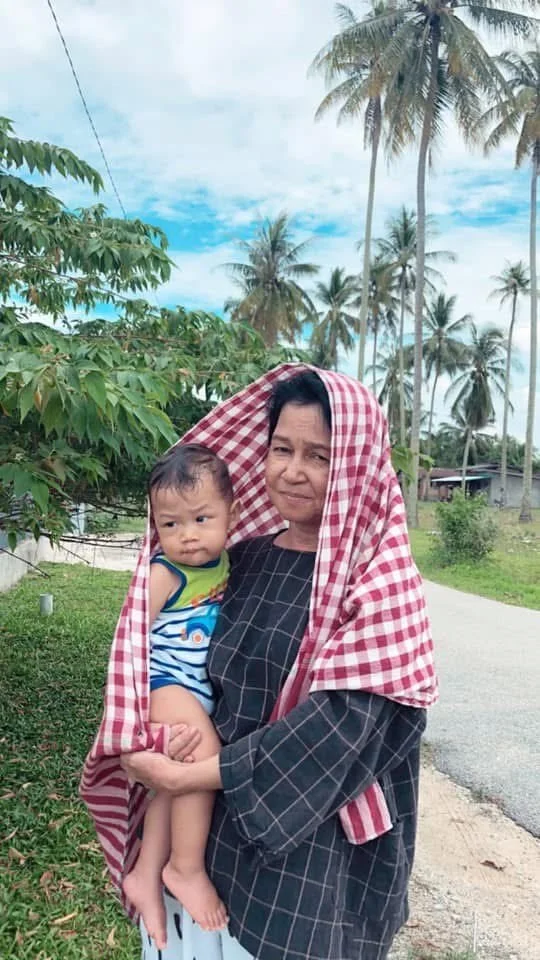
Ana’s mother in Khmai fabric, used as a shawl here.
The foundation of ANAABU’s design philosophy is deeply rooted in Malaysia’s interwoven cultural landscape. Ana describes her home as “a living archive of overlapping cultures,” a place where diverse communities continually influence one another through everyday encounters. Rather than drawing from a single cultural lineage, Ana embraces the layered terrain that Malaysians collectively occupy. “We did not want to design for one community alone. We wanted to honour the emotional landscape we all grew up in,” she explains. This commitment to inclusivity informs ANAABU’s distinctive approach to cultural storytelling that reflects Malaysia as a shared, evolving landscape.
The ethos of shared cultural experience is vividly expressed in the Kongsi Masa collection, conceived as a visual representation of Malaysia’s intertwined festivals, faiths, and cultural practices. Ana recalls growing up with Chinese New Year, Hari Raya, and Deepavali as moments of exchange, where neighbours celebrated together. “There was always a sense of openness in how we celebrated one another, and that spirit of togetherness shaped how we approached the collection,” she explains.
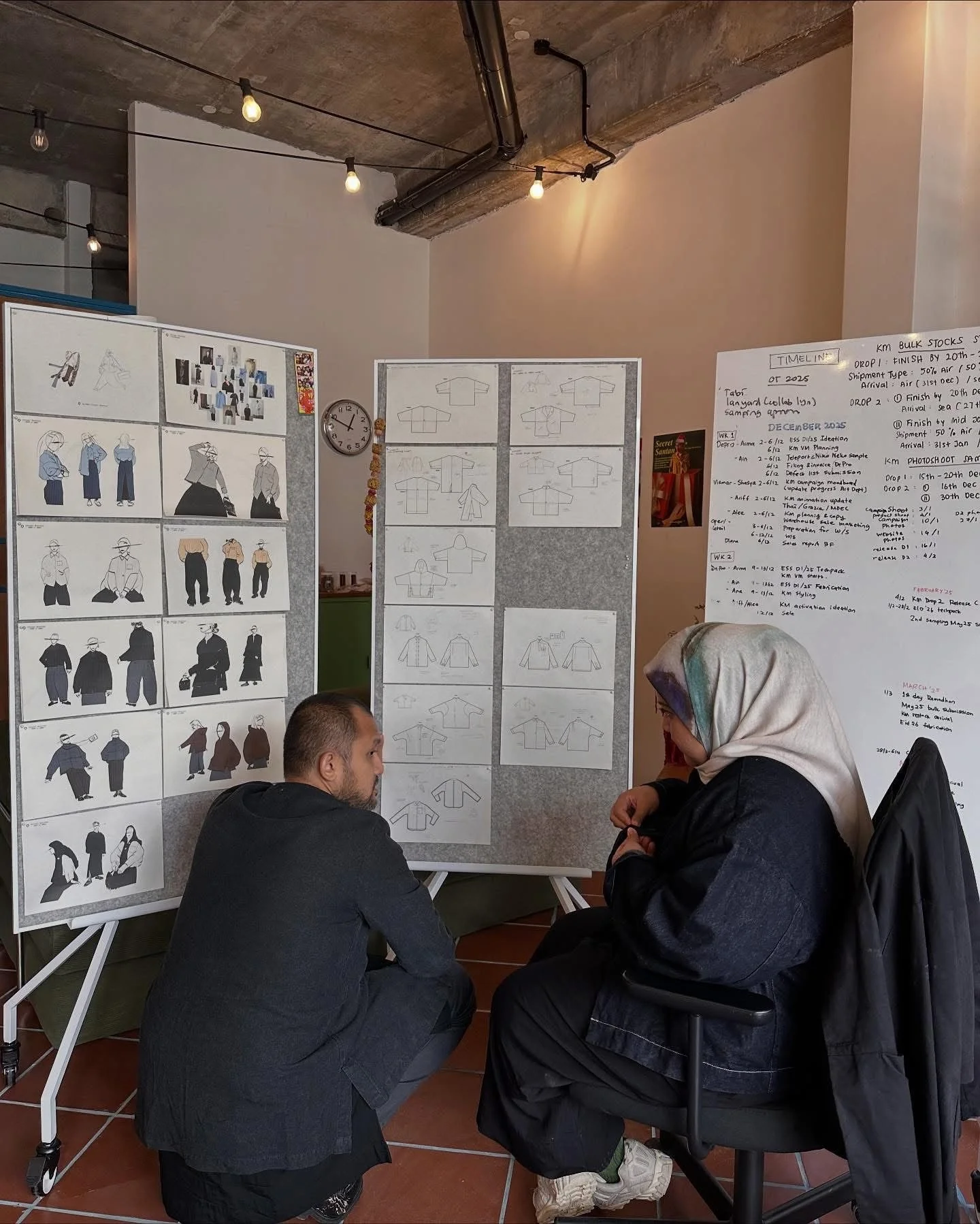
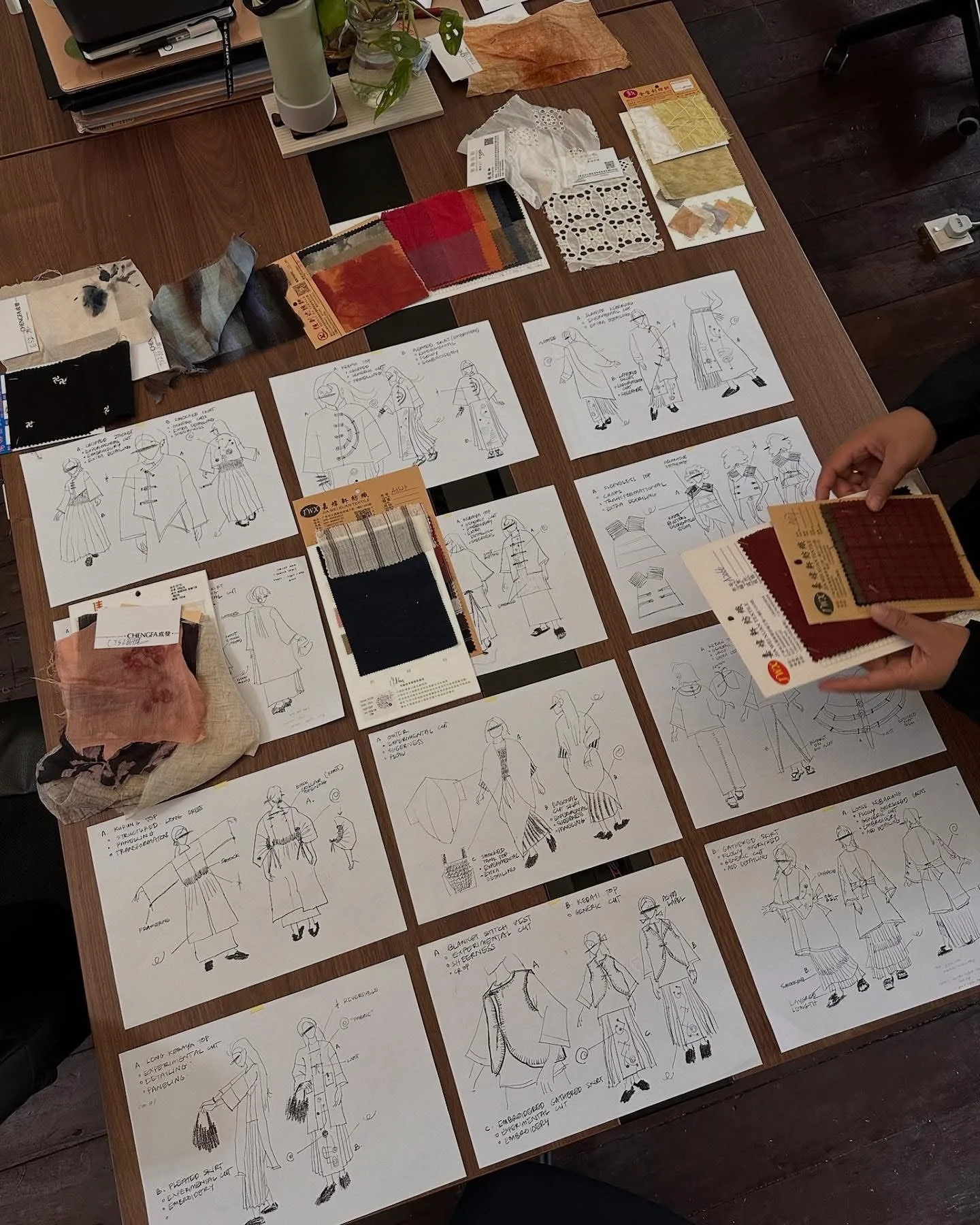
‘Kongsi Masa’ collection planning by the design and production team.
Each piece in the collection carries subtle cues drawn from these overlapping cultural rhythms. “Designing inclusively, to me, means embracing the beauty of our multiculturalism without diluting anyone’s identity,” she says. “It is about recognising that our cultural expressions can intersect harmoniously while still respecting their origins.” Through the Kongsi Masa collection, ANAABU demonstrates how fashion can become a medium of connection, celebrating layers of cultural traditions that define everyday life.
“Designing inclusively, to me, means embracing the beauty of our multiculturalism without diluting anyone’s identity.”

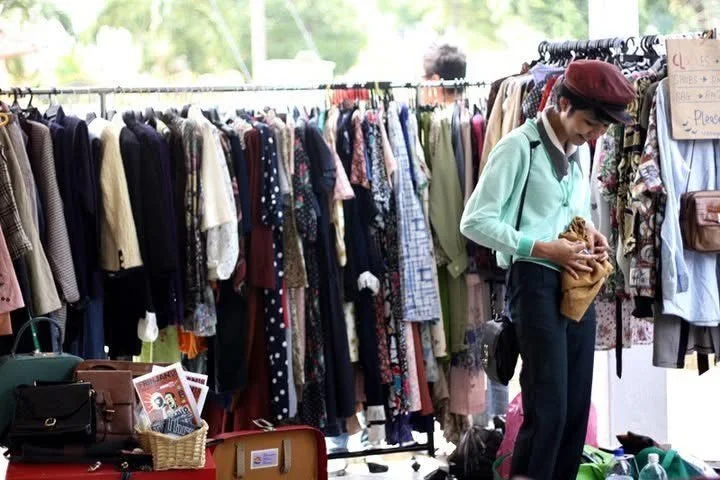
Ana, the Founder, back in her thrifting booth days.
Although ANAABU is now recognised for its multicultural aesthetics and intentional silhouettes, Ana’s entry into fashion was anything but conventional. Trained as a civil engineer, her understanding of garment construction and design principles was acquired through years of diligent observation and tactile experimentation. She dedicated countless hours deconstructing secondhand pieces, studying their forms and fabric quality. “In some ways, my lack of formal fashion education became a kind of freedom,” she reflects. “It allowed me to design intuitively, to make mistakes without fear, and to let the garment teach me what it needed to be.” At the heart of this process is emotion, an internal blueprint from which each collection takes shape.
ANAABU is part of a broader movement in Southeast Asia in which designers are re-examining and reinterpreting cultural garments, textiles, and silhouettes for contemporary life. Ana sees her brand’s contribution to this landscape as intentionally subtle, grounded in everyday life. “I think we are all part of a larger regional awakening - designers in Indonesia, Thailand, the Philippines, and Malaysia are rediscovering our roots in new ways,” she notes. For her, the goal is to express a shared regional sensibility. “Functionality, humility, and depth are values deeply rooted in Southeast Asian culture,” says Ana.
Despite this regional momentum, Ana believes that much of Malaysia’s cultural heritage, particularly its textile traditions, remain underexplored. She speaks with admiration about the saree and the garments of Sabah and Sarawak, especially the pua kumbu, with its refined craftsmanship. These traditions, she feels, hold immense potential for reinterpretation. Yet, she also emphasises the importance of care and responsibility: this is work she hopes to “approach slowly and respectfully, as I continue learning more about the heritage within our own borders.” In this way, ANAABU’s place in the regional conversation is committed to maintaining a deep respect for the histories that inform it, while engaging in creative resurgence.
Looking ahead, Ana hopes ANAABU will be remembered as a brand that honours tradition, while presenting a Malaysian identity through a thoughtful, contemporary lens. “I want people outside of Malaysia to see that we have our own design language that is rooted in heritage, but curious, experimental, and expressive,” she explains. For her, fashion is a way of widening the world’s understanding of Malaysia, and of Southeast Asia more broadly.
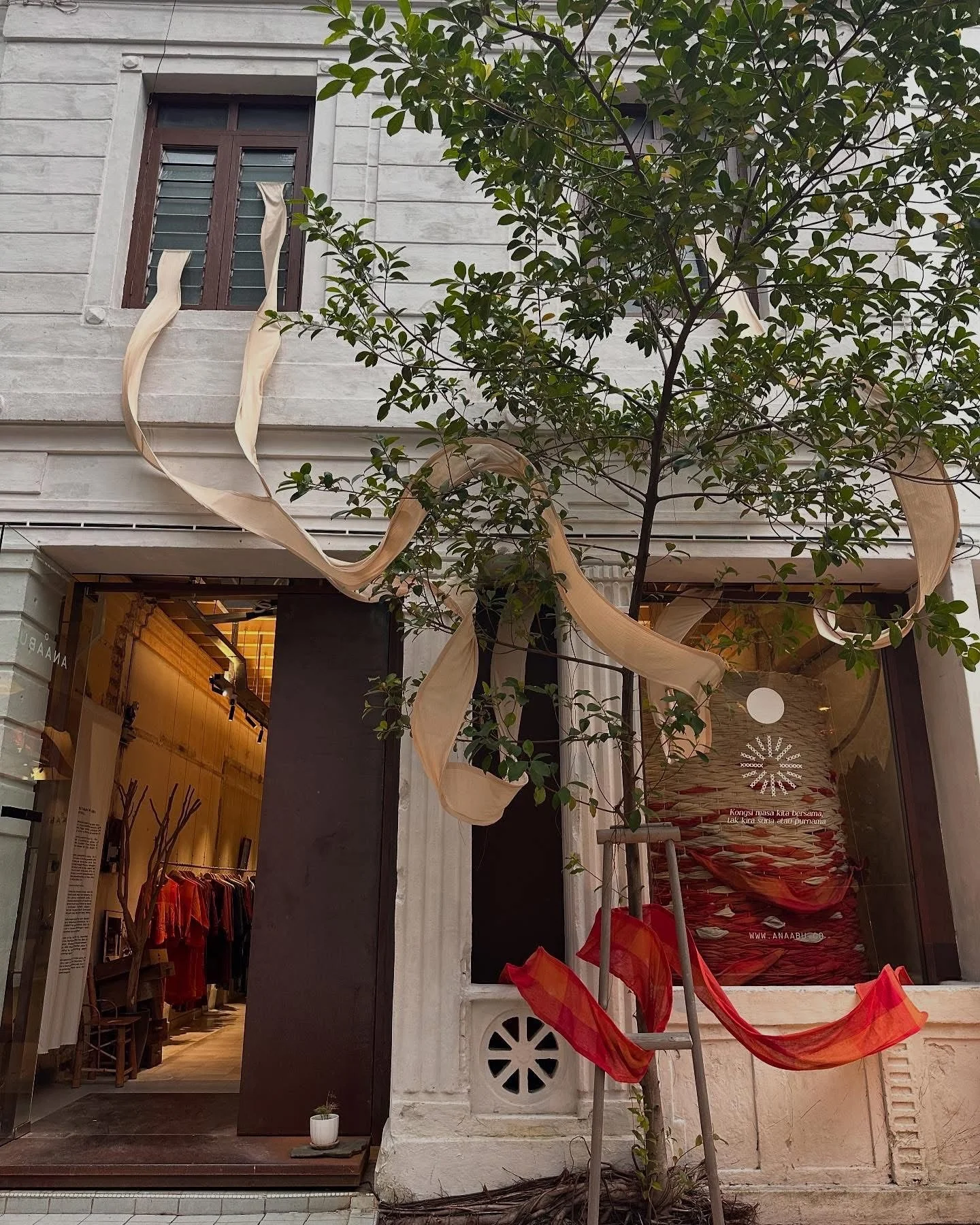
Storefront of Kedai Fizikal Jalan Sin Chew Kee, Kuala Lumpur.
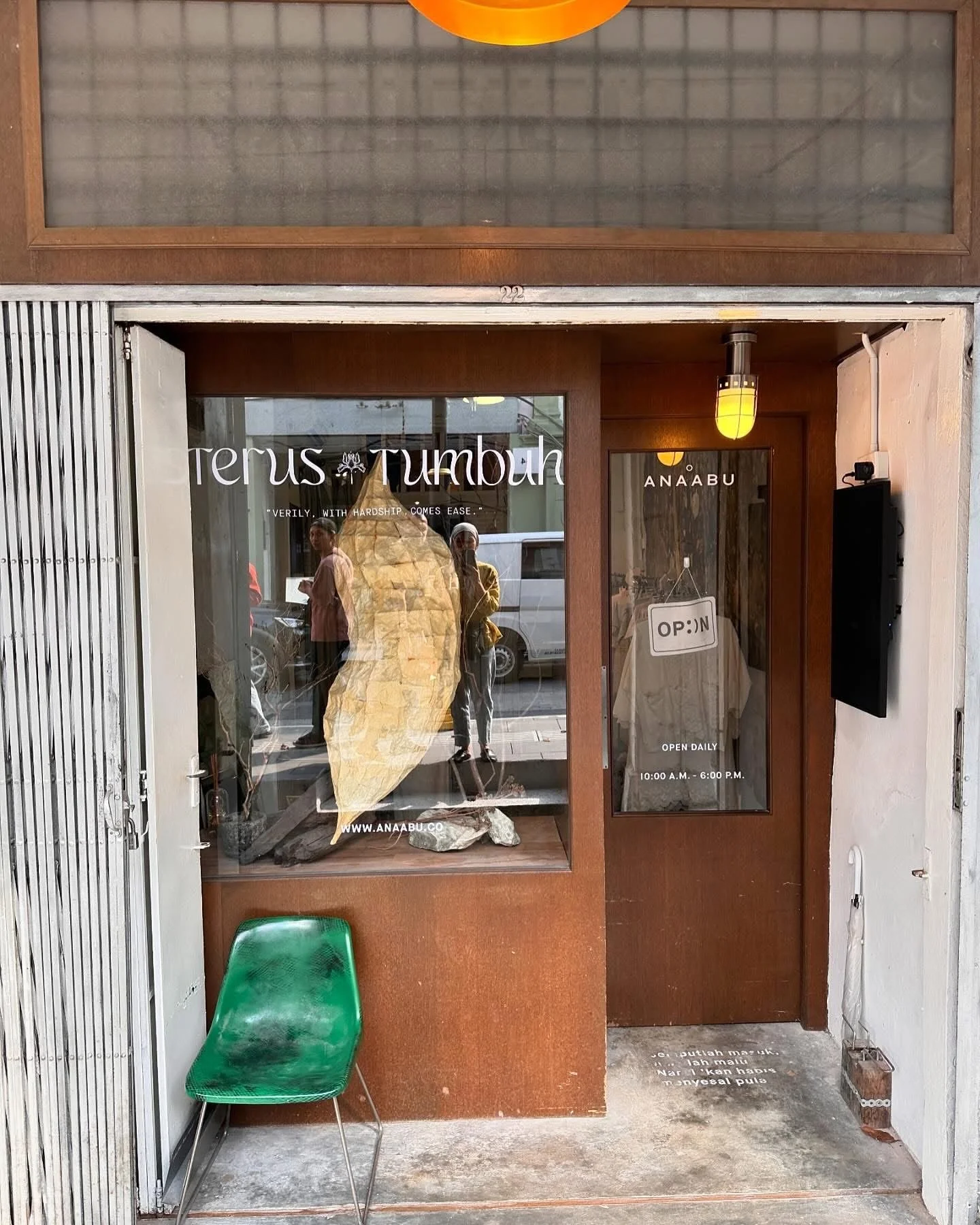
Storefront of ANAABU Kedai Fizikal Jalan Tan Hiok Nee, Johor Bahru.
If ANAABU’s storytelling can help, as she says, “open that window for others to see who we are,” then she believes the brand will have made a meaningful contribution not only to the creative industry, but to the larger cultural narrative of Malaysia itself.
To see more of ANAABU, please visit their website, follow the brand on Instagram, or visit their stores in Johor Bahru and Kuala Lumpur.
About the Writer
Faith Cooper is the creator of the Asian Fashion Archive. She holds master’s degrees from the Fashion Institute of Technology (FIT) in New York and from Fu Jen Catholic University in Taiwan, where she researched Taiwanese fashion and cultural identity as a Fulbright Student. Faith is now pursuing a PhD in history at the National University of Singapore, focusing on the cultural history of women’s sartorial developments in mid-twentieth-century Singapore.