
Portable culture from Indonesia
Fashion X Business is a column that looks at how Southeast Asian fashion businesses are built to last.
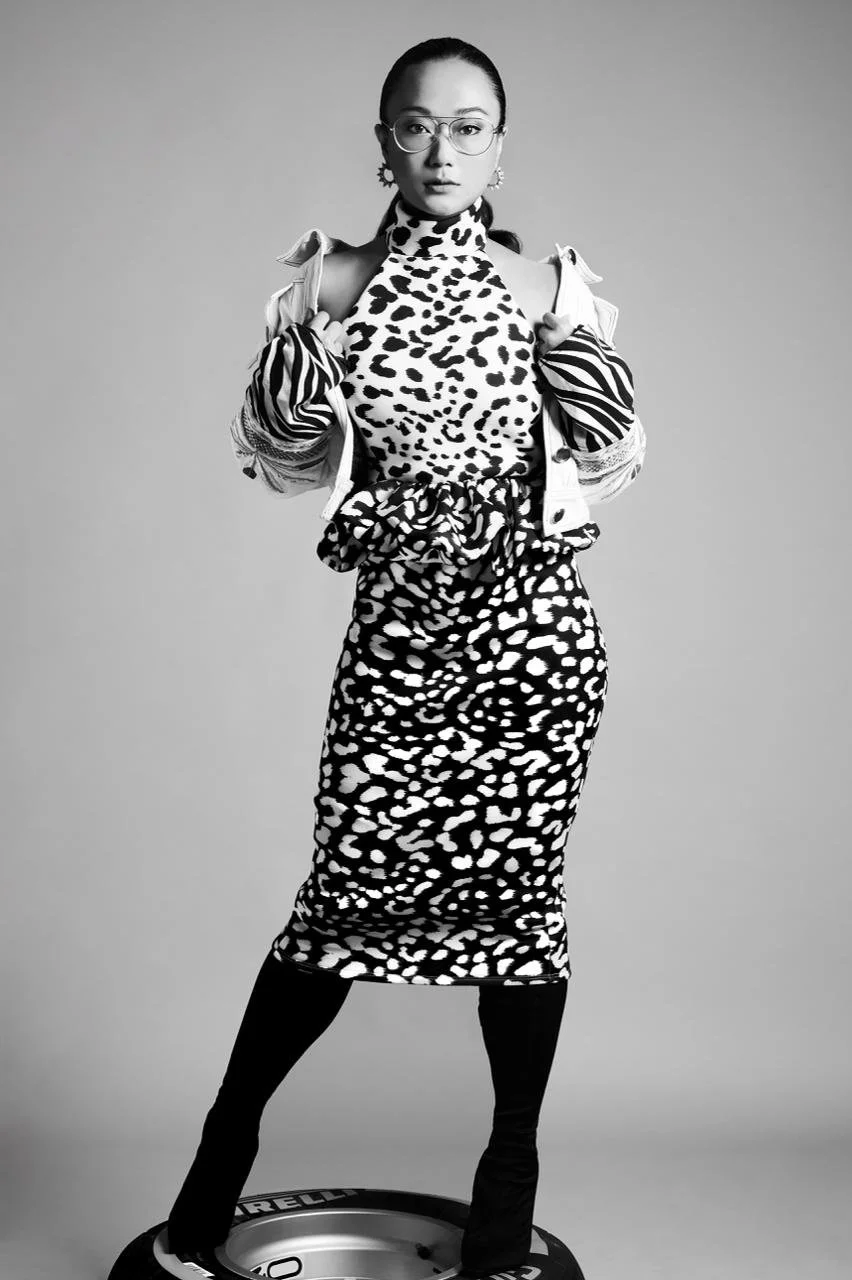
Putri Sodieono.
For Putri Soediono, founder of Pubumésu, longevity has been sculpted by her commitment to artisanal craftsmanship, a clear-eyed approach to brand identity and stoicism through major life changes. Putri calls what she does at Pubumésu portable culture, and its beautiful hand-made leather fans have carried that message faithfully from collection to collection: Wild Things, Market, Botani and most recently, Empress of the Sea.
The fans are designed by Putri, and then handmade in a six-step process by artisans in workshops in Central Java, in the tradition of wayang kulit puppet-making: the leather is sanded down, then cut and punctured to create the details. The pieces of leather are then painted, flattened and sewn onto oxen horns.
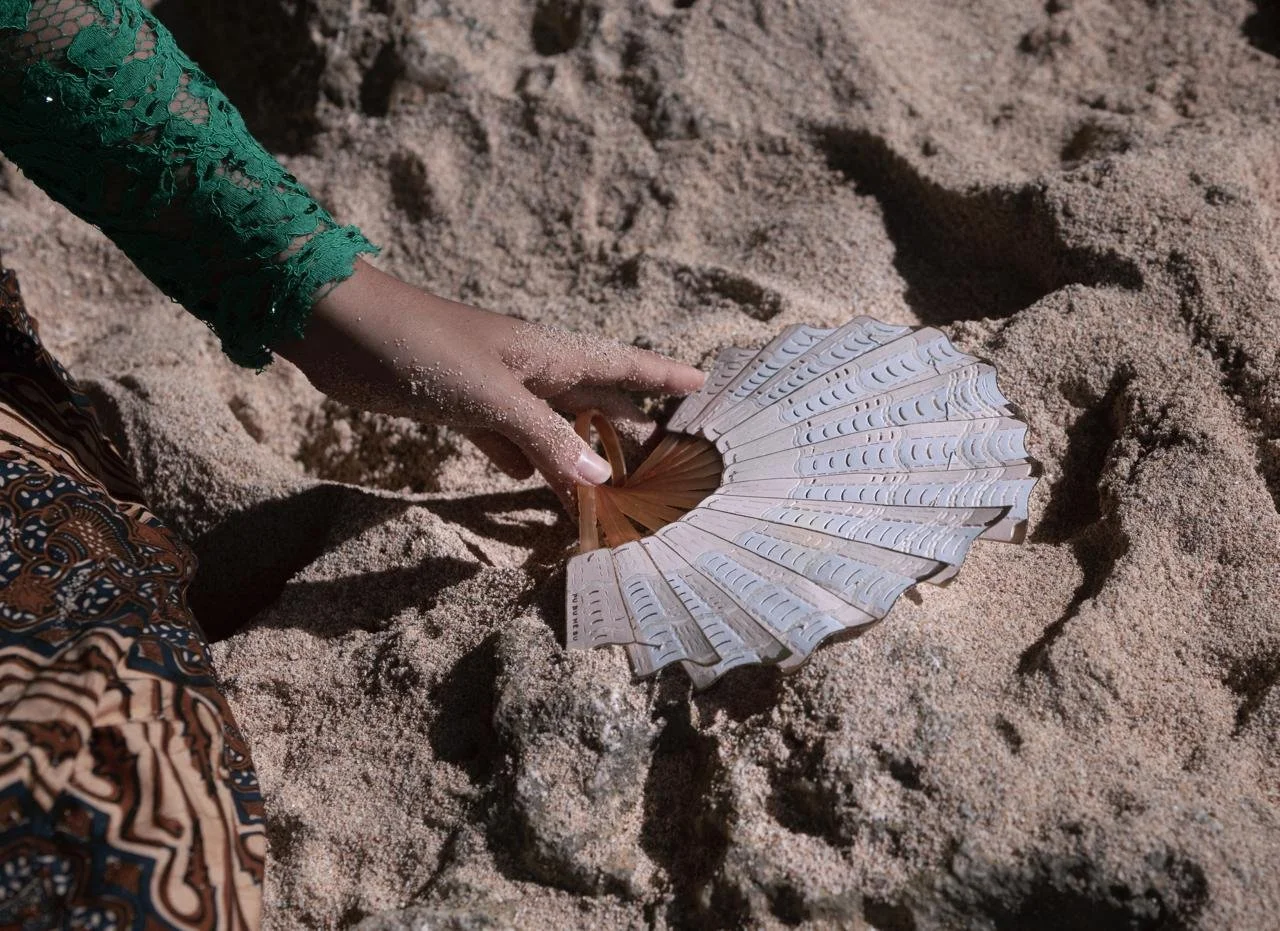
Scallop Shell, Pubumésu. Image courtesy of Pubumésu.
Over 15 years, Putri has built a business that resists typical fashion cycle pressures. Between graduating from Cordwainers at London College of Fashion, University of the Arts London to moving back to Singapore and Jakarta, she developed a clear vision for Pubumésu, and has steadily built the brand and its offerings.
Today, Pubumésu is stocked globally, from Escalier in Bali to Dia Guild in Kuala Lumpur, and from Harrods in London to Takashimaya in Tokyo. In this conversation, Putri speaks about planting seeds and making connections, the importance of collaborations as she has scaled her business, and the exciting opportunities she is seizing in 2026.
Pubumésu turns 15 years old this year. What are your feelings and thoughts about achieving this milestone?
I also turn 40 this year and honestly, I do not think of time as linear. I look at pictures and all the experiences that I have had and I am amazed that we are still here and that we have sustained the business through COVID—that is the biggest one— alongside childbirth and cancer.
I am proud that I trusted my instincts throughout this journey and that has definitely helped me through the years. I have moments where I need to remind myself to stop and smell the roses and realise that I have done well. We need to tell ourselves that and celebrate the wins, even if they are tiny.
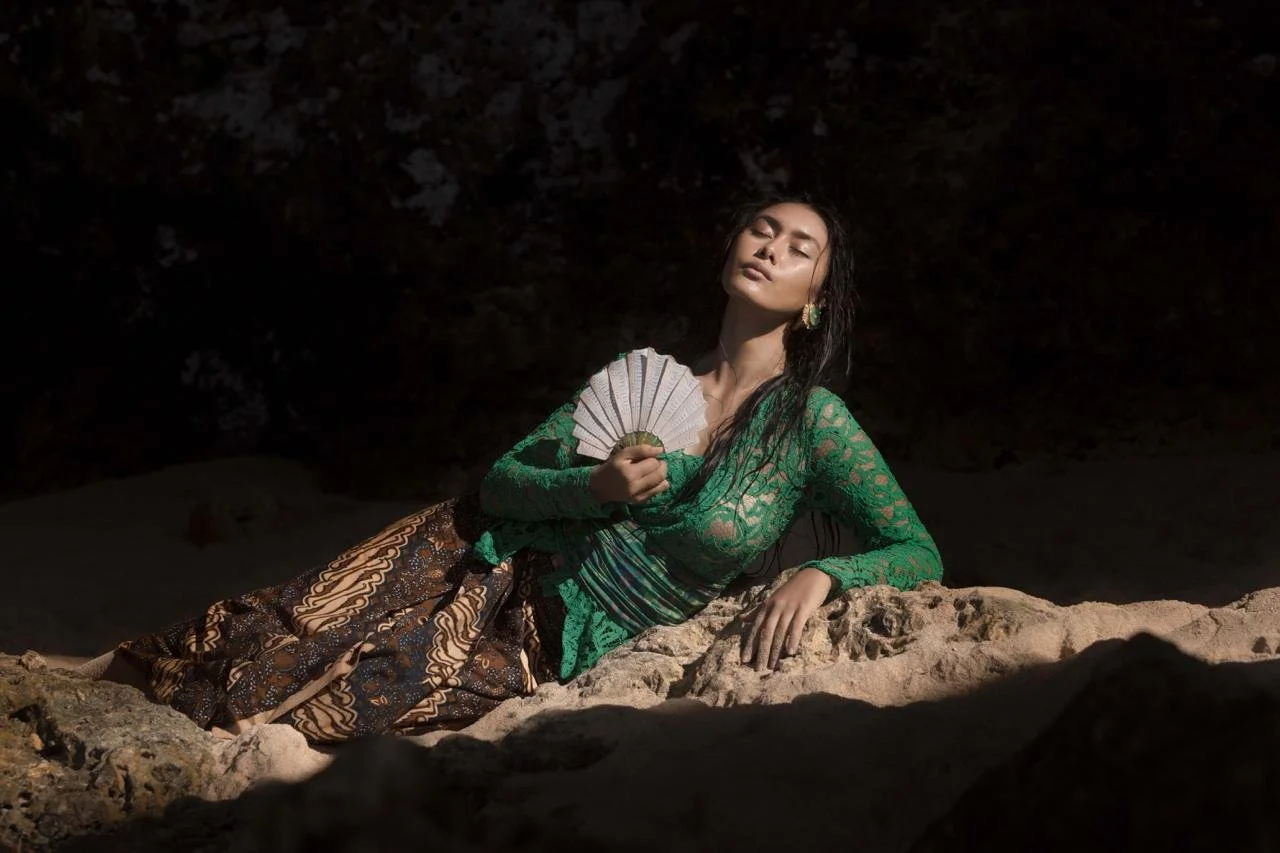
Scallop Shell, Pubumésu. Image courtesy of Pubumésu.
Let us go back to the beginning. How did the business come about, and when would you say it officially launched?
The ideas of Pubumésu came about in late 2008 as I was working on my final-year project. I received some good advice from my boss, Simon Jablon–who was supervising my internship at Linda Farrow Sunglasses at the time. He said to me, “You need to build your career on culture and heritage. You can do that. You come from such a rich culture.” I took that to heart, and built my collection around that.
I remember graduating in London in 2009. My grandmother told me that the job market there was not looking promising. She was hinting that I should return to Asia, and I took the hint. I spent 2010 rebuilding my social network in Singapore and Jakarta. I was working for my family in their education business based in Central Java and used that time to research suppliers. This was before the internet and social media became as they are now. Discovery meant my grandma’s driver touring me through villages to uncover the specialized crafts and skills of each one.
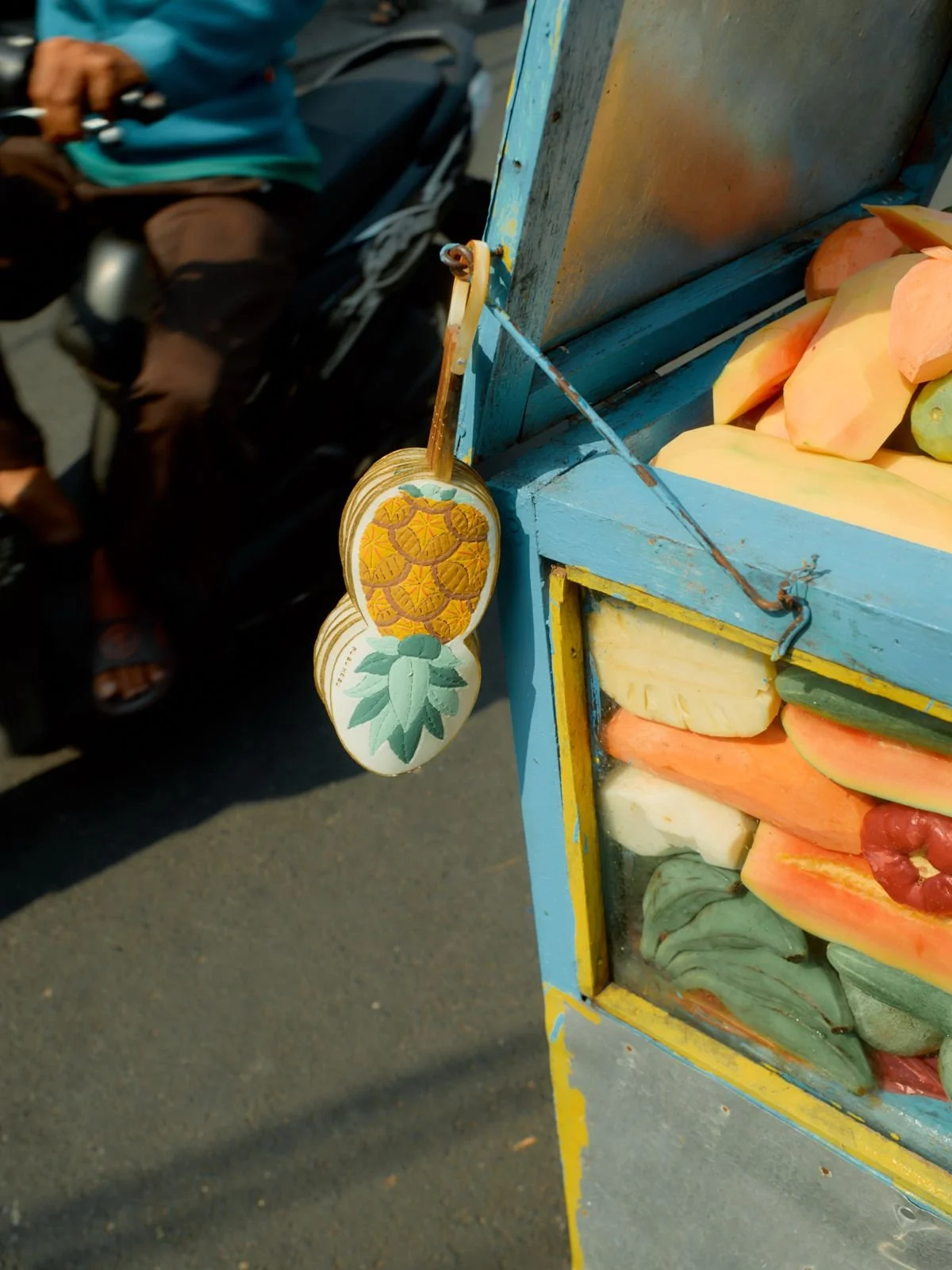
Pineapple, Pubumésu. Image courtesy of Pubumésu.
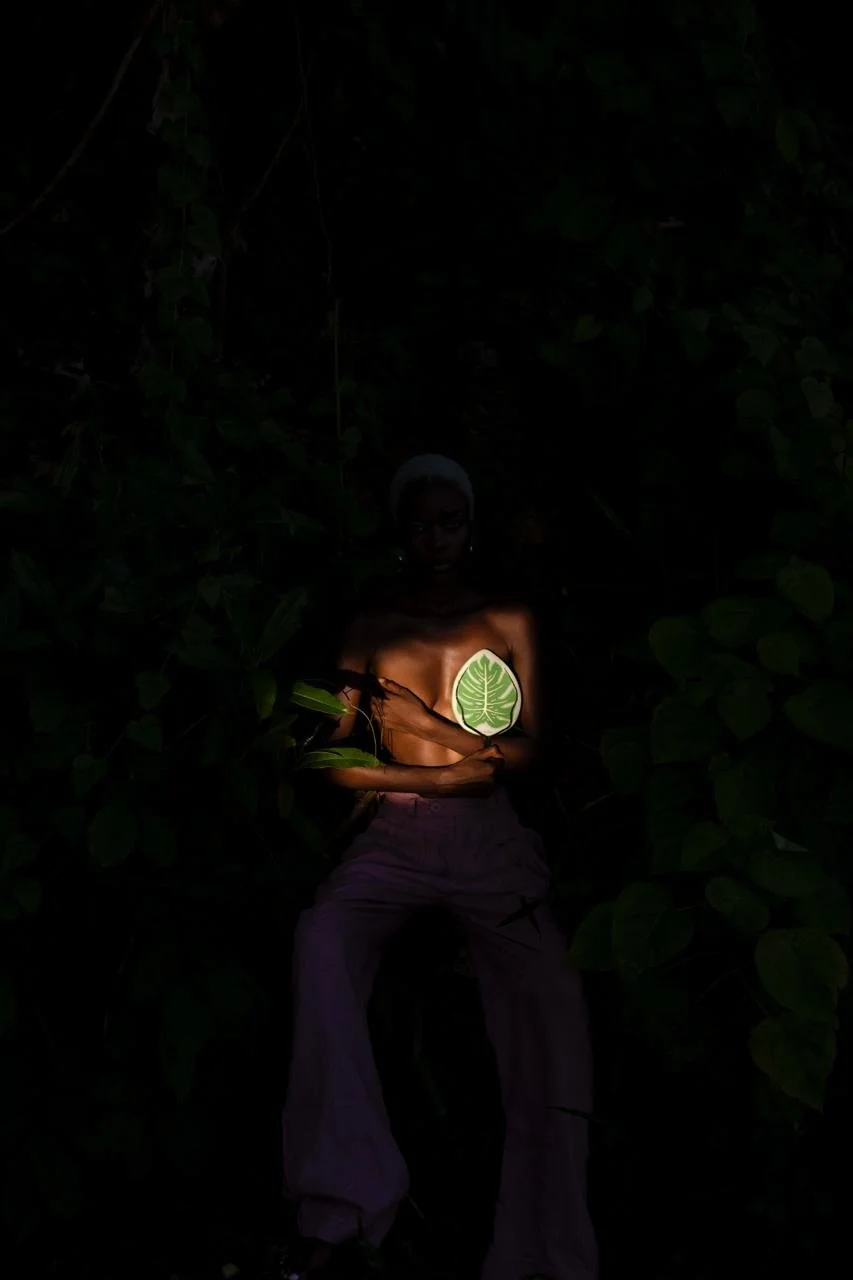
Small Monstera, Pubumésu, in conjunction with Potatohead Bali. Image courtesy of Pubumésu.
By mid-2011, I had done my initial designs, found a factory, and was ready to start the business. Advancing my viewpoint and becoming a voice for culture and craft in Indonesia within a global fashion context remained my driving force, but actually bringing Pubumésu to life drew upon the influence and support of so many people in my life. My time at Vivienne Westwood built the fantasy of my brand in my mind. My grandmother funded my first capsule collection built around my durian bag. And my friend from middle school, Emmelyn Gunwan (whose brother is one of the founders of Potato head and who runs Potato Head’s retail outlet ‘Escalier’ to this day), gave me the opportunity to test the market and launch my bag at her shop. The Blueprint 2012 showcase during Singapore Fashion week marked the moment at which I would say Pubumésu was fully launched. I had my full collection, a holistic narrative, and a proper photoshoot for my collection.
How would you articulate the unique selling point of your business?
I say that Pubumésu is 'Portable Culture', because we are selling culture—not just fashion—that people carry with them as they traverse their lives. Our pieces are joyful but functional. Our collections cross traditional seasonal boundaries. I have gone against the grain of doing the usual two fashion seasons, since we are also classified in the gifting and souvenir space. That is really how we’ve survived as a business: our pieces are relevant and sellable all year round.

Sketch of Banana fan by Putri Soediono for Pubumésu. Image courtesy of Pubumésu.
How have you balanced catering to your existing audience while appealing to new ones at home, and abroad?
Through the years, I had not quite taken full ownership of my branding and social media, mostly because I did not have a proper team in place. Until I was diagnosed with cancer, I was handling almost everything on my own.
We were also being pushed to do resort wear, but I am more interested in creating things that are actually functional for my daily life. As I was working through cancer, I felt a real need to take ownership of what had happened to me, and I told my team we needed to lean into stronger messaging. This has irritated and even annoyed a few customers, but it has also brought in a more aligned, committed following.
I am more determined than ever not to sacrifice my voice or my narrative just to satisfy someone else’s imagination of what Asia should be. I am not offering a fantasy of Asia; I am offering my Asia — seen through the eyes of an Asian woman, mother, designer, and entrepreneur.
“I am not offering a fantasy of Asia; I am offering my Asia — seen through the eyes of an Asian woman, mother, designer, and entrepreneur.”
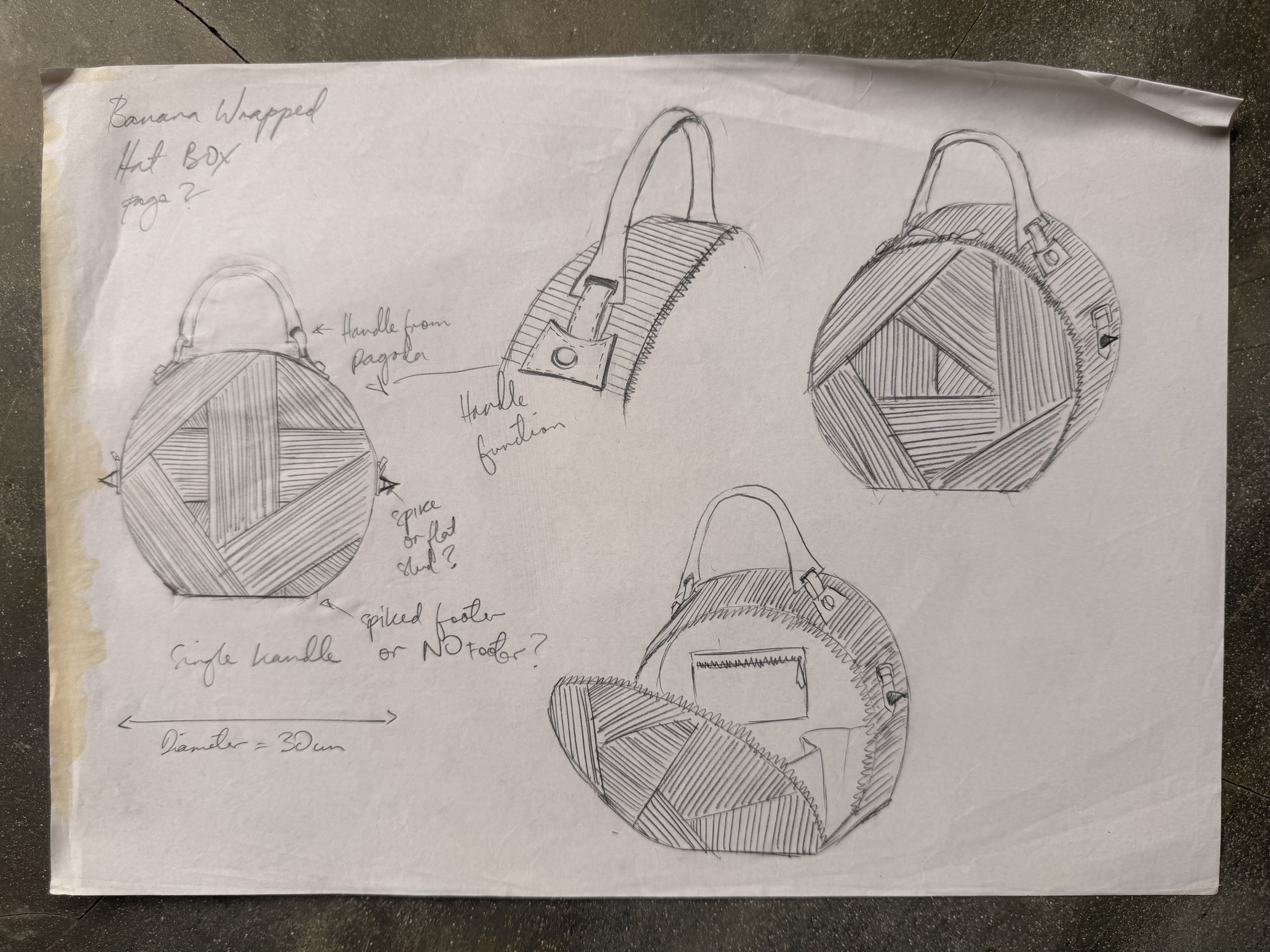
Sketch of Banana Wrapped Hat Box by Putri Soediono for Pubumésu. Image courtesy of Pubumésu.
How has your approach to Pubumésu evolved, if at all, over the years? What is your creative process?
I let the universe tell me what is going on. It sounds a bit maniacal, but my gift as a designer is being able to translate whatever the universe is trying to say to me. The Market collection literally came to me when I was hungover, and I realised that if I changed the way I looked at how things were presented, it could actually become a collection.
My creative process used to be all about building a beautiful sketchbook, but now it is more quick sketches, bouncing between Illustrator and hand drawing. There are no more perfectly curated sketchbooks; it is honestly just scattered pieces of paper everywhere. I need to feel the paper and feel the pen, so I do not think I will ever move completely into a digital process.
My design process also comes from a lot of kiki—which is basically brainstorming with your girlfriends or your best mates. Some of the best ideas come from letting other people talk about what inspires them or what problems they want solved. Then we move into sampling and just try it all out to see what sticks.

Sketch for Tongkol Fish fan by Putri Soediono for Pubumésu. Image courtesy of Pubumésu.
What has made you say yes to stockists and collaborators over the years, and how have they contributed to the success of Pubumésu?
Collaborations are great, especially when you are starting out. They can help raise your brand awareness and positioning, and they are also a solid way to network and expand your knowledge. For example, I am currently collaborating with Singaporean artist Reza Hasni. He draws a lot from his own culture, and it is exciting to work with someone who has collaborated with brands like Adidas, Versace Jeans and Berghain.
When it comes to stockists, we think about strategy from both a short‑term and long‑term perspective. Of course I am not going to say no to being stocked at places like Net‑a‑Porter, Harrods, or Browns—those are no‑brainers—but with newer brands, you have to look at how you can be mutually beneficial to each other.
In the end, it also comes down to whether or not I vibe with the founder or the designers. How are we supposed to make magic together if we do not even like each other?
How do you work on the positioning and reach of Pubumésu? Is there a marketing formula that is tried and tested? This could be through your own channels, working with established magazines or other platforms.
My two‑pronged approach with my business is “planting seeds” and “three degrees of Kevin Bacon.” It really is as simple as that.
It is always good to be able to talk about your business, because you never know who someone knows.
Here is an example: my best friend’s best friend from high school was a buyer at Harvey Nichols. I met up with her, we became friends, and I would send her my lookbooks and whatever I was working on. Then her ex‑colleague ended up working at Net‑a‑Porter. She sent him one of my lookbooks, and he emailed me and gave me my first large wholesale order.
How do you measure the success of your business? The indicators can be quantitative or qualitative, or a mix of both.
Consistently getting into the shops and doing partnerships that I would have only dreamt about is an indicator of success—like getting a call from Bergdorf Goodman, or getting into Takashimaya. My story with Takashimaya is crazy: I was sitting in for my first cycle of chemotherapy and I was opening up my emails and saw the email from the buyer. I am starting my cancer treatment and then all of a sudden, I finally get my foot in the door in Japan. So opening up new markets and being in department stores that I would have only dreamt about is one measure of success.
Being able to pay myself a salary is also one measure—still not quite there yet—but now I am able to pay for my child’s school fees and contribute financially to the household. My husband is happy about that.
My business partner and I also have this bit with each other when things get really hard. We tell each other: look cute, fly biz. Looking cute and sitting in business class is when we know we have finally made it.
What is the single biggest challenge of running the business? Conversely, what are the pleasures of running it?
Breaking the numerous glass ceilings above you is the biggest challenge of any business.
I broke the first ceiling with Net-a-Porter and now I am working on breaking the second ceiling with expanding the business.
The other challenge is also being aware enough to pivot when you see that you need to. That was us when we needed to come up with an entry level product, conversely, the fans were basically that eureka moment for us.
Every designer puts a bit of their soul into their work, and the best thing for me is when I see someone open up the fan for the first time and it brings them that pure joy. That was definitely one of the reasons why I still wanted to design, to pay that joy forward.
“Every designer puts a bit of their soul into their work, and the best thing for me is when I see someone open up the fan for the first time and it brings them that pure joy.”
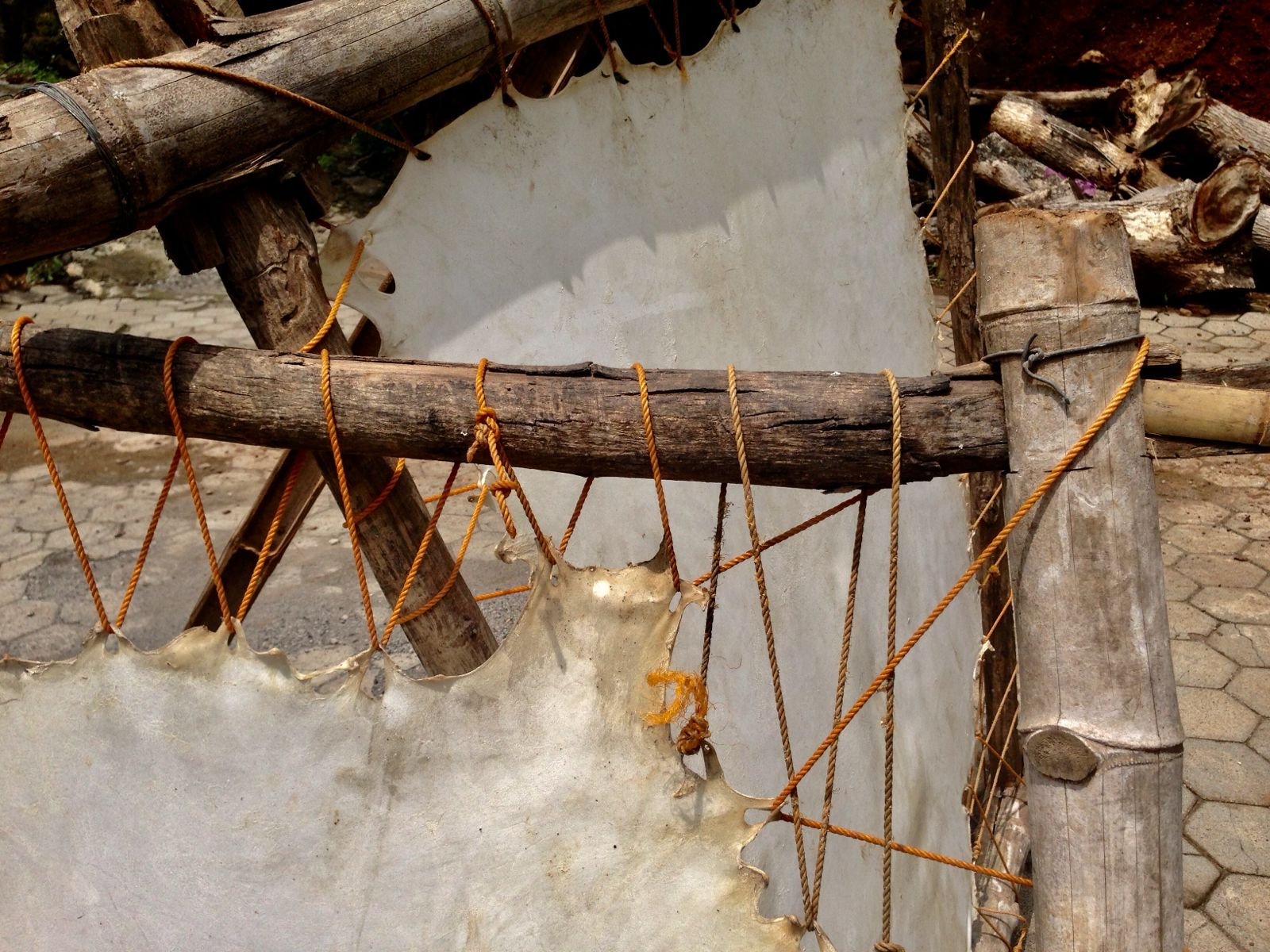
Pubumésu uses leather from cattle sourced from Java. Image courtesy of Pubumésu.
Tell us more about the key members of the team that makes the business work as a whole.
The first is Steven C Nebel. He is my unicorn. We call each other unicorns because we think alike. He is a beautiful mind, and we have understood each other through the best and worst of times. He has helped me as a sounding board, and believes in the dream that I have. He studied law and had his own architecture firm back in the US before moving to Asia to work in design strategy, so he understands the creative and the business side as well. If it were not for him, I do not think I would be in this position where I have the confidence to go to the next phase of my career.
The next person would be my husband. He may not be part of my team but he is the one that keeps the roof over my head. He has been my cheerleader and is the OG Fan of Pubumésu. People don't talk enough about that. The strife of the partner of a founder. He has kept me loved, protected, and sane in my personal life, so he is very essential.
Kian is my assistant and administrator, and my right-hand person. She is someone who gets the chaos that I live in and she is able to understand how I work and navigate it with no question. It also helps that her uncle directed a few of our shoots, so she has been in the realm of Pubumésu for a while now.
Feby is our fan craftsman; he is a fourth‑generation wayang maker, and his father was the first artisan we worked with. I have known Feby since he was in middle school, and after his father passed away, he took over the family business.
I am so proud of how he has brought the workshop to the next level, with his willingness to innovate and to trust me with my vision. He is now 27 years old, and I know his father would be looking down on him proudly.
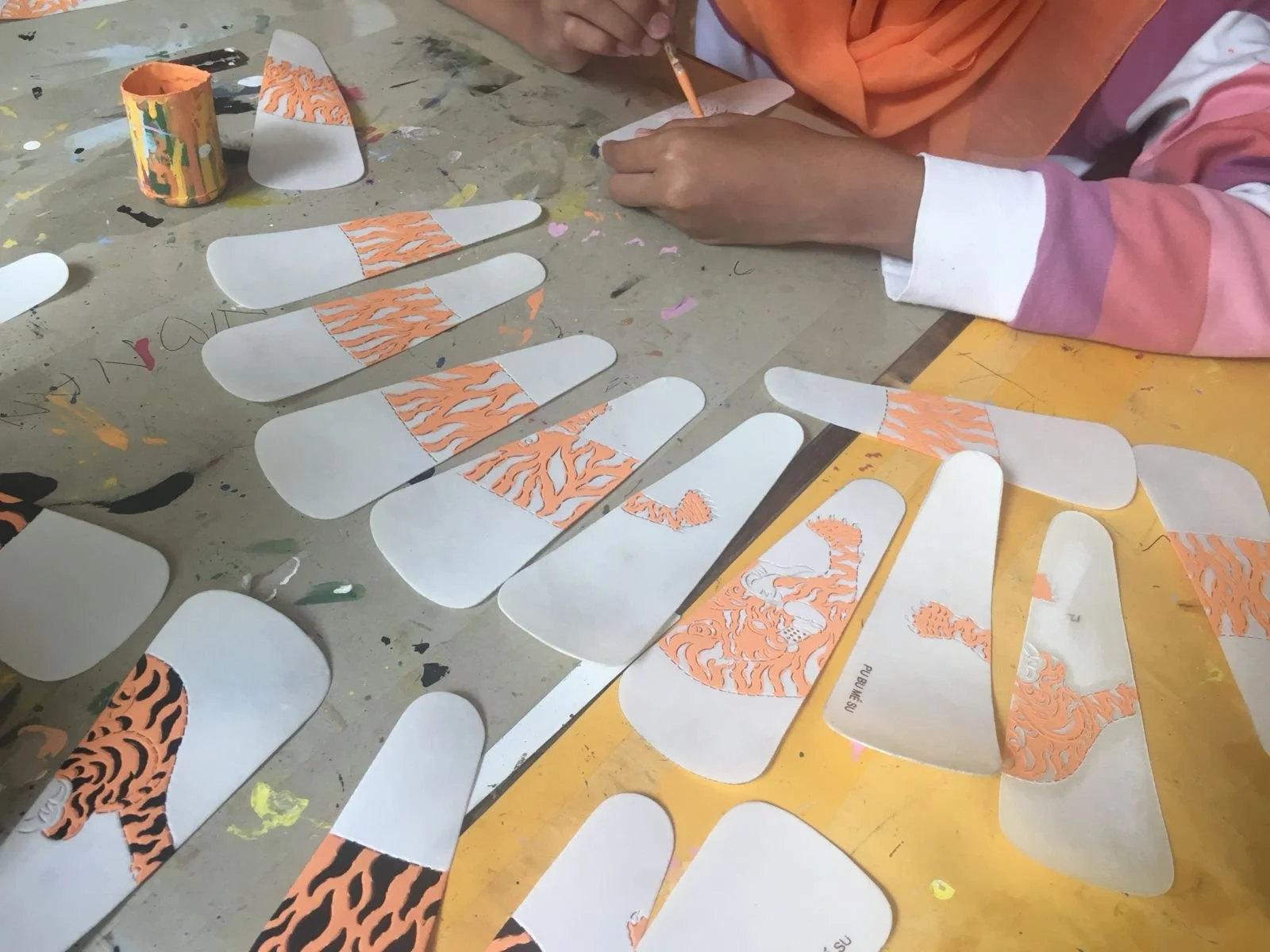
Assembling a Macan (Tiger) fan, Pubumésu. Image courtesy of Pubumésu.
How are you planning to further develop the business? This could be something you have already put into motion, or plan to do soon.
We are in the middle of expanding both our product line and our services, so over the next 6 to 12 months you will start to see homeware pieces and a consultancy arm emerging from the brand.
Like any brand, the long‑term dream is either to eventually sell to a larger conglomerate or to evolve Pubumésu into a holding company. Whichever path we take, I feel there is still so much to be said — and reclaimed — when it comes to the Asian narrative, and I want our work to be part of that conversation.
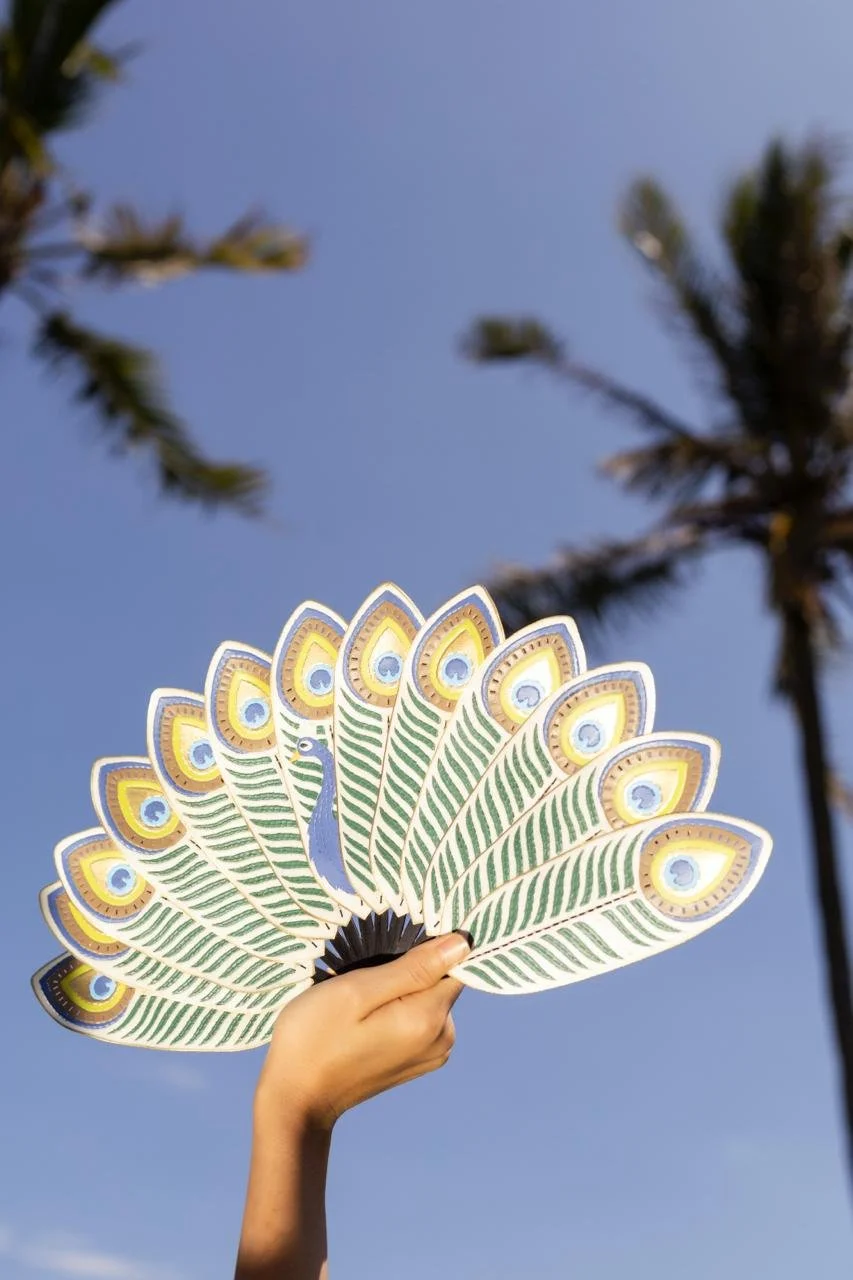
Peekaboo, Pubumésu. Image courtesy of Pubumésu.
What can we expect from Pubumésu for the rest of 2026?
We will be launching with our second Japanese stockist, THENIME at Baycrews Select in Tokyo, this summer. We are also building a few more partnerships with resorts and hotel brands that I cannot share just yet. And for Autumn/Winter, we will be releasing our Harrods‑exclusive design. Perfect timing for Christmas.
Next year is already looking busy for Spring/Summer 2027. We are working towards travelling pop‑ups to launch our new collection, Bless This Beach House, and we have a collaboration lined up with Spanish brand Mint & Rose on a footwear design.
There are definitely a lot of plates being spun at the moment. Hopefully we will be doing it while looking cute and flying biz next year!
More at pubumesu.com.