
PhotoVogue Festival 2026: East and Southeast Asian Panorama
Spotlighting photographers from Southeast Asia
The PhotoVogue Festival returns for its tenth edition, continuing its role as an international platform for contemporary photography. Organised by Vogue Italia, the annual event has positioned photography as a site of inquiry since its inception, inviting image-makers to engage with social and cultural questions through exhibitions, talks, and public presentations. The festival runs from 1 to 4 March 2026 at the Biblioteca Nazionale Braidense in Milan, coinciding with Milan Fashion Week.
The current iteration, titled Women by Women, centres on the ways women represent and imagine themselves, questioning assumptions around visibility and recognition while reframing the female gaze for contemporary contexts beyond simplified binaries. The programme also introduces the East and Southeast Asian Panorama section of the exhibition. Following an open call announced by PhotoVogue in June 2025, a jury of Condé Nast editors selected forty finalists from across the region, including photographers and videomakers from the diaspora. Collectively, the works reflect the region’s cultural breadth and artistic complexity, spanning fashion imagery, documentary approaches, visual research, and personal storytelling.
In this article, we speak with four finalists from Southeast Asia to find out more about the works they are presenting as part of the festival.
Vân-Nhi Nguyễn (Vietnam)
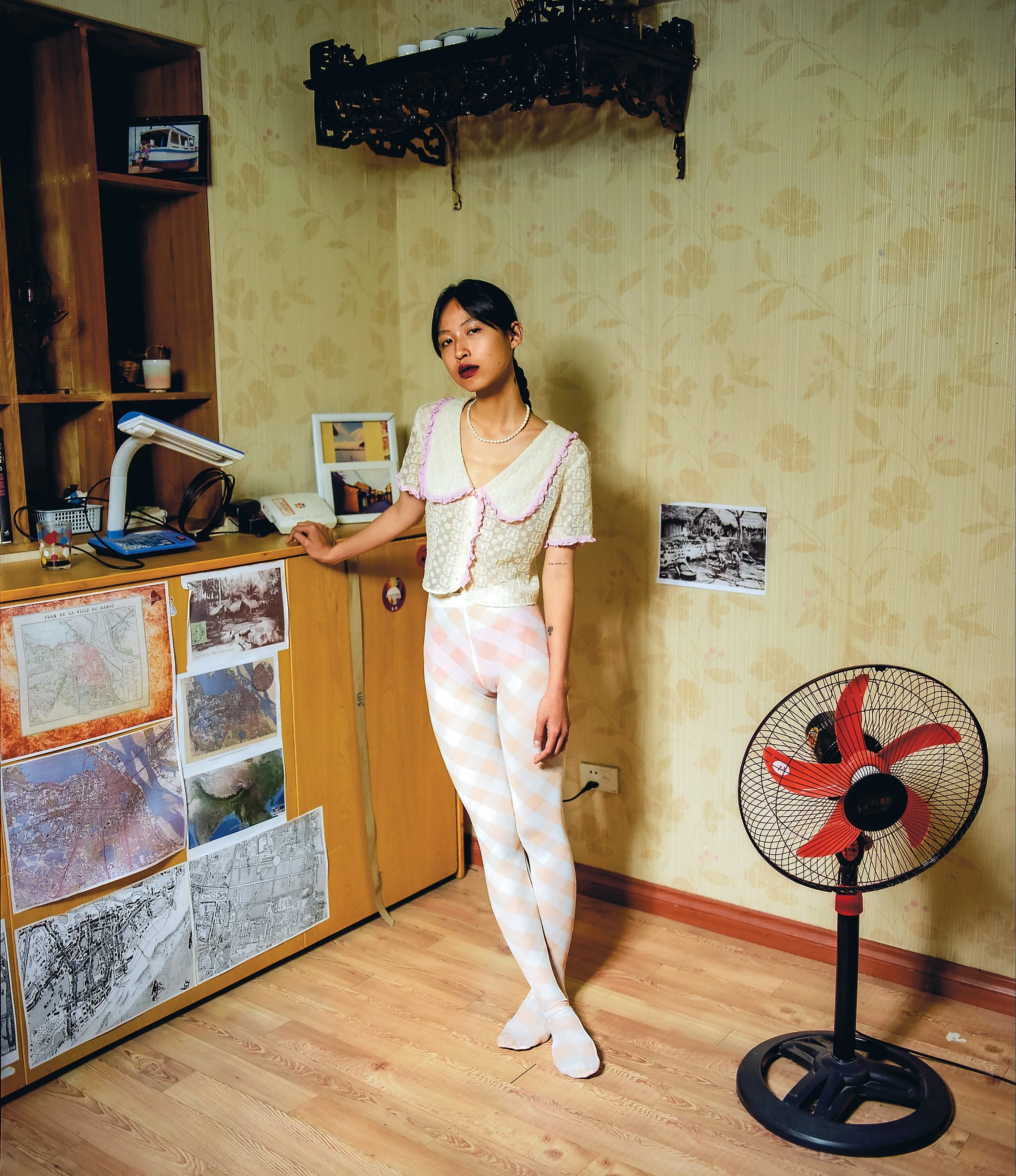
Vân-Nhi Nguyễn, As You Grow Older, 2022. Photo taken from PhotoVogue’s website.
Vân-Nhi Nguyễn presents As You Grow Older and Untitled (Mother Dearest), two projects examining the cultural and structural shifts shaping contemporary Hanoi. Developed after her return to the city in 2020, the works respond to rapid economic expansion, historical erasure, and the marginalisation of youth, queer communities, and women, re-centring those who continue to produce culture outside official narratives.
Moving between fiction and reality, the works find continuity in intimacy and care. “Amidst turbulence, I find vital resistance and hope within womanhood and female friendship,” Nguyễn says, tracing generational shifts from her mother’s era to her own. She further explains, “Existing outside traditional domestic structures, these moments of mutual recognition function as vital refugiums of hope.” At the festival, the series is presented in book form for the first time, offering what Nguyễn describes as “a different perspective” on its reception.
Farid Renais Ghimas (Indonesia)
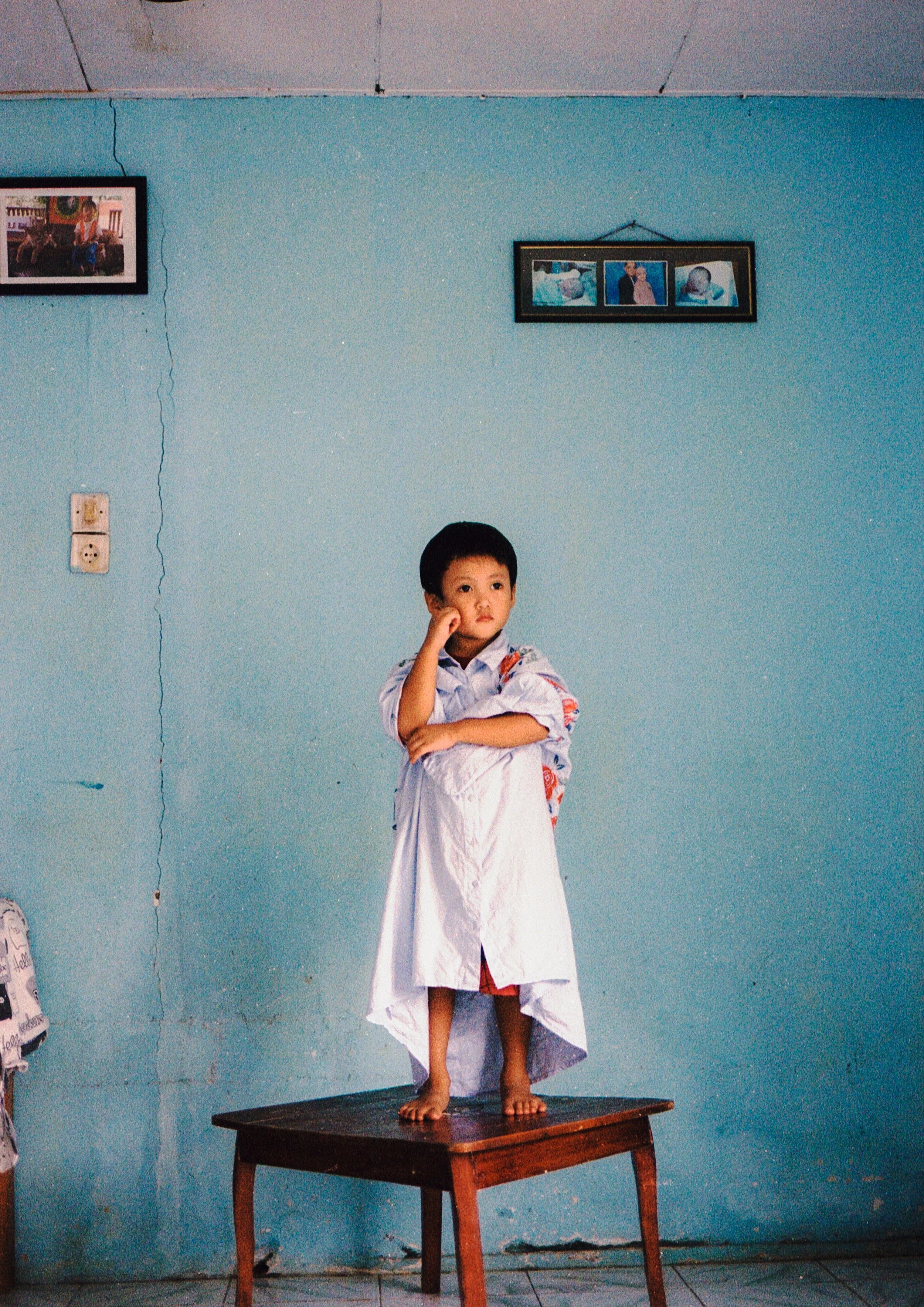
Farid Renais Ghimas, Angan-Angan Harsa, 2022. Photo taken from PhotoVogue’s website.
Farid Renais Ghimas' Angan-Angan Harsa, drawn from his photobook of the same title, brings together moments of joy drawn from everyday life in his hometown of Bengkulu, Sumatra. Photographed in the summer of 2022, it foregrounds family, friends, and community members, celebrating the beauty of the mundane as a foundation for personal and collective identity.
The series was initially developed as Ghimas’s final-year project at Central Saint Martins. It was later published by independent publisher Jordan, jordan Edition in 2024, and began as a personal gesture rather than one intended for wide circulation. “It was simply a way for me to reconnect with my family members after years of being abroad.” Ghimas says. Describing the project’s inclusion in the PhotoVogue Festival, he remarks “The exhibition is an opportunity to share that personal story in a broader space, and to show that such an intimate project can exist within that wider conversation.”
Jake Verzosa (Philippines)
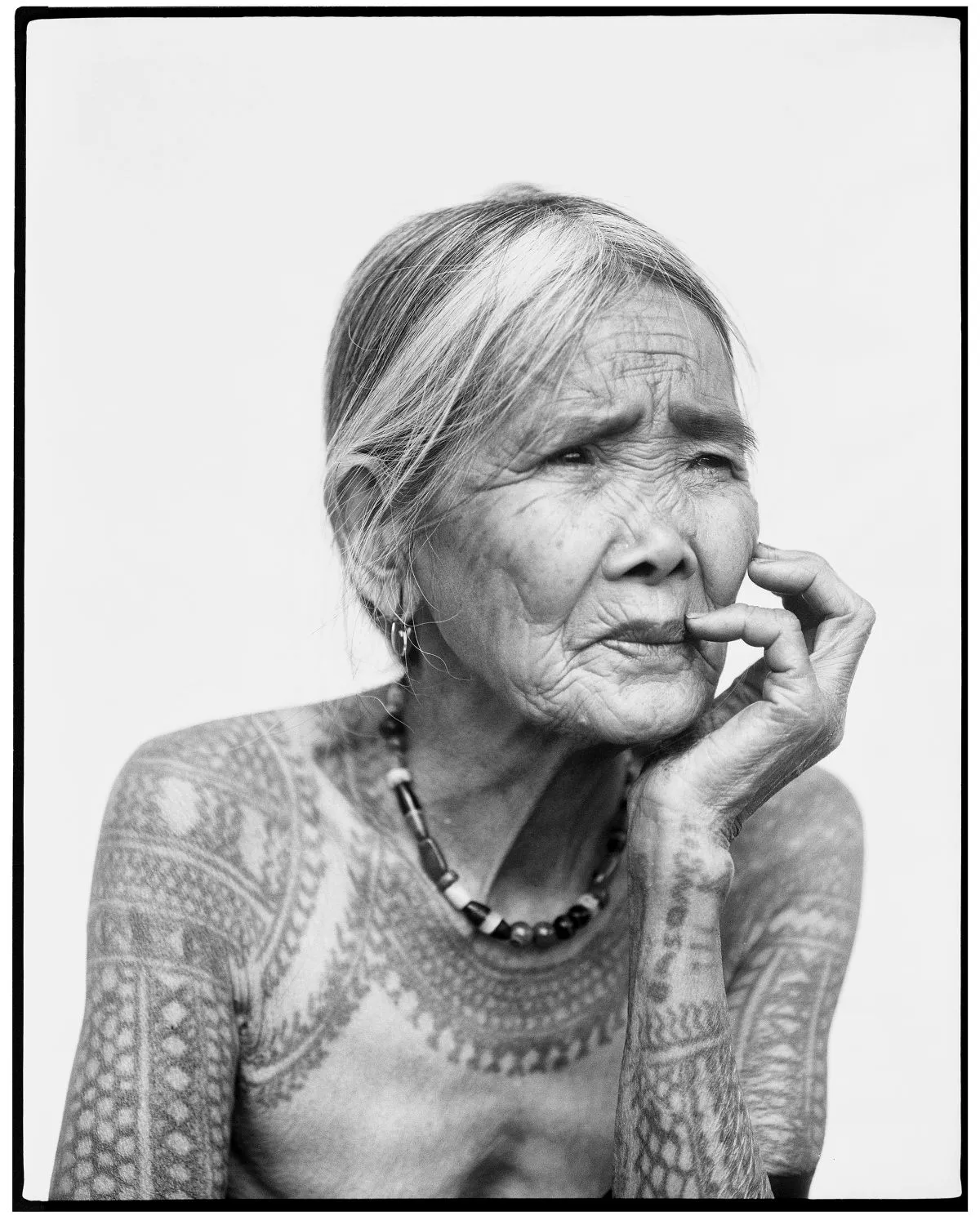
Jake Verzosa, The Last Tattooed Women of Kalinga, 2009-2012. Photo taken from PhotoVogue’s website.
Jake Verzosa brings together The Last Tattooed Women of Kalinga, a portrait series documenting Kalinga women who bear traditional batok tattoos from the northern Philippines, his place of upbringing. Taken between 2009 and 2012, the work records hand-tapped markings once central to ideas of beauty, strength, and identity, at a moment when the practice had largely been abandoned by younger generations.
Rather than framing the work through loss, the series emphasises presence and dignity. “What I want audiences to take away is not sadness, but recognition.” Verzosa explains, underscoring the women’s bearing and histories. As interest in batok continues to resurface, he adds, “For me as a Filipino photographer, it is also a reminder that documentary work authored from within our own region, on our own terms, belongs in these spaces.”
Ying Ang (Singapore)
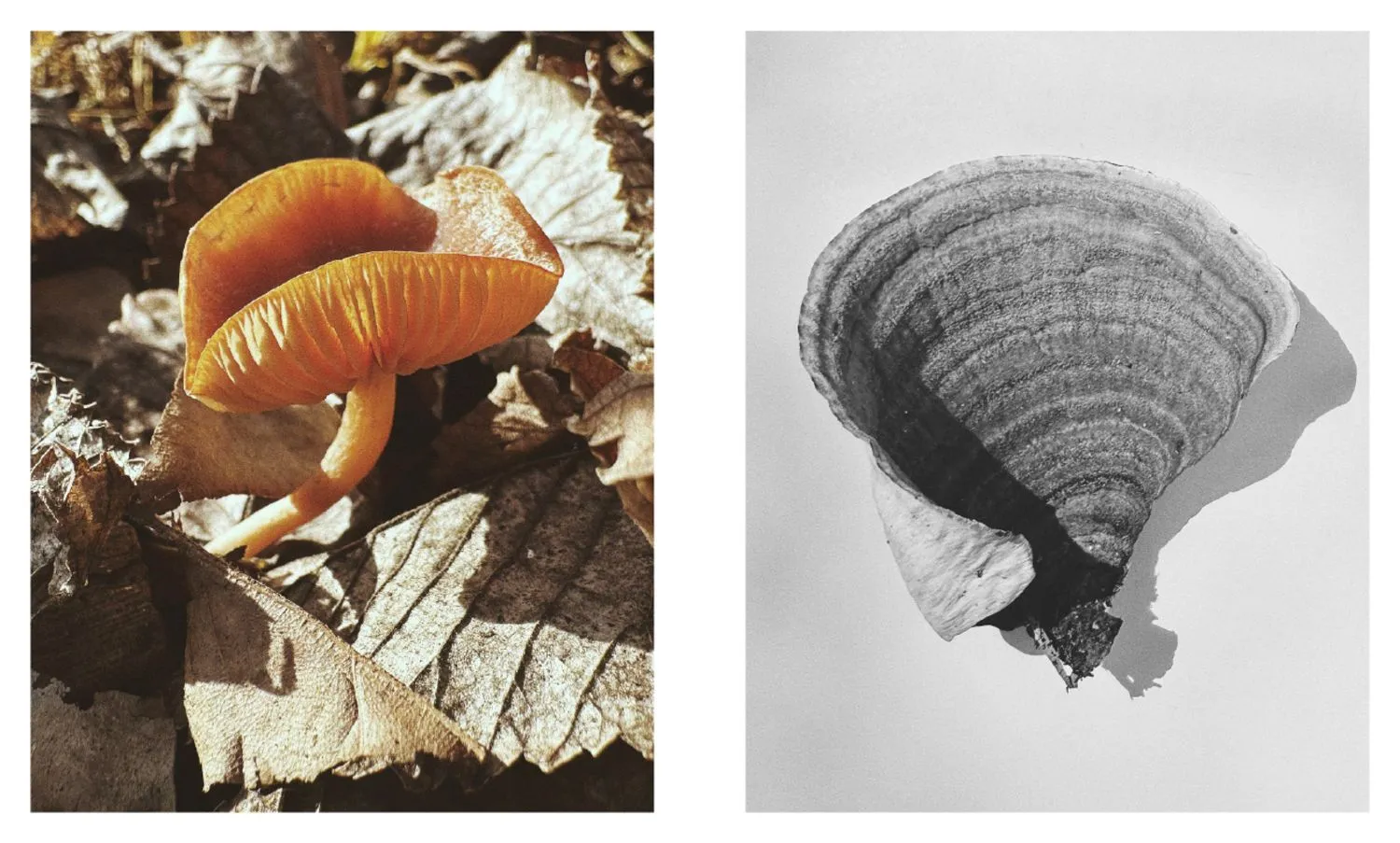
Ying Ang, Fruiting Bodies, 2025. Photo taken from PhotoVogue’s website.
In Fruiting Bodies, Ying Ang reimagines mushrooms as metaphors for womanhood, using still-life portraits to explore value beyond fertility. The series began on daily walks through inner-city parks near her Melbourne home, capturing mushrooms that echo human portraiture while drawing attention to the unseen mycelium beneath the soil, highlighting invisible labour, interdependence, and endurance.
Developed as the Australia-based photographer approached a later phase of her fertility, the work emerged through a process of self-examination. Ang elaborates, “The project questions my own value as a middle-aged woman and interrogates my internal misogyny by actively looking for the evolutionary function of women past child-bearing age.” Presented at the PhotoVogue Festival, she hopes that Fruiting Bodies reaches audiences beyond familiar circuits, foregrounding visual storytelling as a form of knowledge and understanding rooted in lived experiences.
PhotoVogue Festival 2026 runs from 1 to 4 March 2026 at Biblioteca Nazionale Braidense in Milan. For more information, click here or visit @photovogue on Instagram.