
Conversation with Fashion Designer Carla Zhang
LE NGOK: The Pot, Oneness, Zibag and more
Carla Zhang is the founder and designer of LE NGOK, which was established in Manila in 2023. Since 2024, it has been operating out of Shanghai. LE NGOK is probably best known for The Pot, its signature 3D printed bag. This has been followed by the upgraded The Pot .2, as well as the Oneness bag created from zips and more zipper bag styles, including Zibag No.3 and Zibag No.5.
Experimenting boldly with materiality and visuality through bags and ready-to-wear clothing, LE NGOK is an evolving manifestation of Carla’s creative vision. We speak with Carla about her ideas, processes and plans as LE NGOK establishes itself in Shanghai.
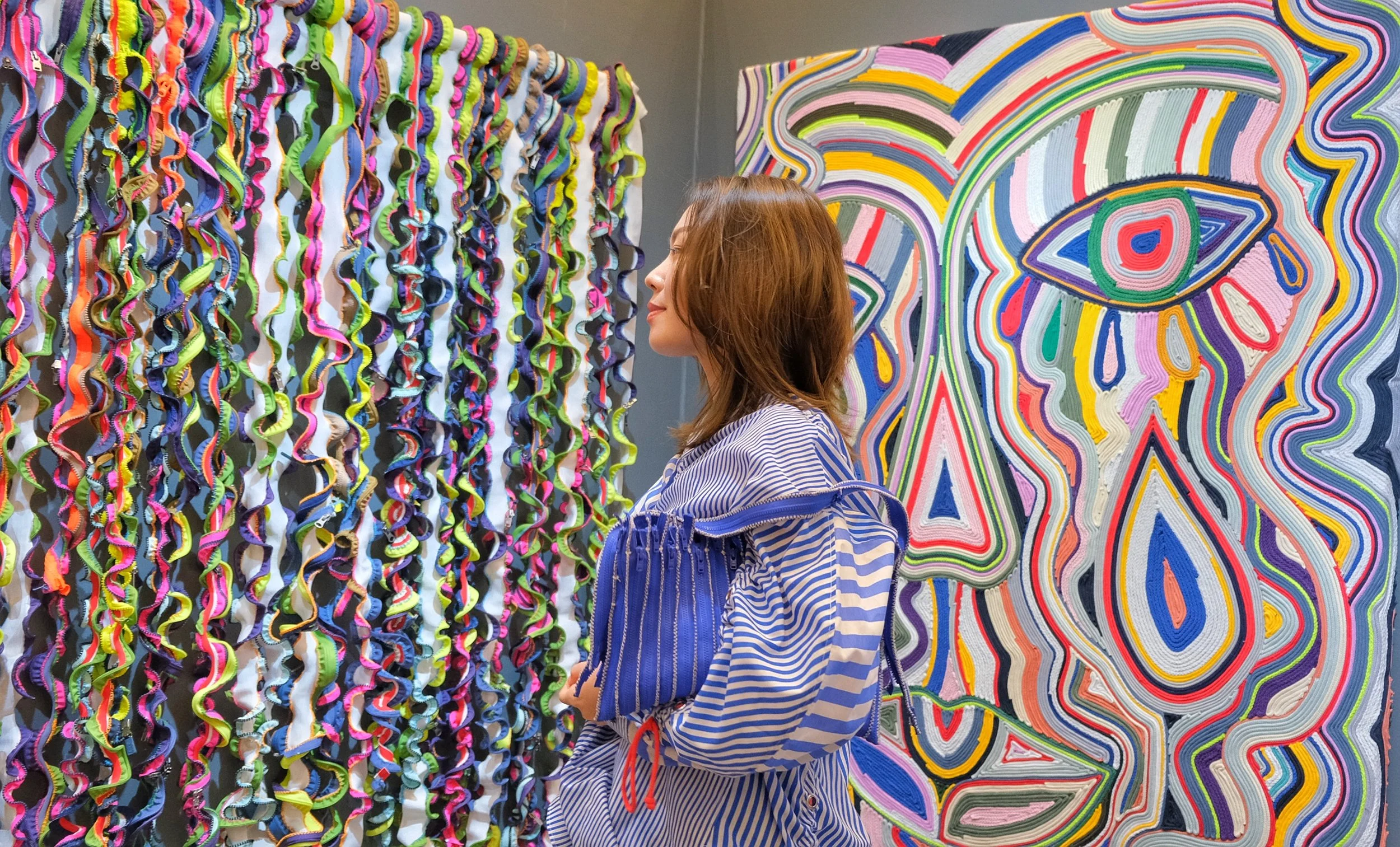
Carla Zhang. Photo by Arttoys PH.
Could you start by telling us why you named your business LE NGOK? What does it mean?
The name LE NGOK is deeply personal: Le (乐), my nickname, representing happiness, joy, and curiosity are feelings that embody my brand's spirit. Ngok honours my mother, whose unwavering belief has supported my dream from the start.
How would you describe what LE NGOK does?
LE NGOK is conceived as a journey for immersive storytelling, one where personal narrative, emotional tension, and artistic expression converge. The brand was established in Manila in 2023 before arriving in Shanghai in 2024, navigating among experimental fashion, mixed media and thoughtful craftsmanship.
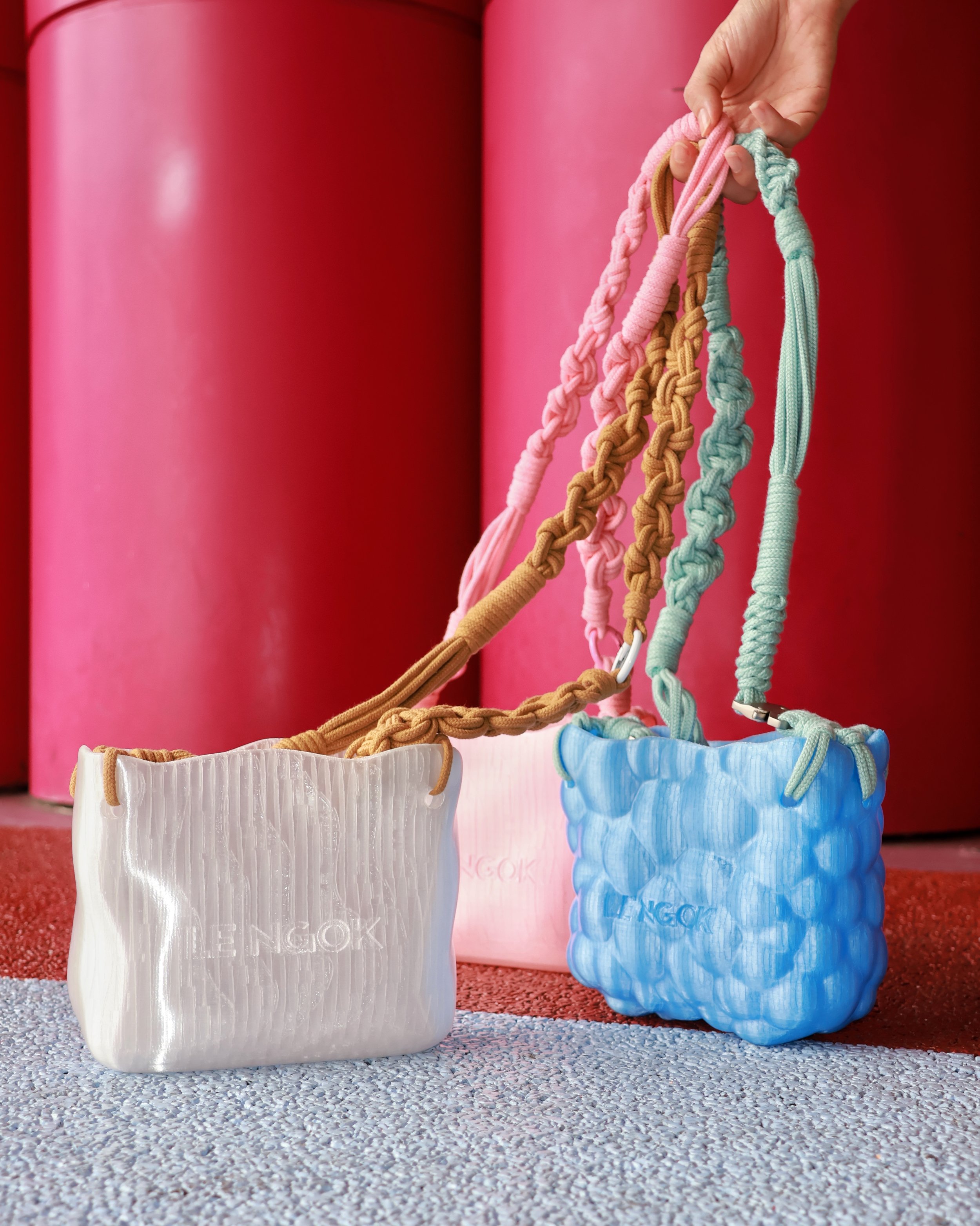
The Pot .2. Image courtesy of LE NGOK.
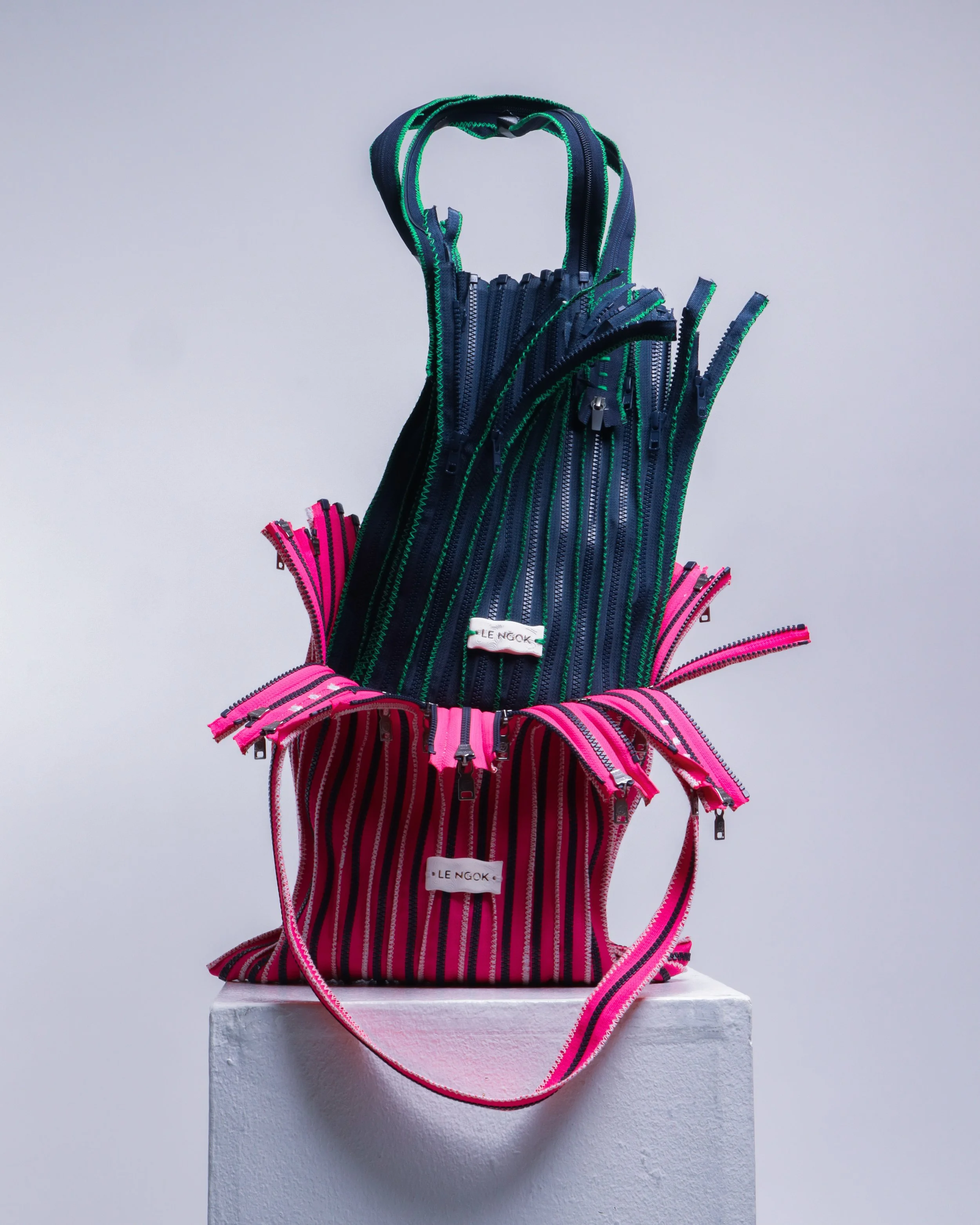
Oneness tote bag. Image courtesy of LE NGOK.
How did you begin to make The Pot, LE NGOK's signature 3D bag? And how have you developed them over the years? How do you determine the sizes and colourways to make each bag one of a kind?
It began with my interest in experimentation. I bought a 3D printer and started teaching myself how to use it back in college, and some of the accessories from my graduate collection Cyber Gaze were already made using 3D printing. I later became interested in developing a bag collection through the same process, which is how The Pot came about.
The Pot was produced entirely in my own studio. It was available in two sizes and multiple colorways, paired with handcrafted straps, and each piece was one of a kind. At that stage, it was about expressing creative ideas freely.
Over time, I gathered feedback from customers, along with my own experience using the bags, to understand which size felt most practical and which colorways resonated the most. This process led me to refine the design and eventually work with a specialised 3D printing facility. The Pot .2 is a version that responds more closely to the market, featuring fewer but more carefully selected styles, a slimmer body, and a single size, along with more versatile straps and improved printing quality.
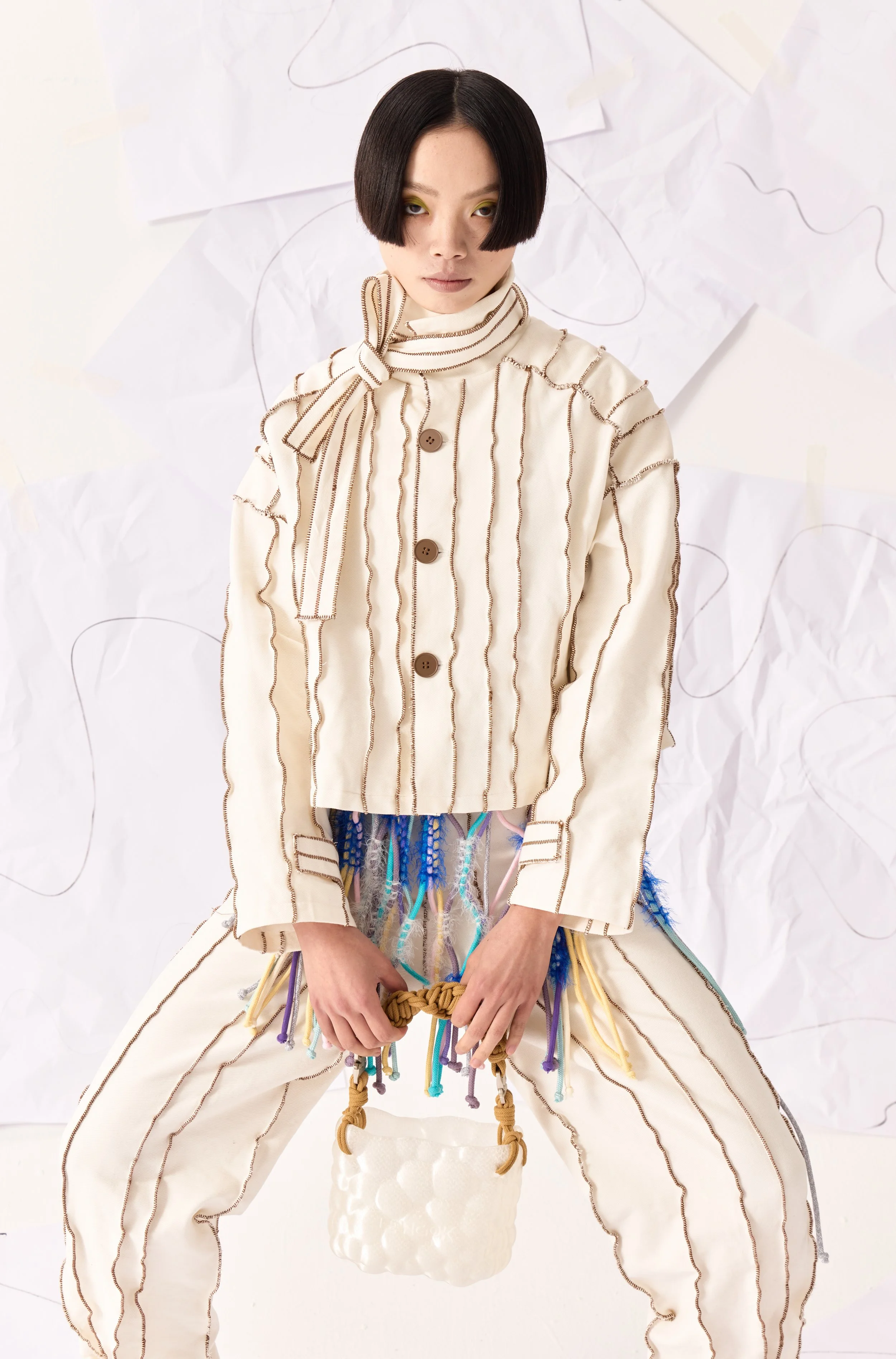
‘Glitch Theory’ ready-to-wear. Image courtesy of LE NGOK.
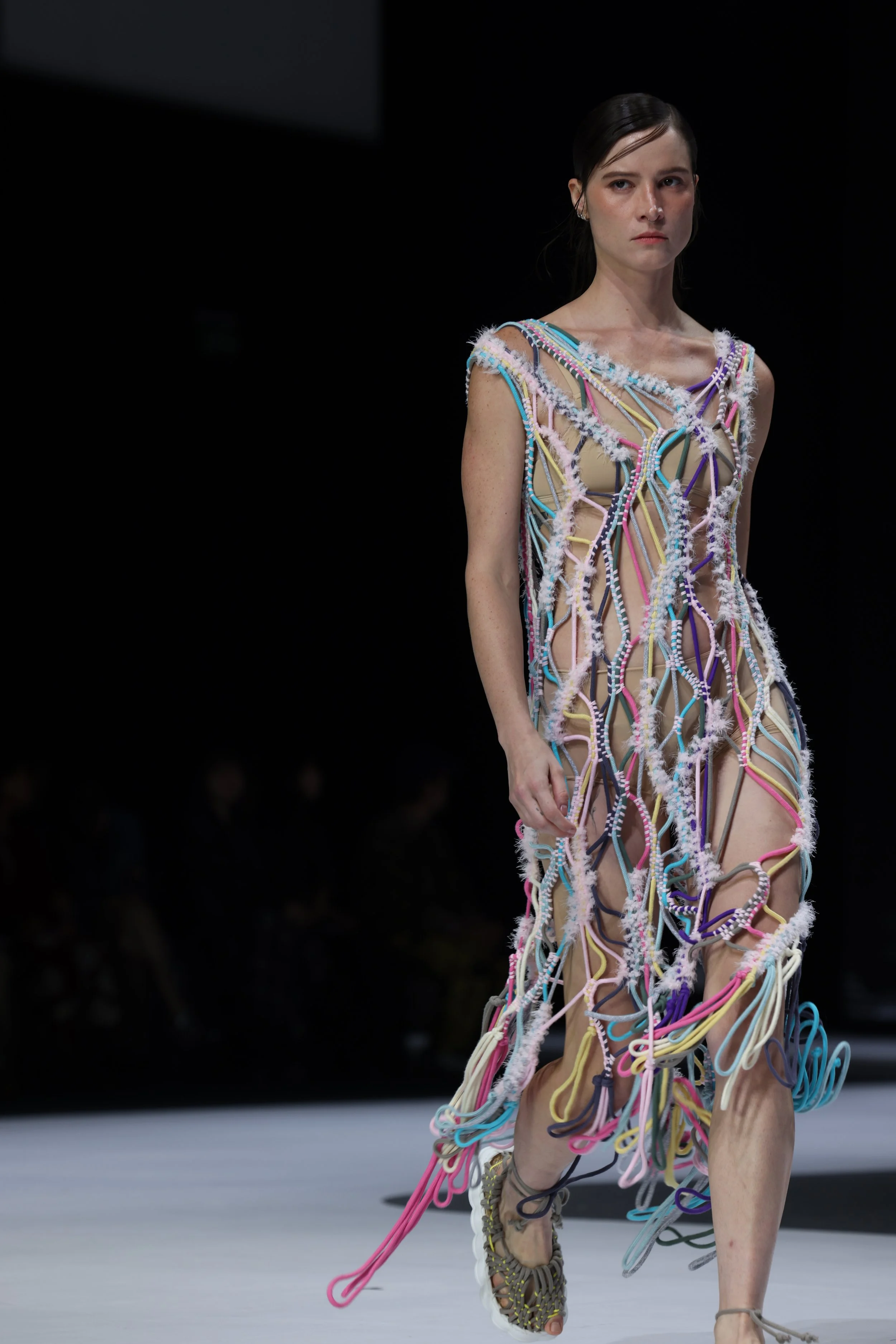
Redress 2025 Runway. Image courtesy of Redress Hong Kong.
In addition to The Pot, you also make clothes that are recognisably LE NGOK, such as in the collections Oneness, Cyber Gaze and There's Nothing Wrong. The materials, silhouettes and colours are bold and experimental. How do you generate the ideas for them and follow through on execution?
Artistic storytelling lies at the heart of LE NGOK. Each collection unfolds like a chapter, translating lived experience and personal reflection into tactile, wearable form. The ideas often emerge from what I am going through at a particular moment in life, so in many ways, the evolution of the brand runs parallel to my own journey.
I generally approach my work through two types of collections: artisanal and ready-to-wear. The artisanal collections are where artistic expression takes the lead. They allow me to explore ideas more freely and push the boundaries of form, material, and silhouette in a more experimental and avant-garde way. These pieces are often created for runway presentations, exhibitions, or special projects, where the focus is on expressing a narrative, an emotion or a concept through clothing.
The ready-to-wear collections are where those ideas are distilled into garments meant for everyday life. Here, I think about how the language of the brand can translate into pieces that people can truly wear and live in. It becomes a process of balancing experimentation with practicality, maintaining the boldness and identity of LE NGOK while shaping it into clothing that connects with people.

Participation in the Ontime Show trade exhibition. Image courtesy of LE NGOK.
There is also the Oneness Zipper Tote/Multi Bag. How does it complement The Pot? Or what does it achieve for you as a designer?
The Oneness Zipper Tote/Multi Bag was part of the Oneness ready-to-wear capsule collection. It was born from the idea of creating designs that are versatile and inclusive, suitable for all genders and sizes. Seeing positive and constructive feedback from clients has been incredibly rewarding as a designer.
Compared to The Pot, the Oneness bag is decidedly more functional. I have personally been using several of them as everyday bags even today. The concept of the Oneness bag also inspired further explorations in my RTW 02 collection, Glitch Theory, leading to the creation of additional zipper bag styles, such as Zibag No.3 and Zibag No.5.

Development of yarns and knitted textiles. Image courtesy of LE NGOK.
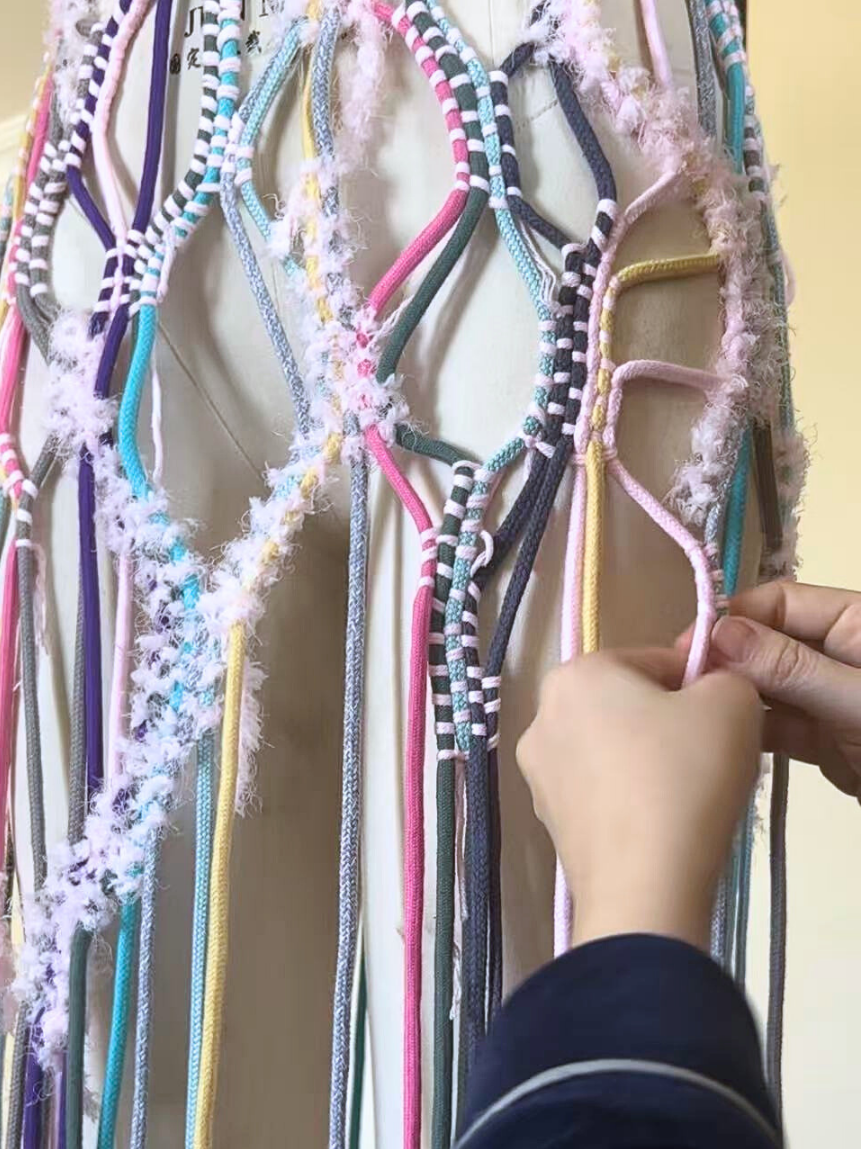
Freestyle weaving behind the ‘Glitch Theory’ collection. Image courtesy of LE NGOK.
Do you work alone? Who do you collaborate with to make LE NGOK thrive?
I run LE NGOK independently and remain closely involved in every part of the process. At the same time, the brand thrives through collaboration with a wider network of people, including artisans, interns, part-time workers, freelancers, and production partners across different facilities and factories. I hope that one day I can build a full team to grow the brand further.
I am also open to collaborations with other designers, artisans, or brands. It is always exciting to connect with people whose work I admire and explore new ideas together.
You have had lots of coverage in magazines, such as Elle Singapore and Design Anthology recently. What do you think makes LE NGOK stand out? What is its unique selling proposition?
I think what makes LE NGOK stand out is really the balance between staying true to the core identity of the brand while continuing to evolve. Over time I have realised that building a brand is not about one single breakthrough idea, but about doing the essential things consistently: continuing to create collections, staying connected to the market, learning from feedback, and constantly improving from there.
At the same time, I try to remain flexible and open to new opportunities. For me, the unique proposition of LE NGOK comes from this ongoing process: combining experimentation, artistic storytelling, and a willingness to evolve.
I still see myself as being in the stage of exploration, finding the right position for the brand and understanding where it can grow. In that sense, the brand is still very much on a journey, and every collection is part of that process.
You moved from Manila to Shanghai. What motivated the move, and how has it impacted your work as both a designer and an artist?
I moved from Manila to Shanghai after spending most of my formative years in the Philippines. I had lived there since I was a teenager, studying, growing up, and eventually starting my brand, so it shaped a large part of who I am. After some time, I began to feel the need to step outside that familiar environment and experience a different perspective of the fashion world.
Shanghai felt like the right place because it offers access to a much larger fashion ecosystem. Being here has allowed me to better understand how a brand operates on a bigger stage, especially in terms of industry relationships to production networks and supply chains. The energy and scale of the industry here constantly push me to think more critically about how a brand grows and evolves.
Art is inseparable from my design practice. From the initial inspiration to experimentation and eventually the presentation of a collection, artistic thinking guides the process. In that sense, regardless of where I am based, the dialogue between art and design remains at the core of my work.
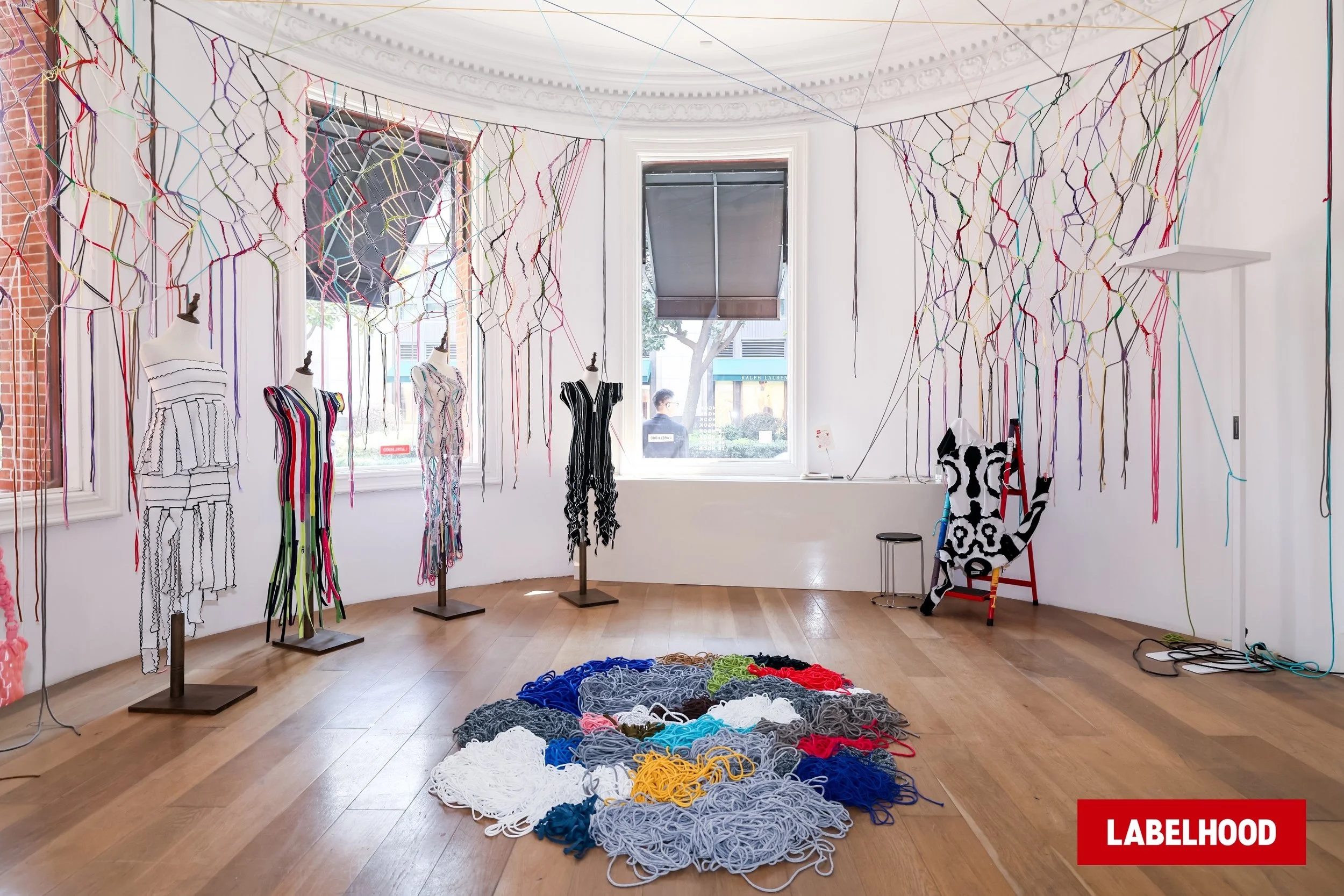
Exhibiting at the 19th season of the LABELHOOD Pioneer Fashion & Art Festival. Image courtesy of LABELHOOD.
What does Manila offer that Shanghai does not, and vice versa for your creative practice as a whole? Could you share one or two places of inspiration in Manila and Shanghai?
I feel very fortunate to have completed my fashion studies and launched my brand in Manila. The fashion community there is relatively small, yet very warm, generous, and supportive. It was there that I first gained the confidence to present my work and engage directly with an audience. Those early interactions were invaluable, giving me firsthand insight into how people respond to my designs in an immediate and personal way.
Shanghai, by contrast, operates on a much larger scale. The industry moves at a faster pace and is far more competitive. When I first arrived, many people in the fashion industry were saying that it was not an easy time for a new brand. The economic climate was challenging, and the environment could feel unforgiving.
At the same time, coming to Shanghai with no connections, I had to start entirely from the ground up: finding my place in the market, forging new networks, setting up my studio and business and managing production. That sense of uncertainty became the starting point for my last collection, ‘Glitch Theory’. It reflected an attempt to uncover structure amidst chaos and to embrace the uncertainties inherent in every creative decision.
Looking back, the journey has been truly transformative. It taught me resilience and helped me grow, both professionally and personally. I feel grateful to have experienced life in both cities; their different rhythms and cultures have influenced who I am and continue to guide the way I think, create, and build my practice.
“That sense of uncertainty became the starting point for my last collection, ‘Glitch Theory’. It reflected an attempt to uncover structure amidst chaos and to embrace the uncertainties inherent in every creative decision.”
Could you tell us about upcoming collections/projects in 2026?
The new collection will continue the craft and technical experimentation from my Glitch Theory collection. It explores happiness, questioned through my own burnout in a fast-paced world. When was I last truly happy? It became my personal discovery of that question. Inspired by the sharp critique in Steve Cutts’ Happiness and the playful curves of Gustaf Westman’s work, I’m crafting a visual dialogue around the pursuit of joy within a contradictory modern life.
More at lengok.com.