
Through the Lens: Wanjie Li
Image-making as research, method, and inquiry
‘Through the Lens’ is a series that explores in detail the images of fashion image-makers in Southeast Asia, shedding light on their creative and technical processes.
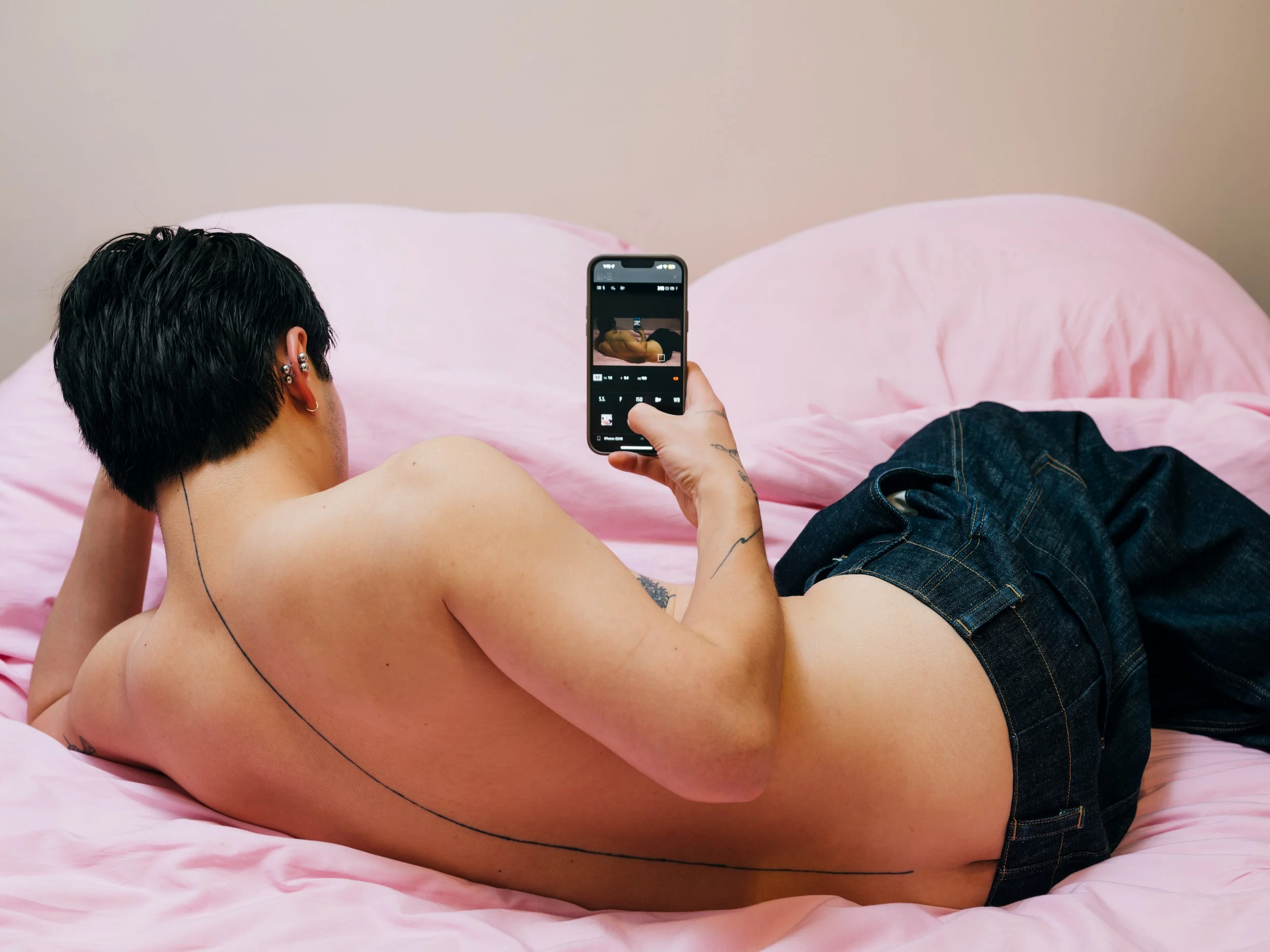
Wanjie Li, Hands free (not really), 2025. Image courtesy of the photographer.
Wanjie Li is a photographer and researcher working between image and inquiry. Hailing from Singapore, he is in his final year of a BA in Anthropology and Political Science at Tufts University. His studies inform a cross-disciplinary practice that engages with the visual language of fashion and advertising. Featured in Vogue Singapore and i-D Asia, his portfolio also includes commissions for Louis Vuitton and RIMOWA.
In this interview, Wanjie reflects on his evolving relationship with photography as he prepares to begin a PhD in Anthropology at Columbia University later this year.
Hi Wanjie! To start, could you tell us a bit about your background? When did you first develop an interest in photography, and what led you to pursue it more seriously?
I cannot say for sure when photography became a “serious” pursuit. I do not know if it is serious, even now. For a while before studying at university, starting in my late teens, I freelanced more consistently in fashion photography, and in that regard, photography, as a labour that I sometimes sold, was “serious” work. Still, it was work I fell into; the industry in Singapore, where I grew up, was so digitally networked and tight-knit that someone with as little experience as I had could land wonderful gigs. These days, photography is more playful for me, besides being a medium I enjoy thinking with.

Wanjie Li, Sickle and Prada, 2024. Image courtesy of the photographer.
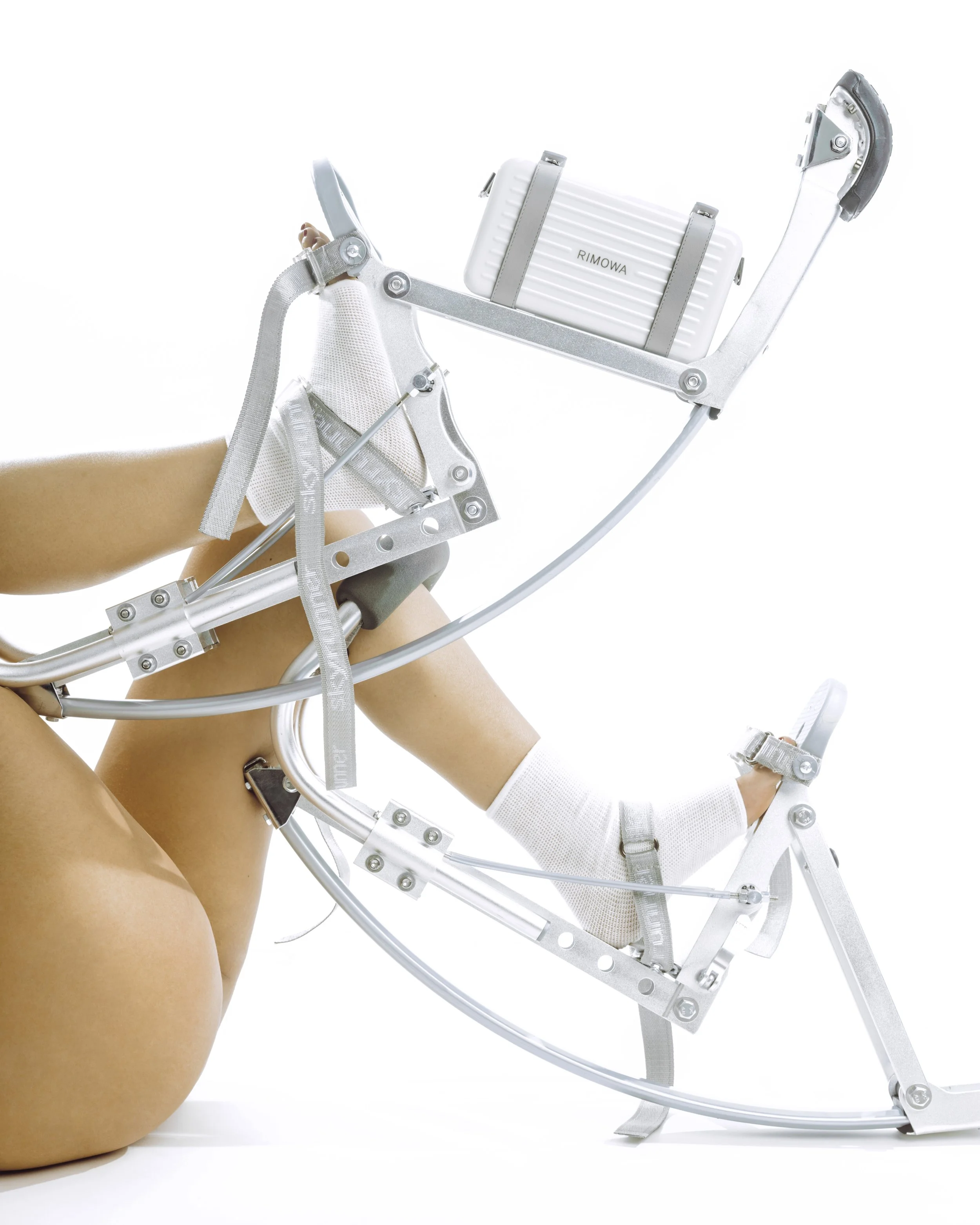
Wanjie Li, Outtake for RIMOWA x Vogue Singapore, 2020. Image courtesy of the photographer.
What inspirations or influences have shaped your practice? And how would you describe the evolution of your visual style over the years?
Ren Hang’s work was everywhere in the 2010s. Everyone who was on Tumblr and Instagram then, as I was, must have been familiar with his prolific output. His photography is particularly somatic because most of it is nude, in line with his philosophy; these are not images you have to approach with your intellect, although they are, of course, complex. The point is to feel it with your body. This preoccupation with images you feel before seeing or understanding is something I first learnt from him. It is the reason I love Leslie Hewitt’s work, for instance. It is also the reason I love Mapplethorpe, who takes Ren Hang’s eroticism into a higher key, and who was more self-conscious about contributing to a classical fine arts tradition.
That said, the way I take photographs today is not as “automatic” or intuitive as I understand Ren Hang to have practised. I think this is a function of studying art at university, or at least in a programme like the one I attended. The pedagogy of the Museum School in Boston is largely focused on developing conceptual rigour. It is a different place today from when Nan Goldin attended it. We were especially encouraged to take on research-based work, although it is still unclear to me what counts as research. I have not abandoned an interest in the spectacular, which I learnt from fashion, but my photos have, for better or for worse, become more invested in expressing particular ideas or arguments.
“I have not abandoned an interest in the spectacular, which I learnt from fashion, but my photos have, for better or for worse, become more invested in expressing particular ideas or arguments.”
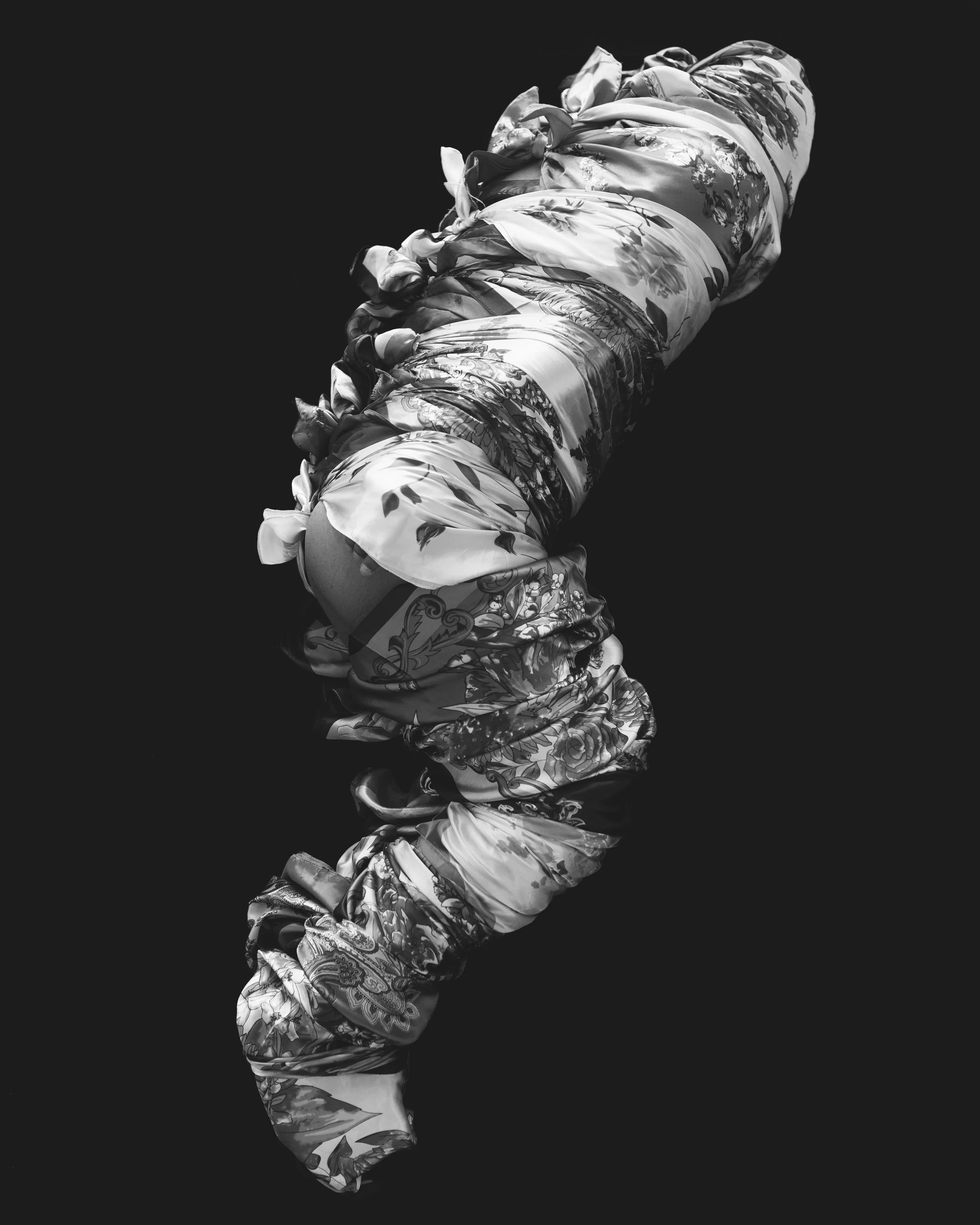
Wanjie Li, Silk, 2020. Image courtesy of the photographer.
You are currently pursuing a BA in Anthropology and Political Science at Tufts University, with research interests spanning aesthetic theory, political economy, and the anthropology of finance. In what ways have these disciplines informed or shaped your approach to photography?
I rarely find that my research interests align with the ideas I am interested in expressing through photos. This has to do with the different strengths that writing and photography possess as mediums. There are certain things that photography is good at, but it is bad at making arguments in a direct or straightforward manner, a weakness that is typically compensated for by supplementary text. My favourite arguments that photographs make, which they do in a meditative and interpretive manner, and usually as collections of photographs, are about their nature as a medium. Here I am thinking about someone like Trevor Paglen, whose practice is dedicated to figuring out how photographs have functioned in teaching us how to see, as well as how such technologies of sight have been used by private actors and the state.
This is a roundabout way of saying that my theoretical training forces me to think about the relationships between material conditions of aesthetic production, form, and content. At the end of the day, the relationship between my research interests and photography is fraught, because the former tends to block the latter. One of my professors described it as analysis paralysis. I admire my sculptor friends, An Ha and Vivian Tran, just to name two, who possess a seemingly preternatural ability to just do and make things, and make difficult arguments with them, without being bogged down too much by the thinking.
“My favourite arguments that photographs make, which they do in a meditative and interpretive manner, and usually as collections of photographs, are about their nature as a medium.”
I would also like to learn more about your creative process. How do you approach a shoot, from concept to execution? What challenges do you usually encounter along the way?
When I am lucky, the general form of a photo, colours, lighting, composition, the central object, just comes to mind. Of course, these tend to be inspired in some half-conscious way by what I am reading or watching or listening to. Then it is a matter of assembling those elements in the studio. The challenge is in turning this way of working into a discipline, something you can practise every day, without feeling like your inspiration or ideas are being exhausted. It is much more exciting when I am given a brief, or when I have to work with a team, because the process becomes more productively dialogic, and I worry less about expressing, to a high degree of fidelity, my own, often limited and narrow, perspective.

Wanjie Li, EPSON Scan Interface, Screen White. Image courtesy of the photographer.

Wanjie Li, Margiela Heels, Screen White. Image courtesy of the photographer.
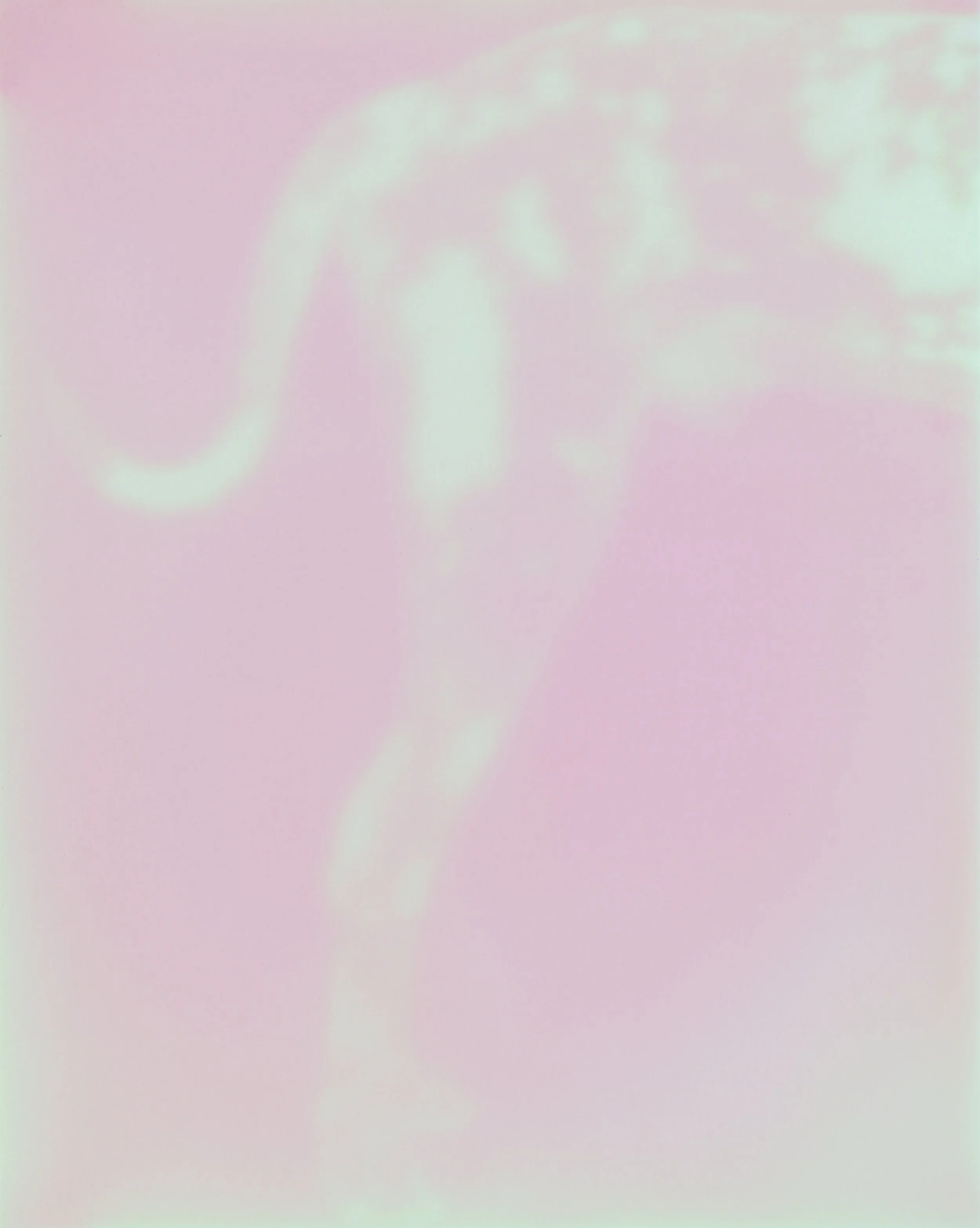
Wanjie Li, Spiritual America, Screen White. Image courtesy of the photographer.
Your most recent work studies “screen white,” the brightest color a digital screen can produce, and explores how technologies of light can create new forms of materiality. Could you walk us through the process of creating this project? What were you hoping to explore or communicate through this series?
I was lucky enough to take Pamela Pecchio’s class on cameraless photography. It was my first time in the darkroom, and I was excited by the novelty, tactility, and immediacy of silver gelatin darkroom prints. Nat Faulkner has made beautiful projects about the wetness of analogue photography, and in this class I felt the value he articulates in recovering those other senses that were once essential to making photos, but which have become less prevalent with the dominance of digital technologies.
I was trying to say something about the meaning of silver gelatin prints as a photographic technology in a universe of digital tools, where photos exist as seemingly weightless things appearing mostly on screens. Around this time, I discovered the work of Giuliana Bruno, who tells us that digital screens, physicalising projections of light, are, in fact, an assembly of material objects. This is the quote I have from her on my website: “technologies of light can produce new forms of materiality... I propose making a material turn in visual studies in order to vitalise the surfaces that clothe the material of our objects and to show that, in our times, materiality manifests itself in projection, in the surface tension of media.” I took her argument seriously, but also simply, when I decided to experiment with pasting silver gelatin paper onto my MacBook, to make a physical image with this constantly available light. I was lucky that it worked at all.
As a Southeast Asian photographer working in the United States, what kinds of challenges and opportunities have you encountered? How has this shaped your perspective as a creative?
Others have said this much more eloquently than I can, but Southeast Asia is a contentious category. Tom Pepinsky, for one, has a good discussion of Southeast Asia as a strange social fact. The region became, in the mid- to late twentieth century, a coherent and legible geography as a theatre of war in the Euro-American military imagination. I am grateful to call it home, but I hesitate to identify as a Southeast Asian photographer.
I come from Singapore, and not only has the Singapore state invested for decades in an exceptionalism of the country, but many in the region are painfully aware of the deep inequities between Singapore and its neighbours. It is an incredibly diverse part of the world, and we should be clear about what we mean when we say Southeast Asia, and why we are invoking the term, or we risk smoothing over real unevenness and difference. My friend Faris Joraimi has written about the rich matrix of exchange constitutive of the cosmopolitan Malay world in which Singapore has been embedded, long preceding the concept of Southeast Asia; I fear histories like these might be forgotten if we are too quick to subscribe to the modern invention of Southeast Asia.
But I retain strong emotional attachments to Singapore and the region. The stories I am most interested in come from there. It is difficult to feel like I am writing or telling stories I care about when I am on the other side of the world. This has led to a concern with relationships and connections that tether where I grew up to where I now live. For instance, I am in the beginning stages of a research project about Moshe Safdie, the architect responsible for Singapore’s public face, and his work in the 1980s to 1990s, when he headed the new Urban Design programme at Harvard. I happen to live next to Harvard, and the Safdie office happens to be in Somerville, where I go to school. I am not sure if this answers your question about my creative perspective, but this is where my head is at these days.

Wanjie Li, Mom's Underwear and Mine, 2025. Image courtesy of the photographer.
Lastly, what is next for your practice? Are there any projects or ideas you are currently developing?
I do not know yet, and that is exciting. I do not have photo projects in the pipeline. Individual photos still come to mind, and I will have time to make them this summer. I am wrapping up my BA in Anthropology and Political Science, and I will begin my PhD in Anthropology this fall. I think graduate school, and reinvigorated thinking, will continue to change my relationship with photography. But I am more excited by where the play will take me.
Find out more about Wanjie’s work on his website or on Instagram at @uuanjie.