
Fashion & Craft: INKAA
Traditional crafts in Malaysia as medium of expression
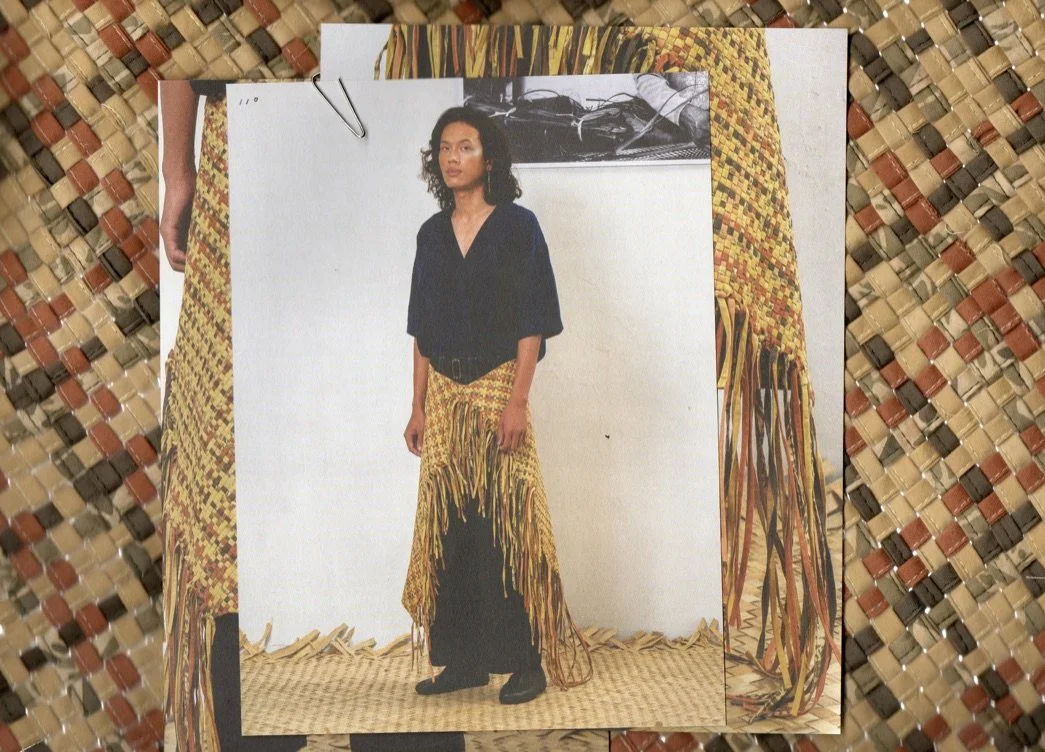
Scanned garment and printed photos of handwoven wrap skirt, made with 314 metres of naturally-dyed cotton/batik strips. Image courtesy of INKAA.
INKAA is a craft collective and independent fashion label co-founded by Muizz Aziz and Ludovic Vankerkoven, with a space in Zhongshan Building in Kuala Lumpur. The duo work with craftspeople across Kuala Lumpur, Terengganu—Muizz’s hometown—and Kelantan. They use traditional crafts, including batik print-making, batik block-making, menkuang weaving and brassware-making as their medium of expression. INKAA offers everyday garments and objects that are informed by a deep respect for artisanal knowledge and steeped in intention and meaning.
In this interview, Muizz and Ludo share with us the essence of INKAA, how traditional craft and fashion interweave in what they do, and what growth looks like for them.
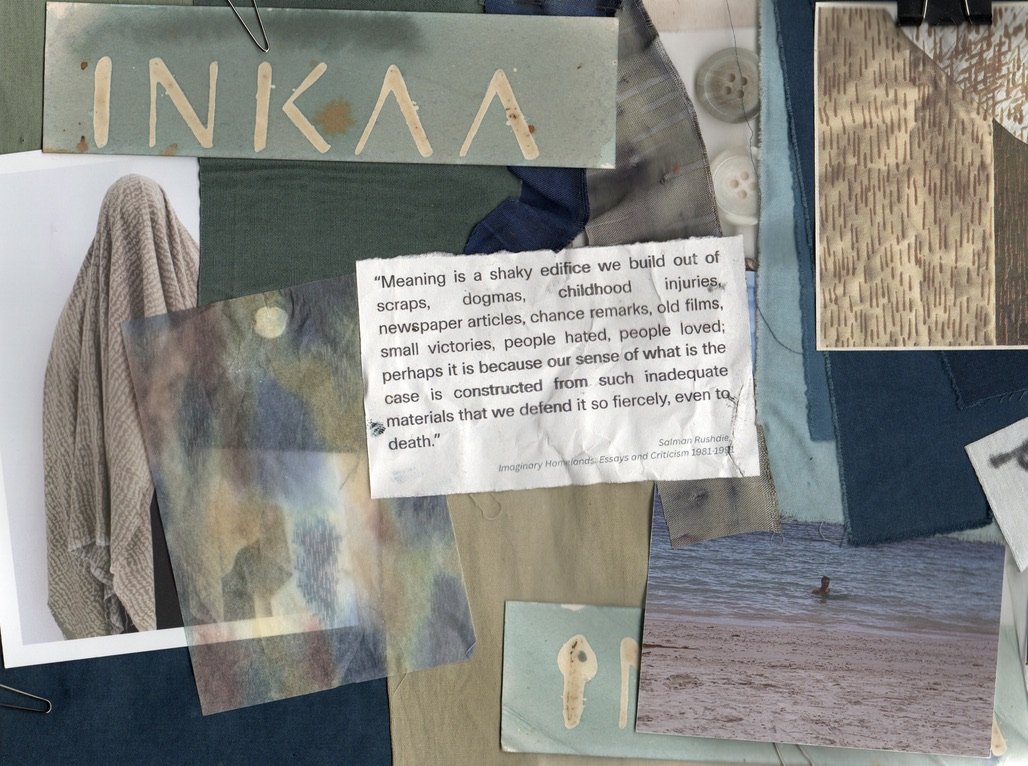
Scanned mixed materials from INKAA Studio. Image courtesy of INKAA.
Hi, Muizz and Ludo! Could you introduce yourselves and INKAA?
We are Muizz and Ludo, craft workers and co-founders of INKAA, a craft collective and independent fashion label based in Malaysia, working with a network of craftspeople across Kuala Lumpur, Terengganu, and Kelantan.
We specialise in traditional crafts of batik print-making, batik block-making, mengkuang weaving and brassware-making, using traditional practices as our guiding compass, and as our playground for experimentations.
How would you describe INKAA to capture its essence?
INKAA is, in many ways, an insistence on the hands in forming a collage of meanings in the everyday garments and objects, using traditional crafts in Malaysia as our medium for expression.

Scanned INKAA brand book, highlighting details of looks, including brass earrings from upcycled bullet shells, hand-stamped and hand-dyed batik garments, and woven bag and accessories. Image courtesy of INKAA.
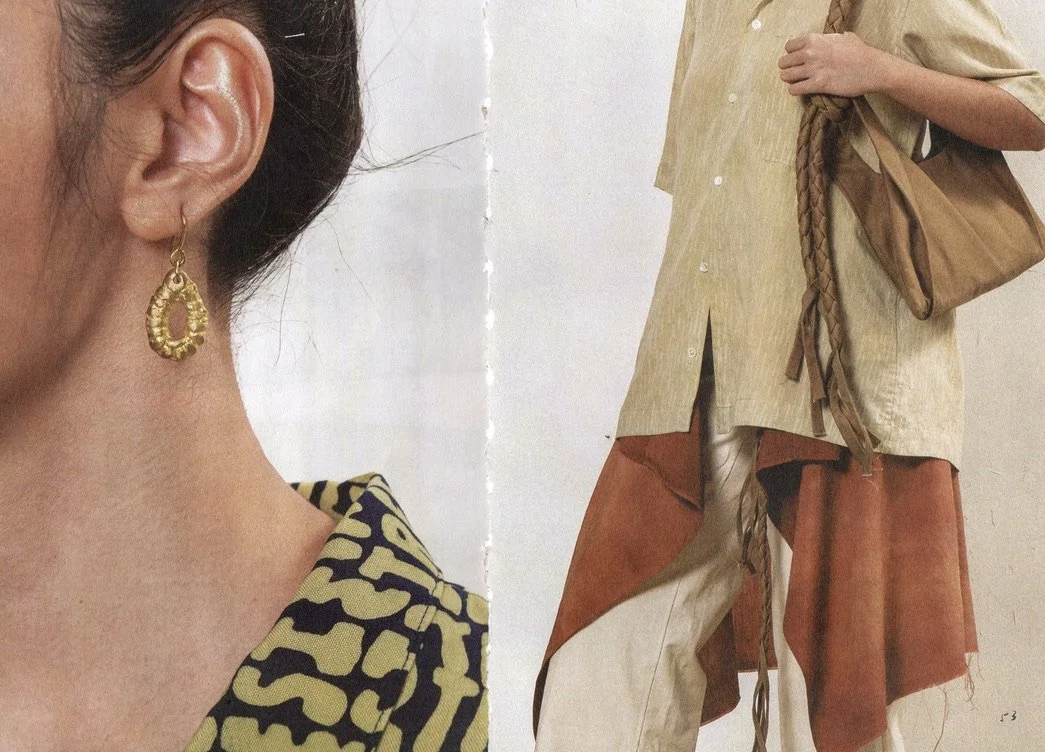
Scanned materials: woven cotton twill and photo of the final look. Image courtesy of INKAA.
What motivated the creation of INKAA?
We enjoy making and unmaking things with our hands, and eventually found ourselves in craft workshops in Terengganu, Muizz’s hometown. We just kept going back, or maybe we never really left. The collective formed organically from there.
What drew us in just as much as the work itself was the sense of care and devotion many traditional craftspeople have towards their practice. INKAA provides a space for us to get together, and collectively learn, play and make.

Scanned test piece (wax on paper, brush-dyed) and Malay dictionary (Kamus Dewan Bahasa). Image courtesy of INKAA.
Why the name INKAA?
It originates from a shared memory between the two of us from the time we spent working on a small farm. When we needed a name for the project, we liked the sound of INKAA and the feeling it evokes.
The meaning, of course, has evolved over the years, layered with more shared memories of the people and experiences along the way.
Crafts, from the making of brassware, batik printing and mengkuang weaving are at the heart of INKAA. How does fashion act as an influence or a key component of INKAA?
Fashion, as a verb, is our everyday practice. We think and work through materials and concepts in relation to the body. Fashion, as a language, is something we are constantly learning so we can communicate better with each other as makers, so we are slowly building up a vocabulary over time. That then lets us explore fashion’s wider cultural archive, through the sharing of techniques, histories, aesthetics, and embodied knowledge across people and time.
Working with traditional crafts, we naturally have a soft spot for fashion as a ritual, built around a set of repeated gestures of making, wearing, and returning to the body through material practice. The ageing and decaying of a material or garment, for example, interests us as much as the process of making it.
“Working with traditional crafts, we naturally have a soft spot for fashion as a ritual, built around a set of repeated gestures of making, wearing, and returning to the body through material practice.”
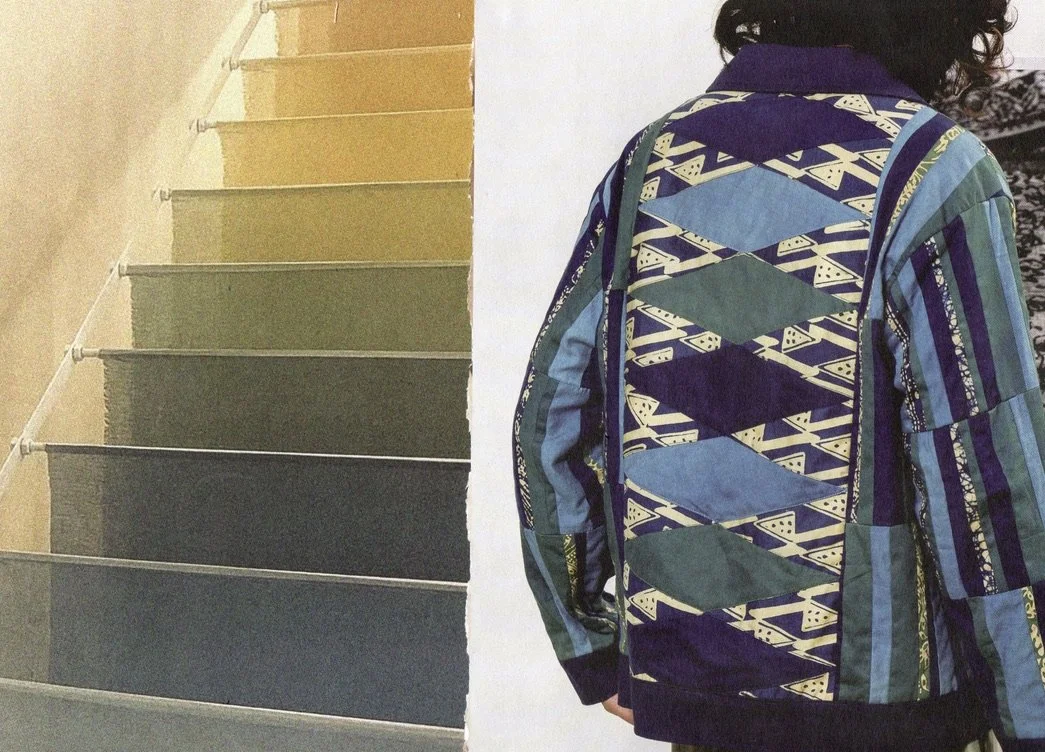
Scanned INKAA brand book: Natural-dyed fabrics from 2021 Crafting Resistance (R&D on a more sustainable approach to crafting), which informed the making of the Pucuk Rebung Jacket. Image courtesy of INKAA.
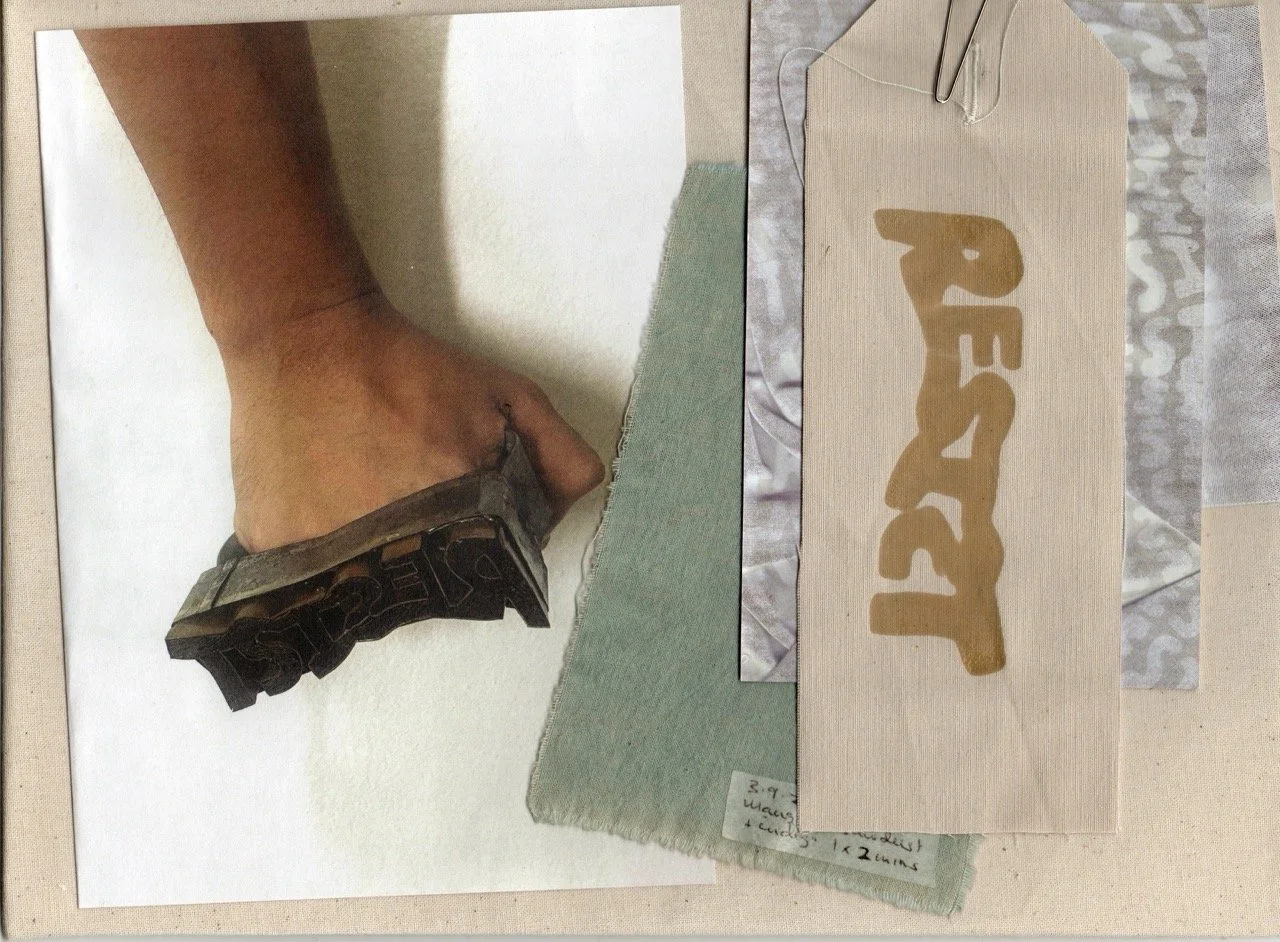
Scanned materials: colour swatch, test piece of RESIST batik motif, and selected process photos. Image courtesy of INKAA.
What are the challenges you have met?
Navigating fashion as a market, including how it relates to labour, capital, and an increasingly unnatural sense of time. A lot of it is structured around speed, output, and a narrow idea of growth, which often feels at odds with the way we work and what we care about.
Working with traditional crafts also means dealing with slower, more material realities, from what the materials allow to the time each process demands, and the basic human need for rest and idle time. These rhythms do not always fit neatly into market expectations or seasonal cycles.
The challenge is about holding on to a way of working that feels grounded in process and care, while existing within a system that we cannot quite quit, because craft is as much about livelihoods as it is about making.
How do you overcome these challenges?
We do not really know. We only have theories and instincts. There is also no reason for INKAA to exist if we have already figured that out. It is wonderful to work within a set of constraints that we are presented with, and take it one day at a time. Sometimes we resist and do things our own way, and sometimes we follow the path of least resistance.
What helps is focusing on what we actually care about: a sense of quality in what we make, and in our shared experience of making it. As long as we can do that, and ensure that we have the financial means to go on, we will be just fine.

Text on Textile for RESIST & DYE at aNERD Gallery, Singapore, November 2024. Text by Ellen Lee, wax application (canting) by INKAA. Image courtesy of INKAA.
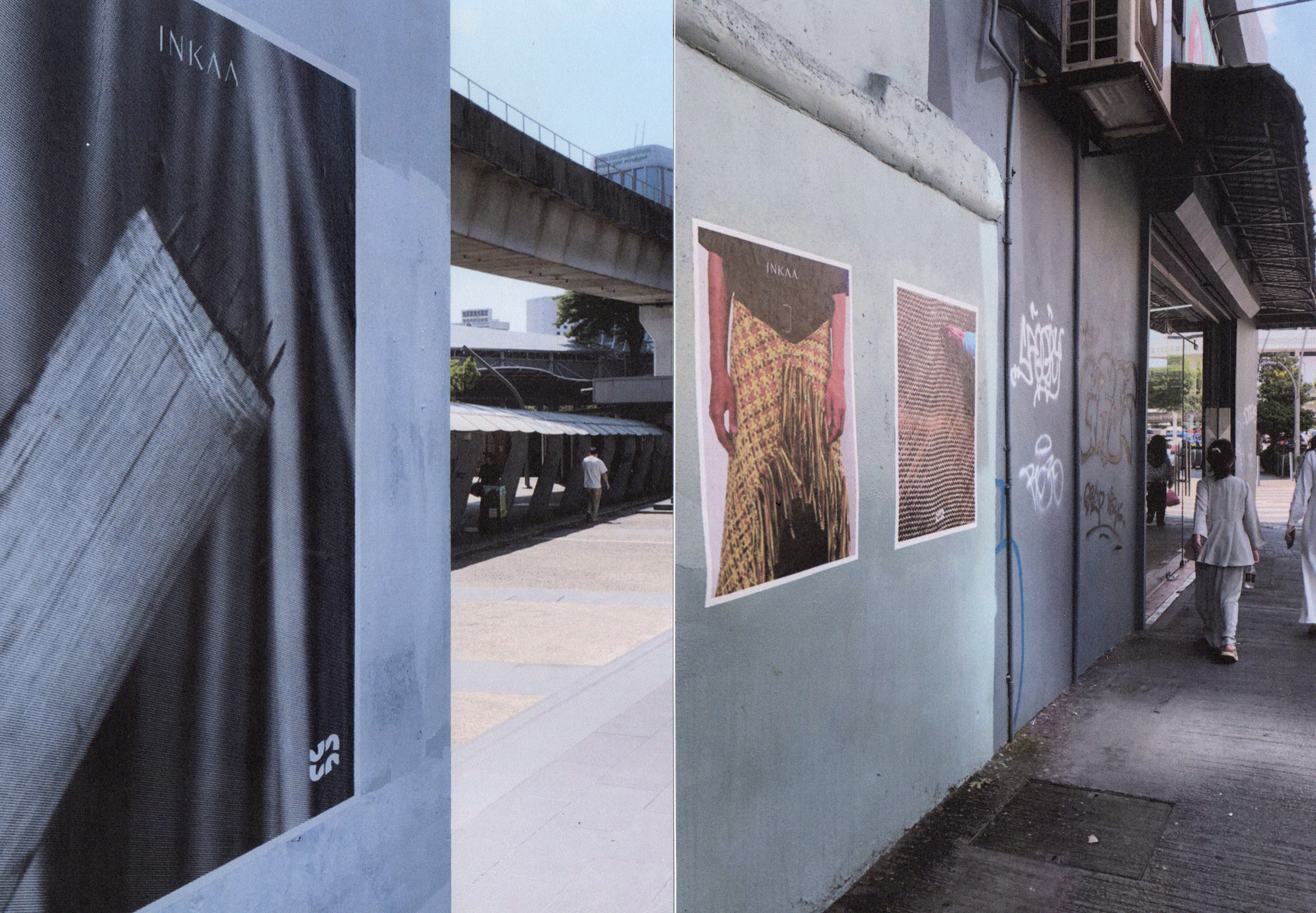
Scanned photos of INKAA’s posters, wheatpasted on the streets of Kuala Lumpur. Image courtesy of INKAA.
You created a beautiful publication and exhibition for the Summer/Monsoon 2025 Collection. Could you talk about how the projects came about? What did you wish to achieve with it?
It was a way to present the collection more cohesively. The common approach of social media campaigns can feel too noisy and flimsy for us.
Working on the publication and exhibition forced us to take a step back, and take the time to digest the three years’ worth of work, including notes, sketches, photos, experiments, prototypes, final products. We asked ourselves what it is all about, and wanted to present the collection in a way that engages the physical senses and space, and demands a longer attention span.
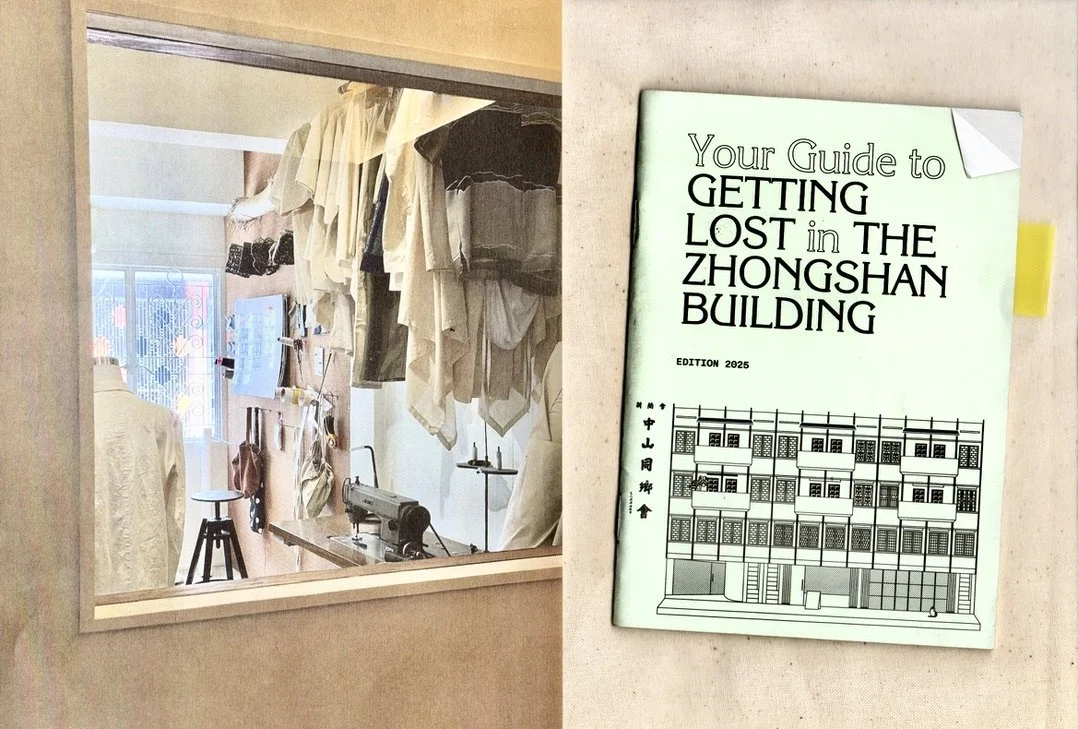
Scanned photo of INKAA Studio (workshop room) and mini guide to getting lost in the Zhongshan Building. Image courtesy of INKAA.
What has Zhongshan Building given you in terms of a community and inspiration?
Being in Zhongshan Building has given us a very real sense of community, not in an abstract, virtual, or idealised way, but in a daily, physical proximity. INKAA basically grew up in the building, alongside friends and neighbours who are also working through their own crafts and practices.
So there are always traces of the building and its people in our works. Over the years, the building itself starts to feel like part of the practice, and quietly influences how we think, make and grow.
How do you plan for INKAA to grow?
Organically, around the craftspeople and the quality of what we make. There is already a natural limit and pace to what we do, given the materials, the hands, the skills, the tools, the physical space, the financial resources, the weather and the time we have. We try to pay close attention to these limits, and let them guide the decisions we make around growth.
Learn more about INKAA at inkaa.my, and follow them on Instagram @inkaa_my.