
Fresh Face: Dikson Mah
Material-led exploration of form, silhouette, and the body
F&M’s Fresh Face is a series featuring young Southeast Asian fashion practitioners, where we speak with them about how they embarked on their careers and what propels them as creatives.
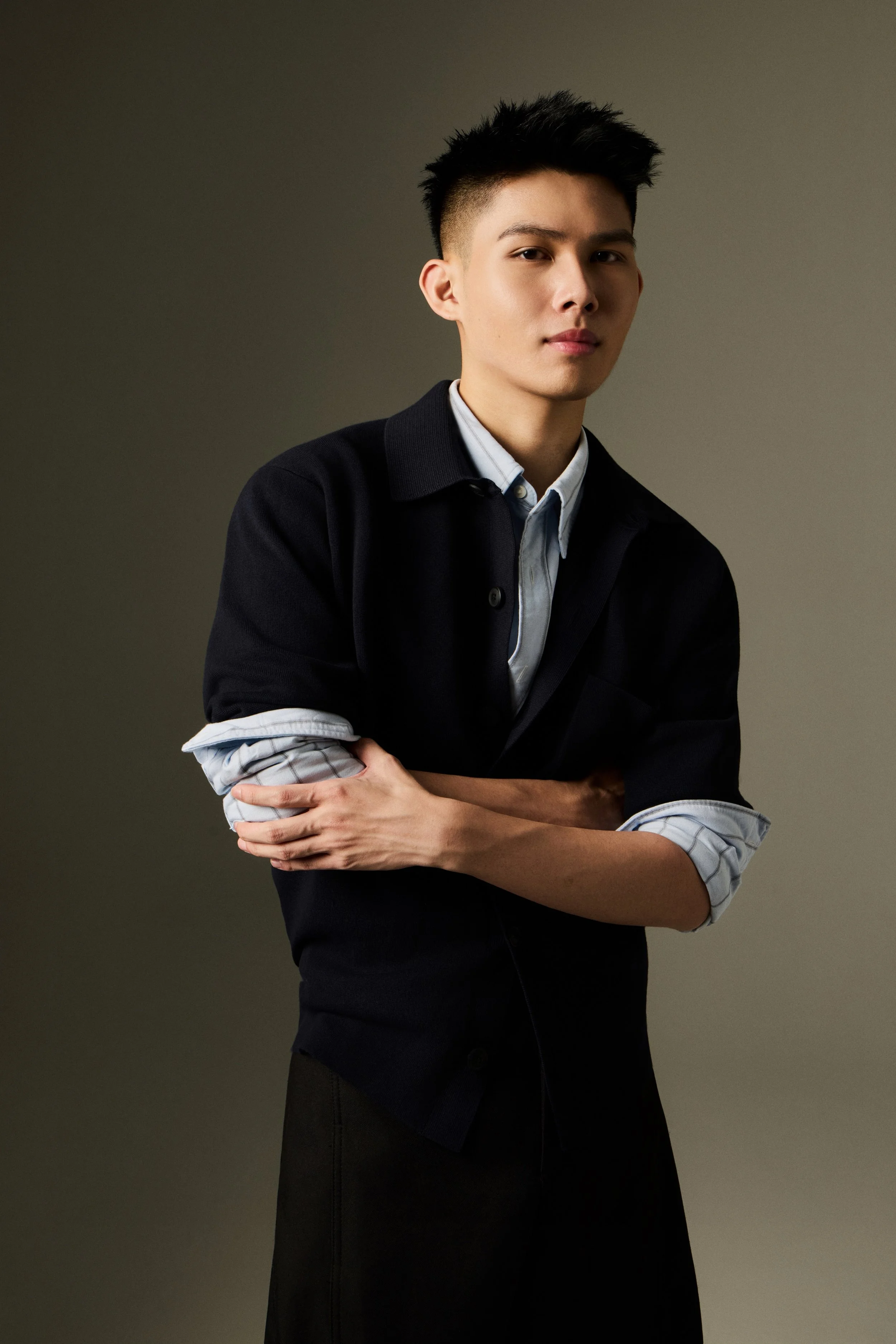
Dikson Mah. Photo by Harry.
Dikson Mah’s work moves between structure and abstraction, with the body as his starting point. This principle underpins his namesake label, established in 2025 in Malaysia. His practice is informed by an ongoing study of human anatomy, where clothing responds to how it occupies space. Translating abstract ideas into constructed form and silhouette, Dikson integrates technological innovation such as 3D printing with traditional craftsmanship. His designs have been featured on regional platforms including Next in Vogue in Singapore and Mercedes-Benz Kuala Lumpur Fashion Week, where he continues to expand his material-led approach.
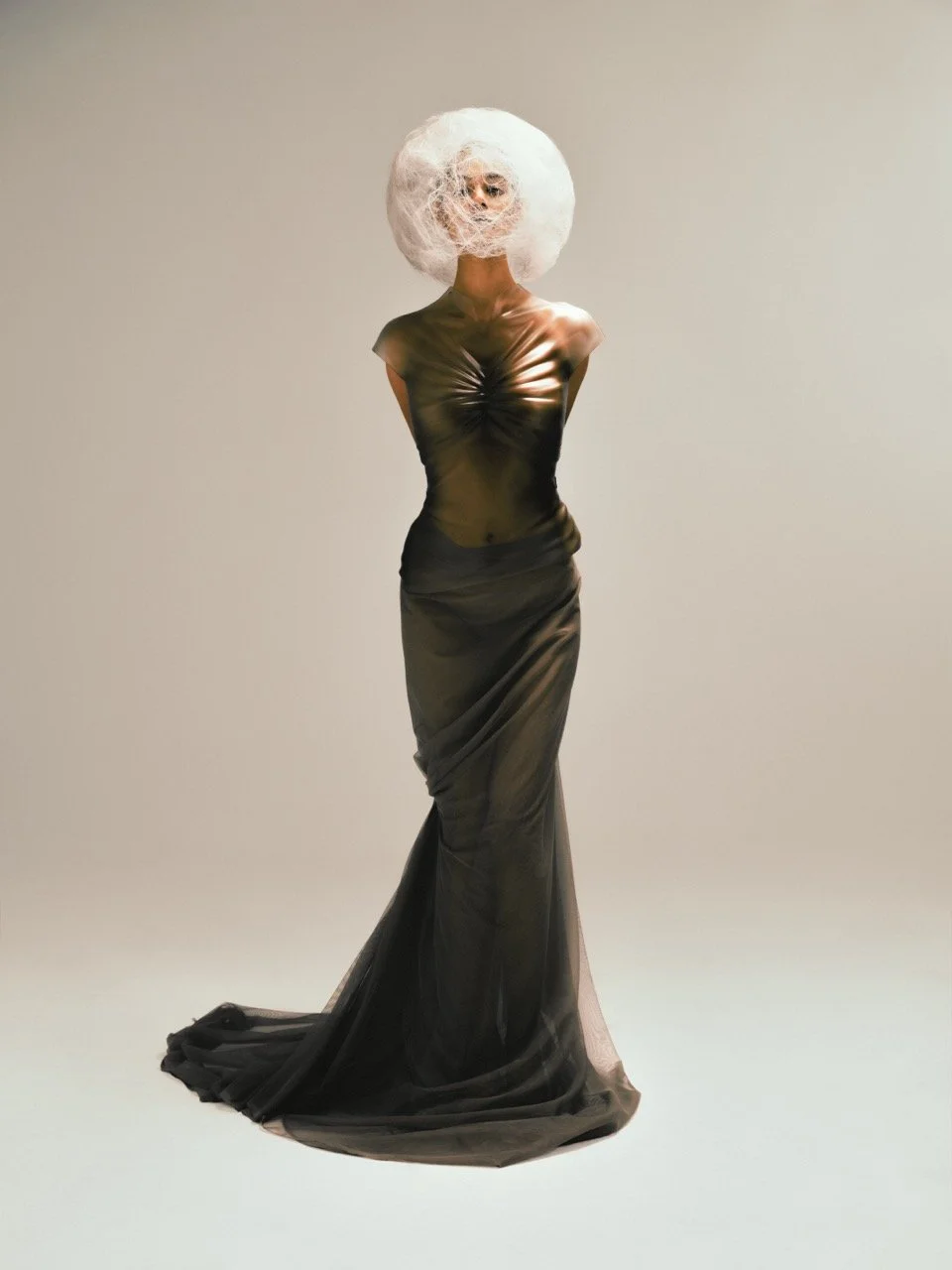

AW26 Collection: ‘Nexus’. Photos by Aun Chua. Images courtesy of Dikson Mah.
Hi Dikson! Could you start by telling us about your background and what inspired you to establish your namesake brand?
I launched my namesake label, DIKSON MAH, in 2025. After graduating in 2024, I had not originally planned to start a brand so soon. It developed organically when the timing felt right. I began by creating a new collection, and as people around me showed interest and asked to purchase pieces even before their release, this encouraged me to develop it further. The brand emerged from a genuine desire to design for people who connect with my work.
Where do you draw inspiration for your pieces? Are there particular themes, experiences, or references that consistently inform your work?
I usually draw inspiration from observing my surroundings and everyday life. I am particularly interested in the human body: its structure, proportions, and the ways in which clothing can interact with it. Many of my pieces begin with a study of form and silhouette, then evolve into something more expressive.
Conceptually, I am drawn to inner states and emotional narratives, so there is often a balance between physical structure and something more intangible. That said, the references shift depending on the direction of each collection, but the core idea of exploring the relationship among body, form, and emotion remains consistent.
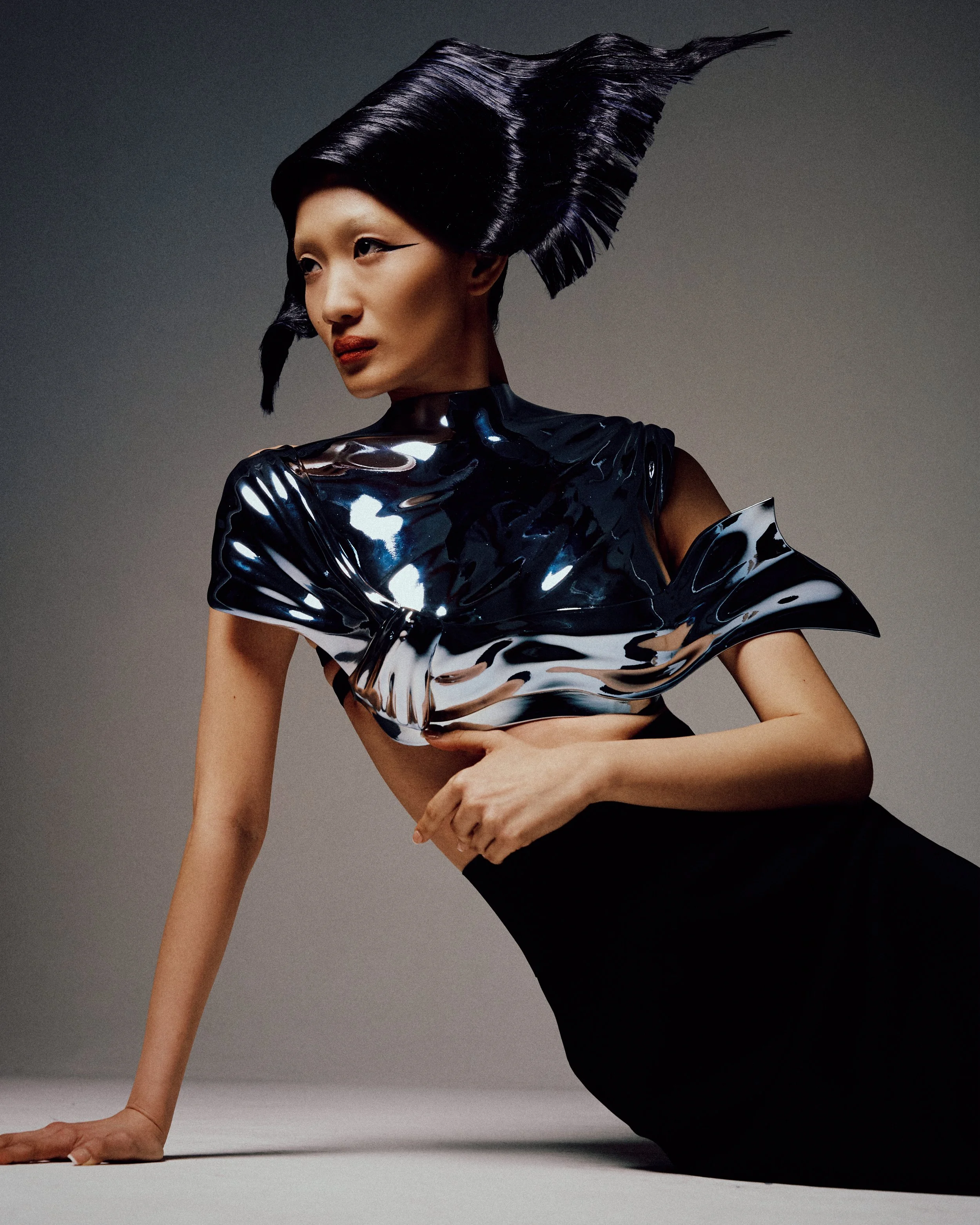
SS25 Collection: ‘Edge’. Photo by Weeyang. Image courtesy of Dikson Mah.

SS26 Collection: ‘CORE’. Photo by Weeyang. Image courtesy of Dikson Mah.
Corsetry and body armour play a defining role in your practice, alongside a deep interest in anatomy and structure. How do you move from these conceptual inspirations to the tangible details of each garment?
I approach it through a surrealist lens, taking abstract or dream-like ideas and translating them into physical garments. It is about reinterpreting something intangible and reshaping that into a structured form that interacts with the body.
“It is about reinterpreting something intangible and reshaping that into a structured form that interacts with the body.”

SS26 Collection: ‘CORE’. Photo by Weeyang. Image courtesy of Dikson Mah.
The latest SS26 collection, ‘CORE’, draws on the poetic imagery of flowers and birds in Chinese culture. Could you walk us through how this concept developed from your initial research to the final silhouettes?
The concept for ‘CORE’ began with my research into the symbolism of flowers and birds in Chinese culture, where they often represent life, freedom, and continuous growth. I was drawn to how these elements are poetic and delicate, yet carry a strong inner energy. From there, I did not want to translate them literally. Instead, I abstracted these ideas into form and movement. I began looking at how growth emerges from a central point, almost as something arising from within the body. That became the foundation of the collection.
In terms of silhouettes, everything is built around the core of the body. There are structures that extend outward from the waist or torso, resembling branches growing or forms unfolding. Corsetry plays a key role, acting as a controlled base, while other elements expand more organically. Overall, the collection is about translating something poetic into something physical, where growth, structure, and emotion converge at the body’s core.
Fabric manipulation, sculptural folds, and 3D-printed elements are central to your designs. How do these techniques influence your creative process and the way each piece is constructed? What challenges do you encounter, and how do you overcome them?
Fabric manipulation, sculptural folds, and 3D-printed elements shape how I design, and I often begin directly with material and form rather than sketches. They allow me to balance structure and movement, building pieces almost like sculptures on the body. One of the biggest challenges is making a design feel both timeless and wearable, rather than an art piece alone. I address this by refining proportions, simplifying where necessary, and focusing on construction, so the final piece retains its concept while remaining wearable.
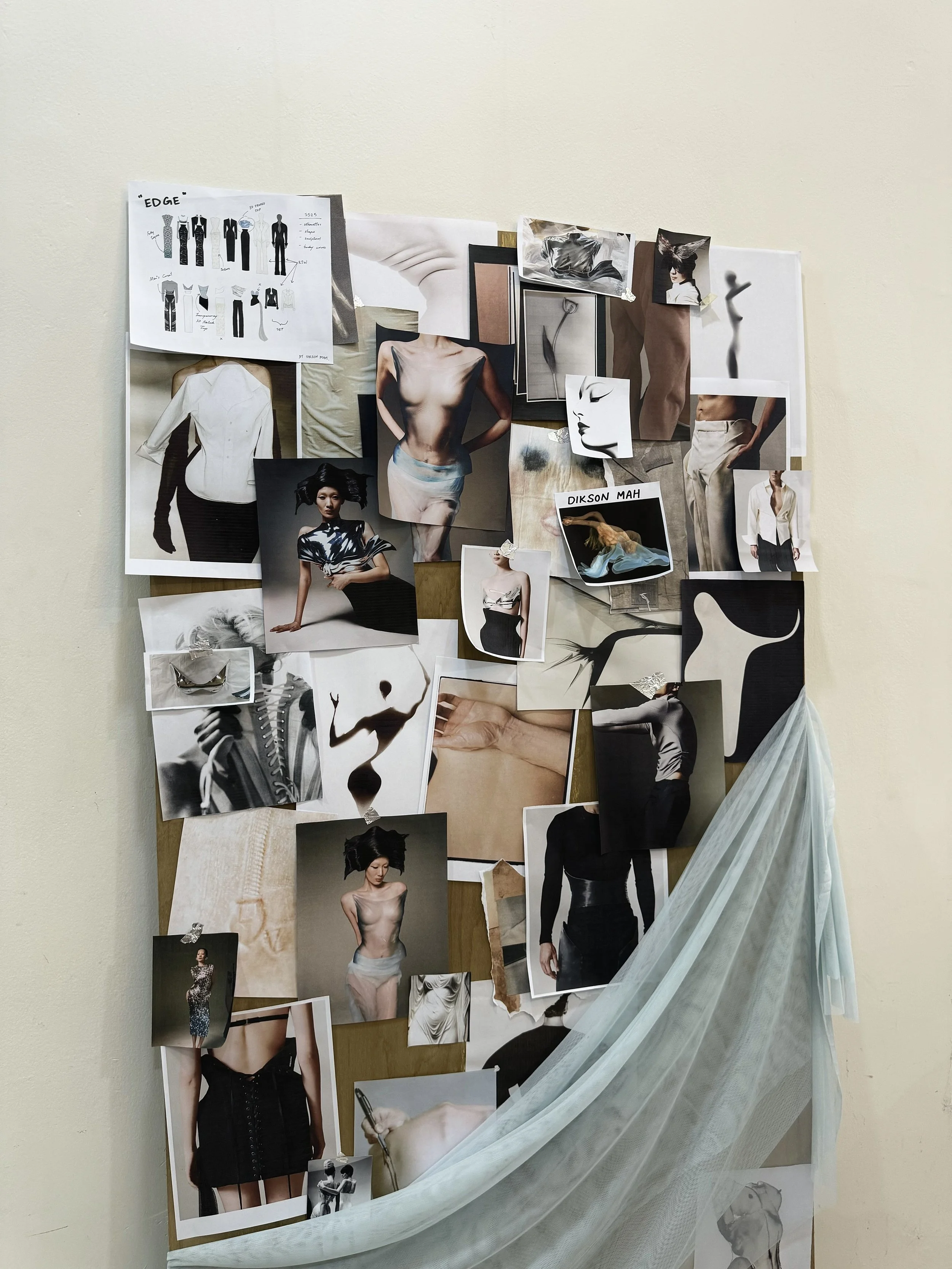
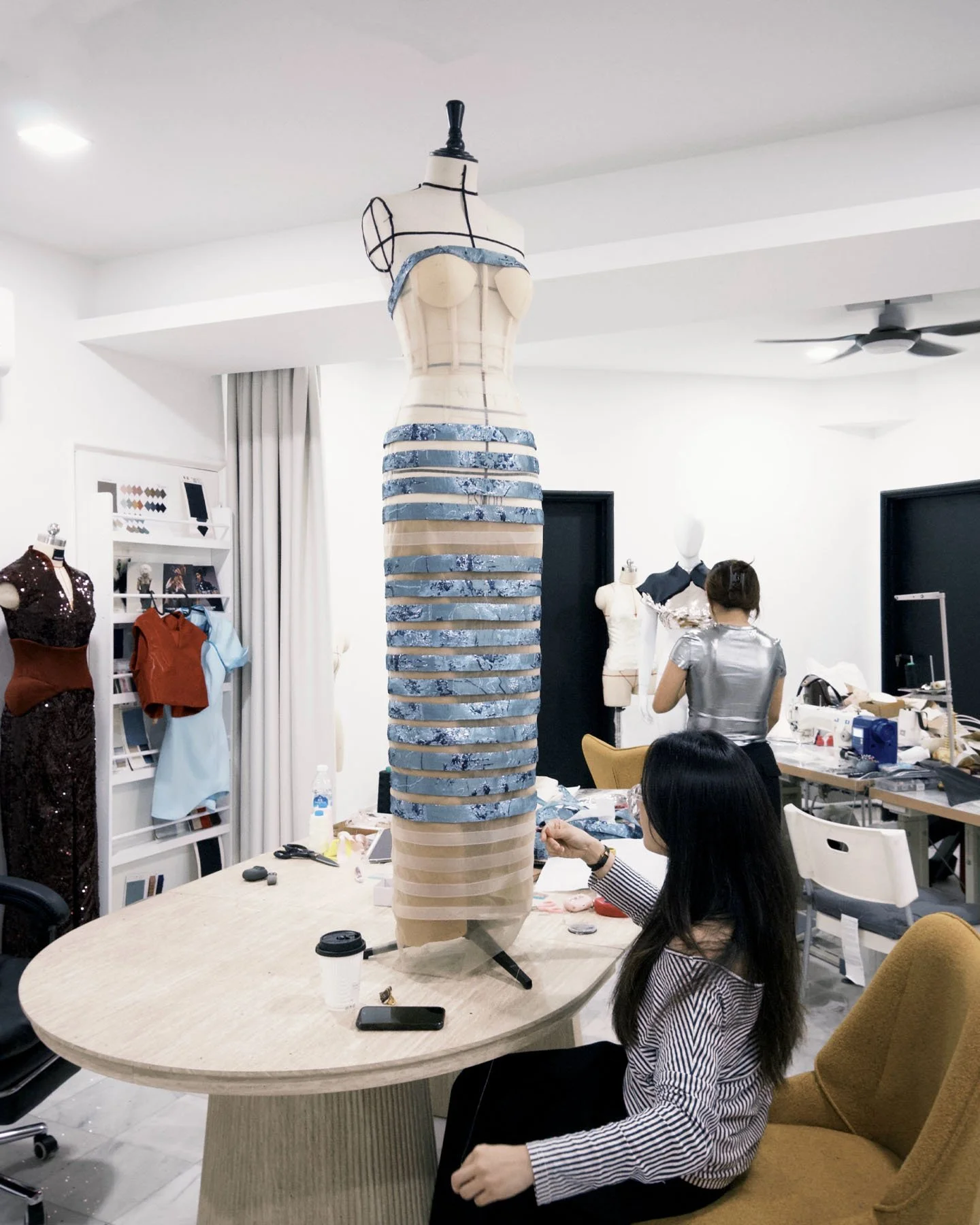
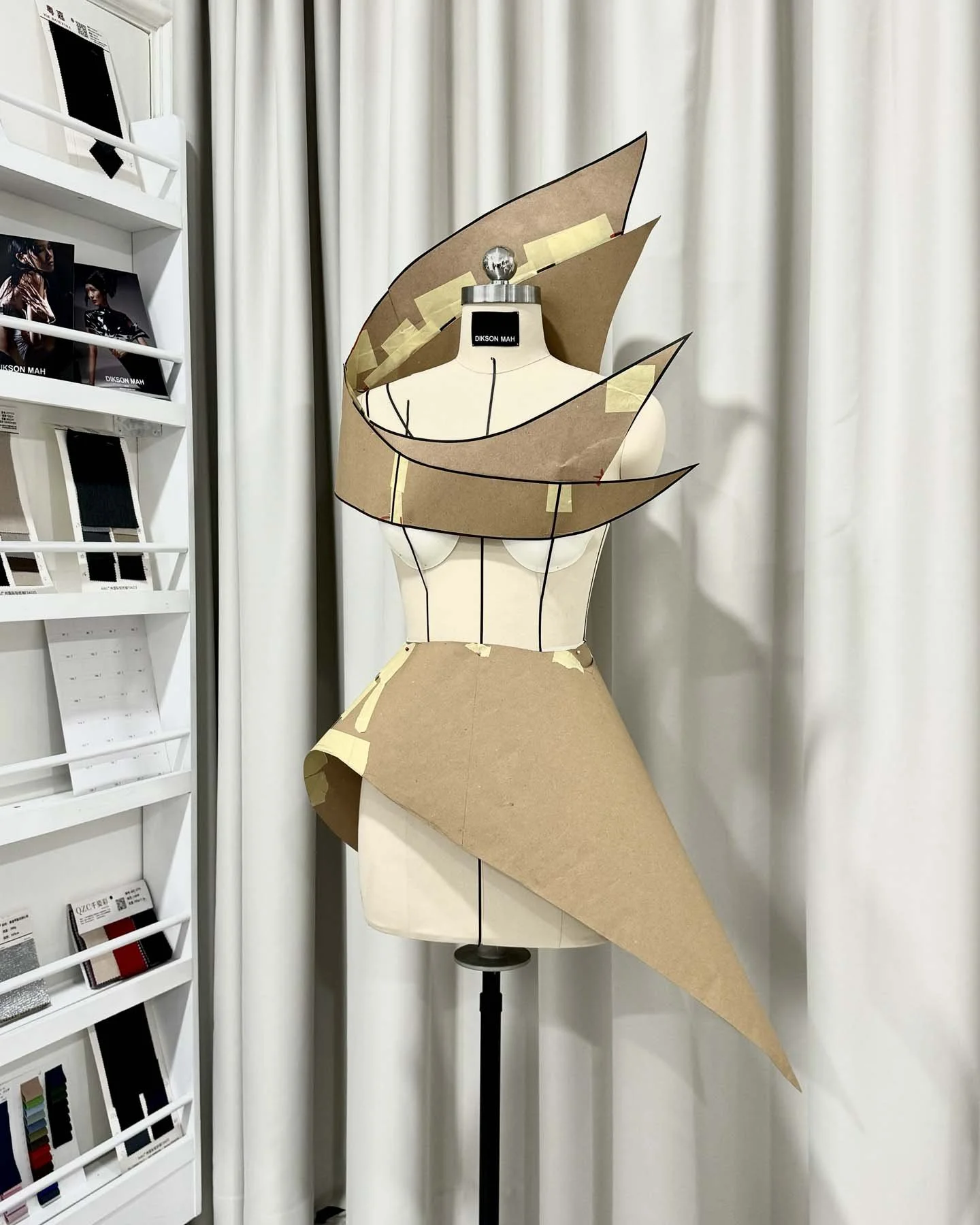
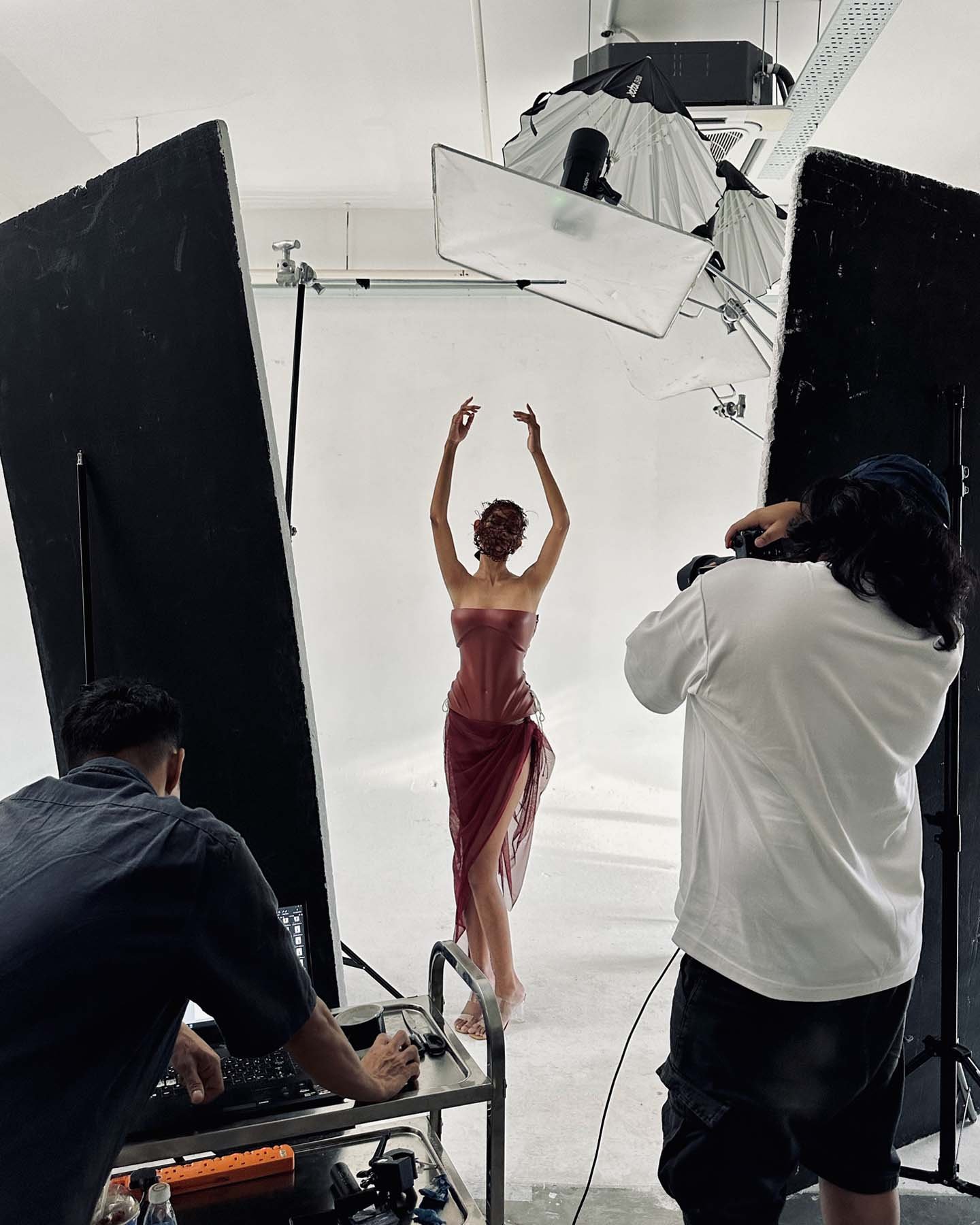
Behind-the-scenes process. Images courtesy of Dikson Mah.
In balancing artistic integrity with wearability, what guides you in ensuring your designs resonate with a diverse audience?
I am guided by the body first and how a piece feels, moves, and sits in real life. No matter how conceptual a design is, it must function and be lived in. I also focus on clarity in design. Even when the concept is complex, the silhouette and construction need to feel intentional and legible. This allows the piece to connect with a wider audience. Ultimately, it is about editing, knowing what to keep and what to hold back, so the design remains strong in identity while still being accessible and wearable.
“I am guided by the body first and how a piece feels, moves, and sits in real life. No matter how conceptual a design is, it must function and be lived in.”

Brooch, Special collaboration with UBE, 2025. Photo by Thomas Sito. Image courtesy of St. Yarra.
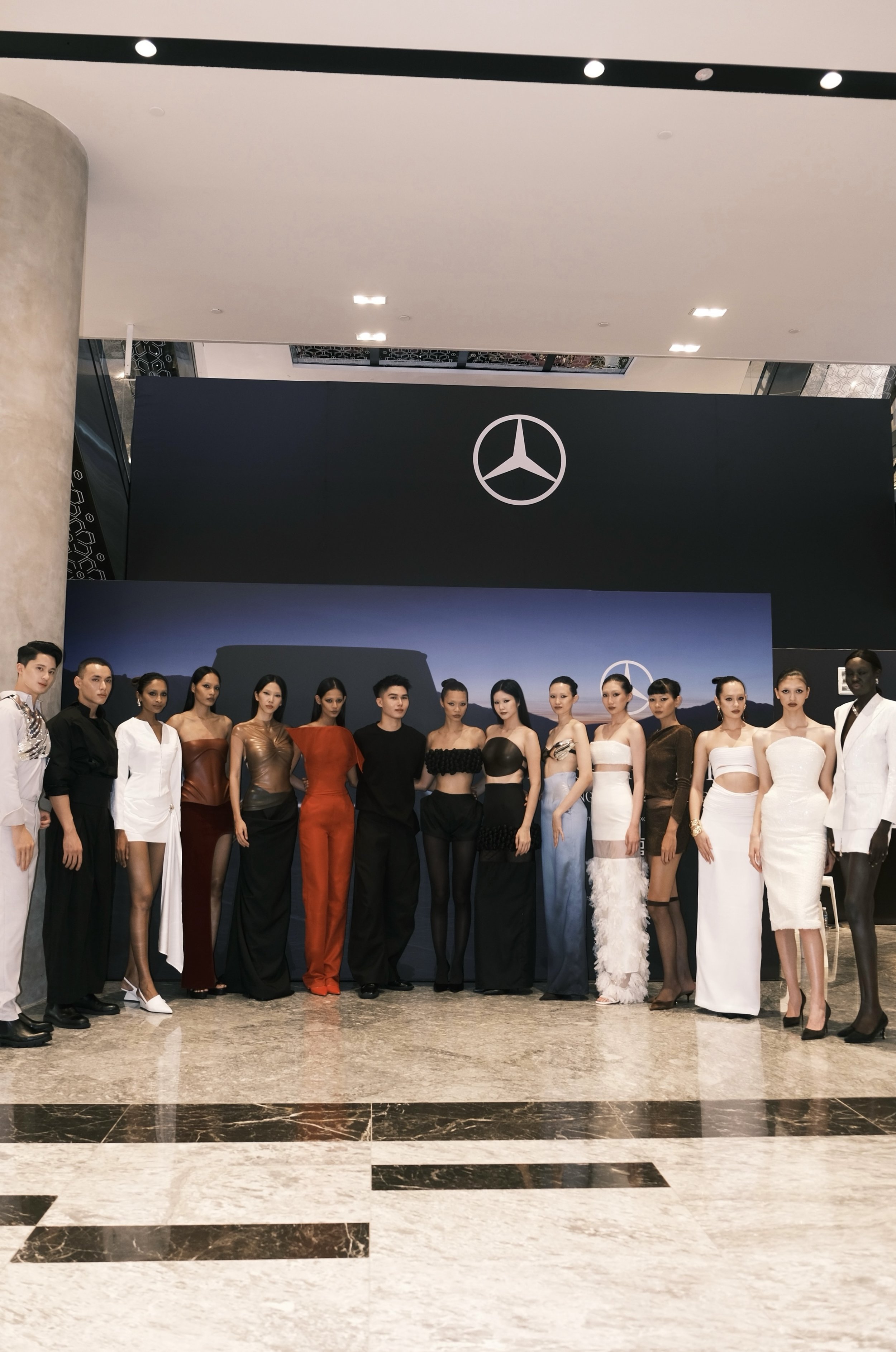
Collection Showcase at Mercedes-Benz Kuala Lumpur Fashion Week, 2025. Image courtesy of Dikson Mah.
Last year, you presented your collections at Next in Vogue and Mercedes-Benz Kuala Lumpur Fashion Week. What was it like to showcase your work on these platforms, and what excites you about opportunities in the Malaysian and Southeast Asian fashion scene today?
It felt like a step forward from local platforms such as Mercedes-Benz Kuala Lumpur Fashion Week to an international stage like Next in Vogue by Vogue Singapore. Being part of a Vogue showcase gave me a sense of gradual growth, as though my work is slowly finding its place on a larger scale.What excites me about the Malaysian and Southeast Asian fashion scenes are their openness to new ideas and individuality, along with strong cultural depth, which allow for meaningful contemporary reinterpretation.
Finally, what’s next for your practice and brand? Are there any upcoming collections or projects you can share with us?
Stay tuned for our upcoming collection!
See more of Dikson’s work on his website and on Instagram at @bydiksonmah.