
Fresh Face: Kelly Vo
Womenswear at Schiaparelli and Vietnamese storytelling
F&M’s Fresh Face is a series featuring young Southeast Asian fashion practitioners, where we speak with them about how they embarked on their careers and what propels them as creatives.
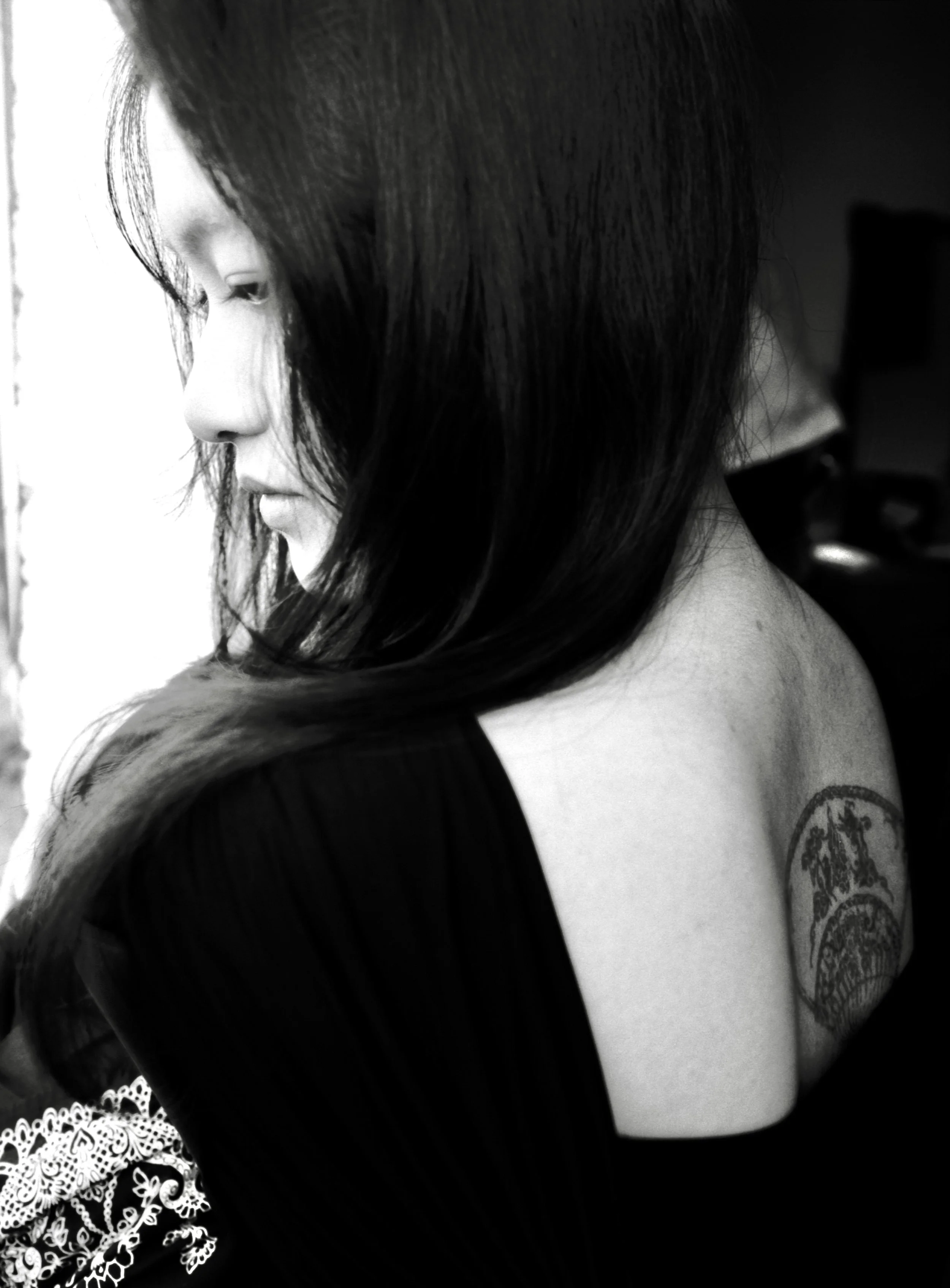
Kelly Vo.
Kelly Vo is an emerging womenswear designer in her final year of a BA in Fashion Design: Womenswear at Central Saint Martins, University of the Arts London.
At Schiaparelli in Paris, she worked as a 2D Knitwear Assistant Designer on Pre-Collection Fall/Winter 2026, Ready-to-Wear Fall/Winter 2026 and Pre-Collection Spring/Summer 2027. Across these collections, she contributed to research, silhouette proposals, fabric swatches, fittings and technical sheets. She has also freelanced with Conner Ives as a studio and backstage assistant, where she handled VIP orders, pattern drafting, hand sewing and embroidery.

Kelly Vo, ‘Mom's Night Out’, organza strings set and wool blended with latex coat. Photo by Kelly Vo.
Her project ‘Mom's Night Out’, inspired by her mother’s stories of wanting to go clubbing in the 1990s, explores how people socialised and dressed themselves in post-war Vietnam. In this interview, we speak with Kelly Vo about her time at Schiaparelli and Conner Ives, the parts of the design process she enjoys most and how she is thinking about her next steps when she returns to Vietnam.
Hi, Kelly! To start, could you tell us a little about your background and how you found your way into womenswear? What first drew you to fashion design?
I am 100% Saigonese, born and raised in Vietnam. No one in my family has worked in the arts, so I am the first to go down this path. As a child, I was devoted to visual art and imagined a future as a painter. Things shifted when my family moved to Latvia when I was 14. Suddenly, I was a girl trying to find her place in a completely different world, far from my friends and the life I had known.
In a way, fashion became my language before I could fully speak the culture around me. It was how I tried to build a sense of belonging. It started as what people might call “dressing to impress”, but over time it became something much deeper.

Schiaparelli by Daniel Roseberry, ‘Sphynx’ Ready-to-Wear FW2026. Looks in development. Photo by Kelly Vo.
You were a 2D Knitwear Assistant Designer at Schiaparelli. Could you describe what a typical day looked like for you there and what your role involved across the collections you are working on?
It depended on the stage of the collection we were in, but it was always a full day. As an intern, I liked arriving early, usually around 9am,to get a head start on the workload. Those quiet hours before the studio were often the most interesting. I started to understand the rhythm of the house and how everything worked. Most of the opportunities I had to speak with Daniel Roseberry, Schiaparelli’s creative director, happened during those early mornings.
Because I worked in 2D, my days were spent more in front of a computer than behind a sewing machine. Depending on the collection phase, I would create Photoshop variations for new designs, conduct visual research, or, later in the process, work on tech packs, collection range plans, fittings and other development tasks.
Lunch was usually around 1pm. My colleagues and I loved wandering through the second arrondissement, trying new restaurants, though we more often than not found ourselves returning to Korean food. By 2pm, we were back in the studio, and the workday typically wrapped up around 7pm. Personally, if it were a Friday, I loved ending the day at a café or a bar to unwind. No one does work-life balance quite like the French.
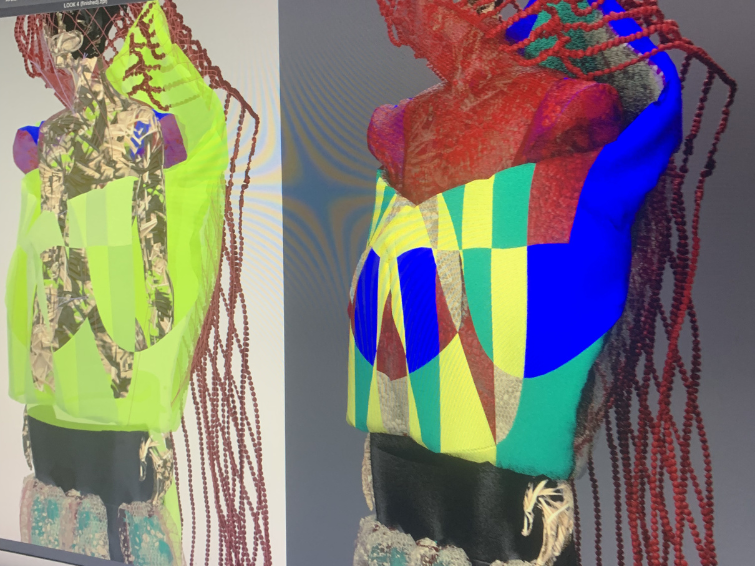
Kelly Vo, ‘Untitled’, project in development. Photo by Kelly Vo.
At Schiaparelli, you work on everything from research and silhouette proposals to fabric swatches, fittings, and technical sheets. Which part of that process do you enjoy most, and why?
Probably research. I got to peek into Schiaparelli’s archive, into things that belonged to the late Elsa. It was fascinating. And then the shows, where everything the team has worked on together comes to a fruitful end, and the busy atmosphere backstage is such an adrenaline rush.
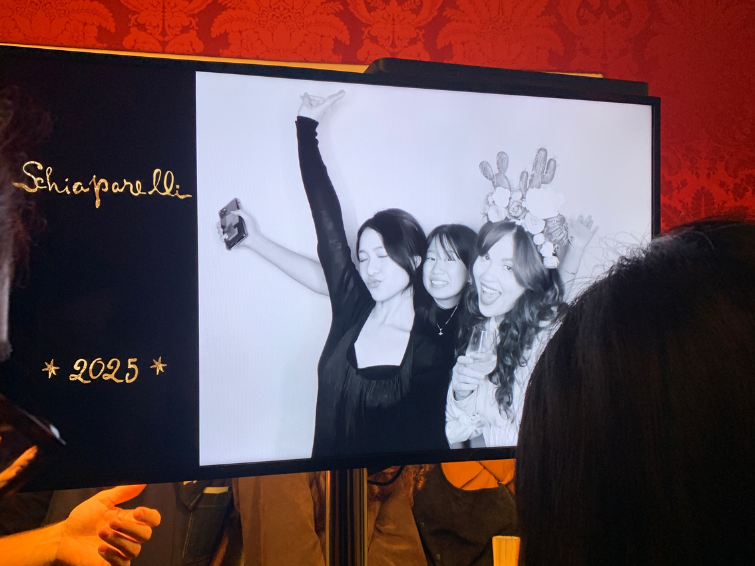
Behind the scenes, Schiaparelli’s Christmas party. Photo by Kelly Vo.

Schiaparelli by Daniel Roseberry, ‘The Agony and the Ecstasy’ Haute-Couture SS2026. Looks on exhibition for employees to preview. Photos by Kelly Vo.
Schiaparelli is a house with a very strong identity. What has working with the brand taught you, and has it shaped the way you think about your own design?
I think a fashion house is everyone involved in it. Once I started working in fashion, I figured out that a brand is not one identity; it is a lot of designers’ identities blending into the same purpose. Working with these seniors taught me there is more than one way to problem-solve, to be efficient, and specifically, it is okay to not do it like everyone else. Just try, and we will eventually get to where we want to be.
You grew up in Saigon before studying in London and working in Paris. How has moving between these very different cities shaped the way you see fashion?
That every city has its own rhythm and style. When I first moved abroad, fashion was a way for me to belong. But after moving among so many places, fashion became something I started looking at from the outside. Instead of dressing myself, I find joy in dressing others now and studying fashion almost like a scientist with a subject. In a way, I am no longer trying to be part of the rhythm; I am more interested in observing it, understanding it, and seeing what it reveals about people and culture. I am fine with a T-shirt and a good pair of black trousers nowadays.
“Instead of dressing myself, I find joy in dressing others now and studying fashion almost like a scientist with a subject. In a way, I am no longer trying to be part of the rhythm; I am more interested in observing it, understanding it, and seeing what it reveals about people and culture.”

Kelly Vo, jersey motorbike jacket with hand-sewn flowers. Photo by Kelly Vo.
Do you find your roots coming through in your work, whether in the way you approach craft, colour, or storytelling? Are there parts of Vietnamese culture you would love to bring into fashion practice one day?
Almost every project I worked on during my first two years at Central Saint Martins was rooted in Vietnam. I find myself returning to it for inspiration, not just because it is home, but because there is still so much to learn and uncover.
I am fascinated by the small questions: What did people wear in 1939, in 1974, in 1999? What were the events that shaped the lives of ordinary people? One of my projects, ‘Mom’s Night Out’, was inspired by my mother’s stories about wanting to go clubbing in the 1990s despite having strict parents. It became this fun journey into post-war Vietnam, discovering how people socialised, dressed and expressed themselves during a time that was not often documented through fashion. What draws me to Vietnamese culture is that one personal story can open the door to a million others. If there is anything I would like to bring into fashion practice, it is not necessarily a specific craft or aesthetic, but a commitment to telling these stories of everyday people, family histories and overlooked moments. It might inspire someone else.
“I am fascinated by the small questions: What did people wear in 1939, in 1974, in 1999? What were the events that shaped the lives of ordinary people?”
Finally, what are your plans moving forward? How do you imagine your work growing over the next few years?
Right now, I am realising how much I still do not know and how many skills I want to continue developing. Before I worked in the industry, I was fueled by this ambition to start my own brand, put my name on the door and become successful. But after studying and interning, I have learned to slow down a little. I want to spend time observing what is actually missing in fashion, what I can genuinely contribute, and where my strengths lie. Only then do I think it makes sense to talk about starting a brand. Fashion does not necessarily need another brand. It needs people with a point of view. And maybe that person is not a creative director. Maybe they shape the industry in a different way. These still feel like my beginning years, and for now I am happy to explore and let the direction reveal itself rather than rush toward a title.
Follow @kelly___vo to learn more about her work.