
‘I like it. What is it?’ With Atty Tantivit
Jewellery exhibition at ATTA Gallery
Atty Tantivit is Founder and Director of ATTA Gallery in Bangkok, which presents exhibitions and activities centred around contemporary visual art forms. Its latest exhibition I like it. What is it? features jewellery from Atty’s personal collection, and is co-curated with Chalisa Viravan. Hear from Atty about how she acquires jewellery, and what this exhibition has meant to her and visitors.

I like it. What is it? exhibition view. Image courtesy of ATTA.
Please share how you came up with the title of the exhibition, ‘I like it. What is it?’
When I first showed the curator my collection, we tried to identify themes based on the emotions I felt when choosing pieces to wear. We attempted to draw connections between the emotions and the pieces, but it still felt somewhat superficial.
She then asked if there was a particular “trigger” when I encountered a piece that I eventually chose to acquire. I spent some time reflecting, almost conversing,with the pieces in my collection until I realised that my recurring response was:
“I like it. What is it?”
It was this sense of curiosity that initially drew me to many of the jewellery pieces I now own. The title reflects that moment of attraction that precedes understanding, or the point where collecting often begins.
How did you decide to work with a co-curator Chalisa Viravan, and what was the process like working together with her to put the exhibition together?
I have known Chalisa since grade school. She was a few years my junior, and our mothers are still friends to this day. She has worked in fashion and once ran a social media account called @tasteofnowhere, which focused on aesthetics and personal taste.
At the outset, I was interested in how jewellery can signal one’s taste, so I thought of inviting someone from outside the contemporary art field to look at my collection with a fresh perspective. When we reconnected, however, I discovered that her interests had shifted toward self-discovery and well-being.
As we worked together, she naturally wanted to explore the psychological dimensions behind my choices: my desires, fears, and motivations. Through the jewellery I wear and the energy I project, the exhibition gradually became a way to reflect how I seek connection with others, albeit in an introverted and sometimes complicated way.
Although she did not select pieces to be shown, our deep conversations guided us to naturally come up with what you see in the exhibition.
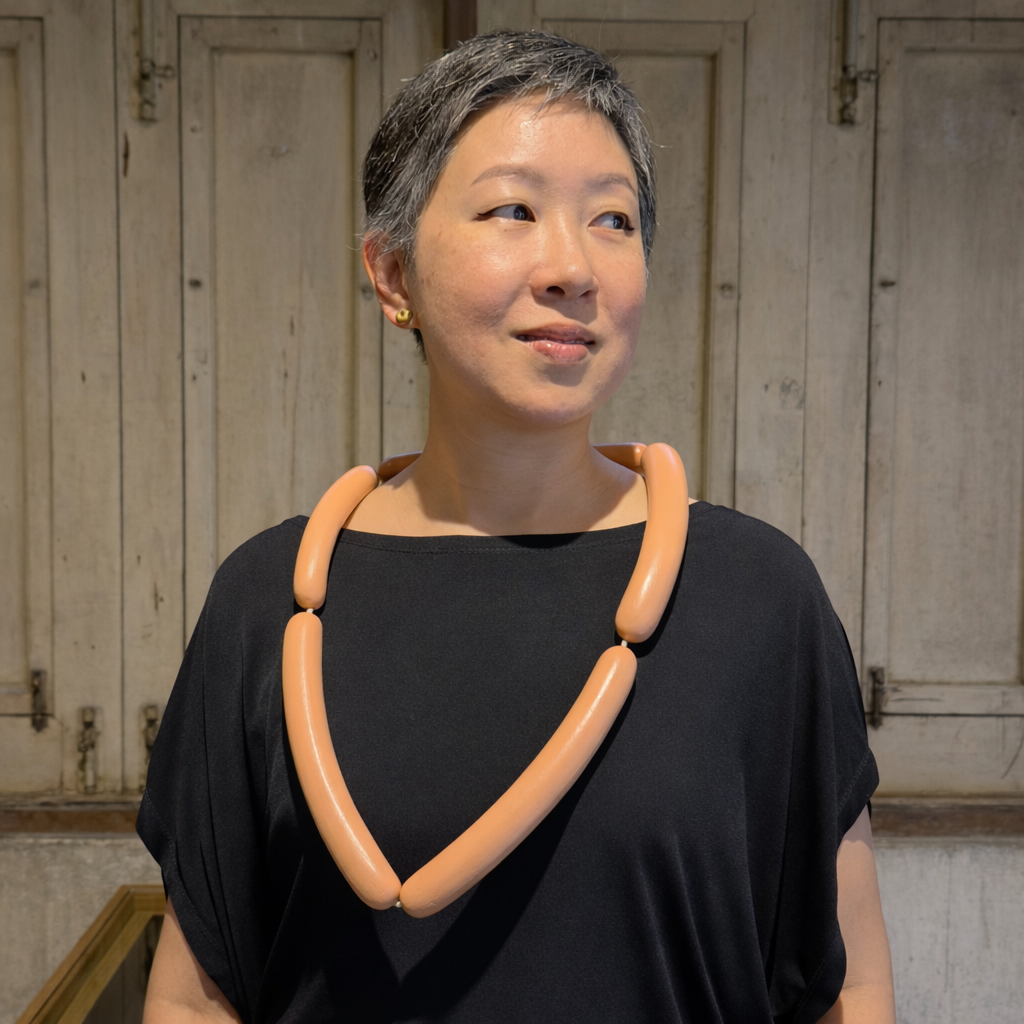
Atty wearing Frankfurter by David Bielander. Image courtesy of ATTA.
How did you select the jewellery pieces that are included in this exhibition? Please write about a few highlights from the exhibition, and why they are highlights to you. The reasons could be the design, the rarity, the sentimental value etc.
We wanted the exhibition to be story-driven. I began by listing pieces associated with memorable encounters. Some were light-hearted, while others more complex.
From there, we selected key works to place at the centre of the exhibition space as anchors, along with accompanying anecdotes. Chalisa also encouraged me to include additional pieces that carried similar “energies” to those central works, but without accompanying anecdotes or explanations. This allows audiences to form their own connections with the pieces.
Outside the main exhibition room is a timeline of my collecting journey. I tried to include as many pieces as possible, with some dating back to before I turned ten,to show how my collecting habits have evolved over time, though I had to omit works that were too fragile or difficult to display.
One highlight for me is the Frankfurter necklace, which is placed at the centre of the exhibition. I wore it out a few times, and had the following memorable encounter:
Circa 2015
Saxophone Pub
On a late evening after a work event, while winding down with friends,
a waitress approached our table after noticing the necklace.
With a straight face, she said that outside food is not allowed.
Another highlight is the timeline wall. I was able to locate pieces that I have kept since I was a young girl. I tried to trace back to when I acquired them and placed them as accurately as possible in chronological order. In doing so, I was surprised to learn many things about myself that I had forgotten about, or had not considered before.
My journey began as a jewellery user, with pieces that were wearable and practical. Over time, my choices became bolder, and my collection “exploded” from my late thirties through to my forties. Now that I have entered my fifties, I find myself slowing down. With limited storage and only so much that I can wear, I am purchasing fewer pieces, but with greater intention. I want my vote with money to truly count.


Timeline display of pieces purchased from Atty’s 20s to the present. Image courtesy of ATTA.
The exhibition opened on 29 January. How has it been received in the few weeks since it opened? Do you have any anecdotes from visitors to share?
We have received very positive feedback. I was surprised that many visitors thanked me for being generous in sharing something so personal from my private collection. I did not think of it that way at all.
Some asked whether I felt exposed or vulnerable now that these personal objects are on public display. Others mentioned that the exhibition inspired them to revisit what they already own, or to be more intentional and adventurous in their own collecting practices.
A few visitors even remarked that they felt they could “see me” through the collection, which I found both affirming and slightly unsettling in an interesting way.
A German artist, whose works were among the very first pieces of contemporary jewellery in my collection but are not shown in this exhibition due to display difficulties, wrote to me on Facebook:
“Hey Atty
That look very real
...but also wonderfully
normal
...and the yes on transparent
What should i say ...
....shine on ...this way”
I think that is really nice.
Part of your exhibition text notes that the jewellery you wear functions as "both magnet and filter". Could you explain how the jewellery you wear can create meaningful connections with people you meet?
I consider myself an introvert, even though my work often requires me to engage with many people. I am not particularly comfortable with small talk in large crowds, but I do enjoy deeper conversations with a few individuals.
Jewellery becomes a kind of social interface or even armour for me. If I prefer not to be approached, I might wear bold, visually assertive pieces that create distance. When I am open to interaction, I tend to wear smaller, subtler works that invite closer engagement, asking people to “invade” my personal space.
In this way, jewellery filters who approaches me, often those driven by curiosity. For me, meaningful connections do not have to be long conversations. A brief exchange, a shared question, or even a passing acknowledgment can be deeply memorable.
On display at the exhibition are not only jewellery but also clothing. How do the clothing complement the jewellery, or otherwise complete the exhibition?
Jewellery is meant to be worn on the body, not simply displayed on walls. Presenting the pieces with clothing helps simulate an encounter with a person wearing them, rather than viewing them as isolated objects.
Both clothing and jewellery function similarly for me. They can attract or repel. Displaying them together also communicates that these are pieces I actively live with, rather than objects kept away in drawers.
“Jewellery is meant to be worn on the body, not simply displayed on walls. Presenting the pieces with clothing helps simulate an encounter with a person wearing them, rather than viewing them as isolated objects.”
ATTA Gallery was founded in 2010, and was the first to specialise in contemporary art jewellery in Thailand. How has it evolved over the years and deepened into this aim, and/or expanded from it?
After ten years of operation, I began expanding ATTA beyond contemporary art jewellery. In 2020, we moved to our current, larger space. At the same time, the COVID-19 pandemic limited our ability to work with international artists, prompting us to engage more closely with Thai practitioners.
This led us to broaden our scope to include other forms of material-based art, and eventually contemporary art more broadly, with a continued emphasis on materiality.
More recently, ATTA has shifted from operating primarily as a commercial gallery to functioning as a platform for exchange and cultivation, aimed at developing art audiences in Thailand. This exhibition is part of our Collector/ Curator/Conversation series. By presenting works from private collections and activating conversations around them, we hope to support the journey from art appreciator to buyer, and from buyer to collector.
Jewellery will always be present at ATTA and in my life. You will see jewellery displayed alongside other types of artworks in our exhibitions, as we hope to challenge the notion of hierarchy when it comes to art, especially to living with art.
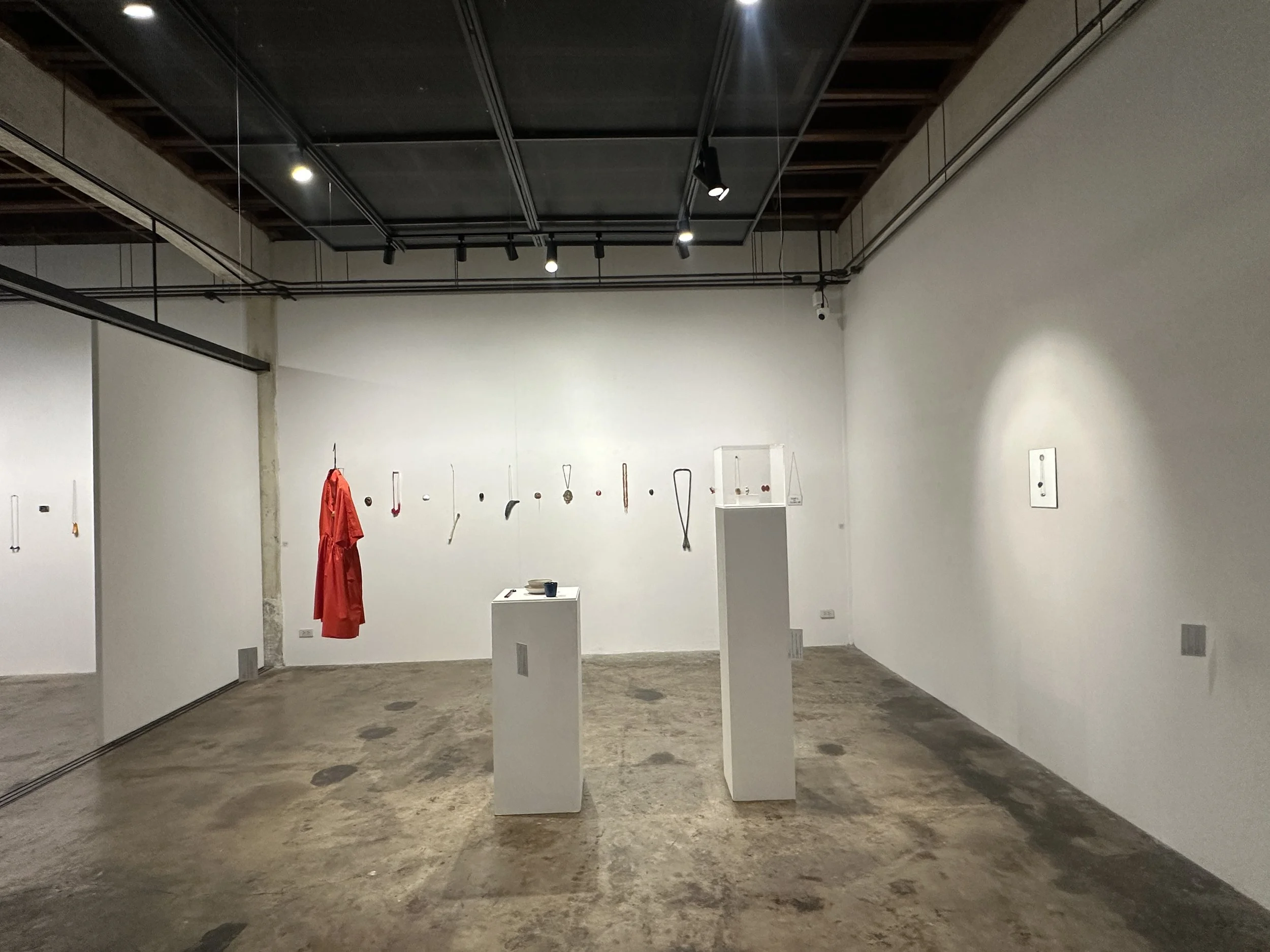
I like it. What is it? exhibition view. Image courtesy of ATTA.
Could you tell us about upcoming exhibitions/projects around jewellery that ATTA Gallery is working on for the near future?
Last year, we launched the ATTA X programme through an open call, providing THB50,000 in funding to support a selected artist in developing an exhibition at our space. The aim is to help artists better understand the commercial aspects of exhibiting and working with galleries. This exhibition will follow directly after the current one.
We are also preparing the second part of our Cellulose exhibition series. Following Cellulose I: Paper, Cellulose II: Wood will present works made from wood by various artists, with the aim of educating audiences about the value of materials that are currently undervalued and under-collected in Thailand.
In addition to exhibitions, we will be introducing new cultivation programmes that bring like-minded individuals together to exchange experiences and ideas about art. We hope to help them develop deeper appreciation and discover the joy of living with art.
‘I like it. What is it?’is on view at ATTA Gallery from 29 January to 22 March 2026.