
Dewi Fashion Knights at Museum Nasional Indonesia, Studio Jeje, ANW and Gelap Ruang Jiwa
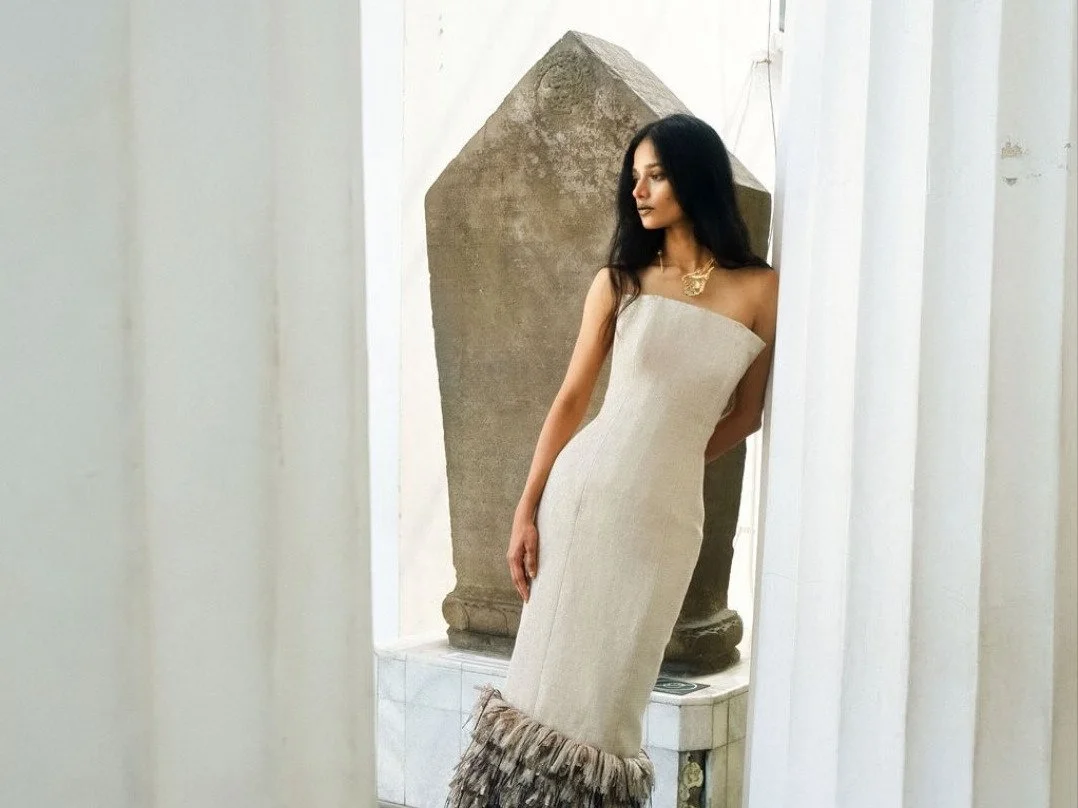
Stella Rissa: Mother Earth collection. presented at Dewi Fashion Knights. Photo by Derai Studio. Image courtesy of Dewi Magazine.
A fashion week is, by nature, built on spectacle. Designers bring their ideas to the public through runways, performances and carefully staged experiences. But looking back at this year's Jakarta Fashion Week (JFW), I found that some of the most interesting moments went beyond the collections themselves. Held from 26 October to 1 November 2026 at City Hall, Pondok Indah Mall 3, JFW explored these possibilities through several approaches. Dewi Fashion Knights presented contemporary collections in a museum setting, while Studio Jeje and ANW took part in the Australia–Indonesia Creative Exchange Program, bringing Indonesian and Australian designers together in Melbourne and Jakarta. Elsewhere, Gelap Ruang Jiwa collaborated with multidisciplinary artist Dani Huda bringing jewellery and moving images together. This reflection examines how JFW is expanding the ways it presents fashion, creating room for designers to experiment with materials and techniques, place their work in new contexts and collaborate across creative disciplines.
Beyond the Runway
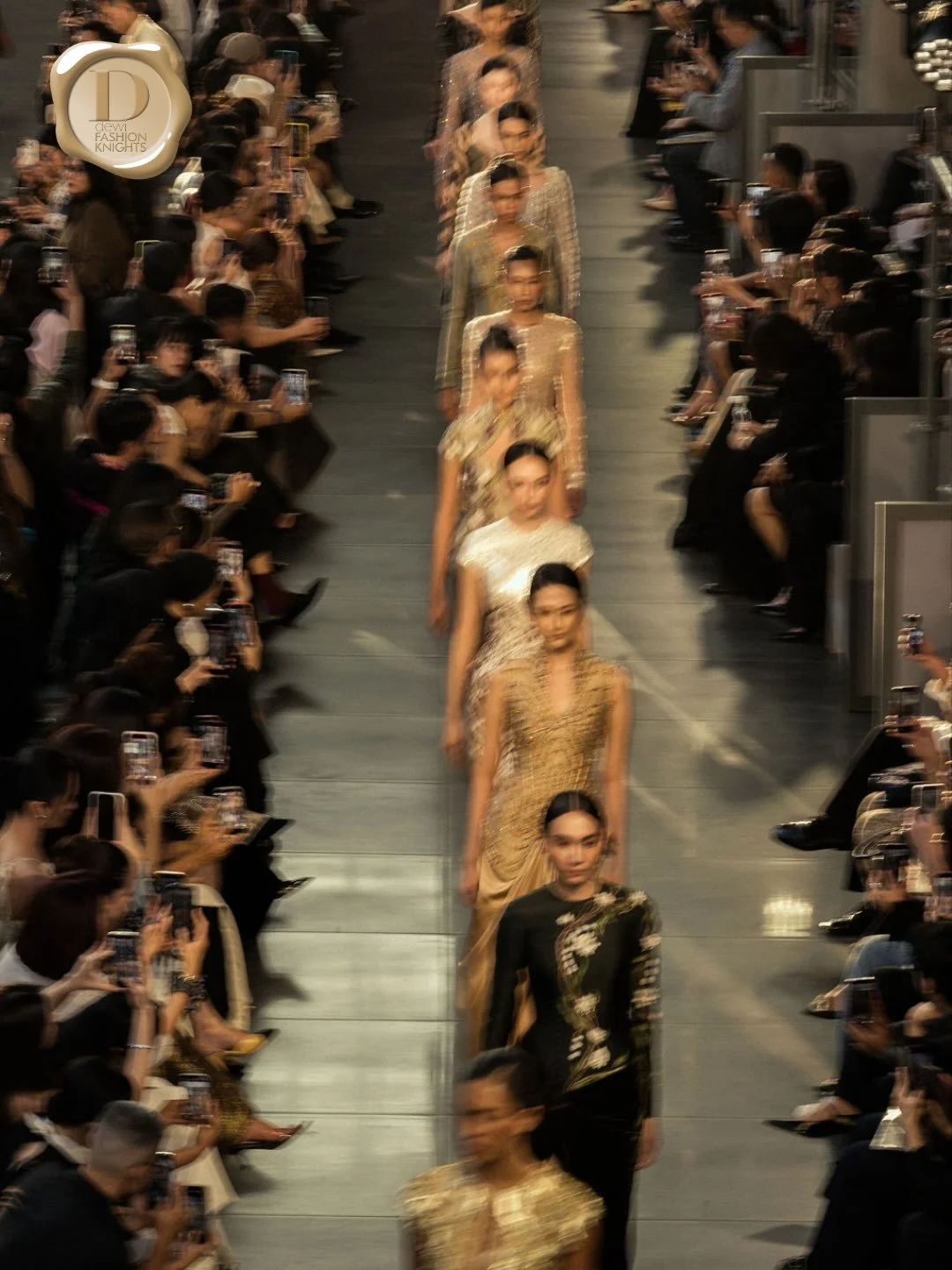
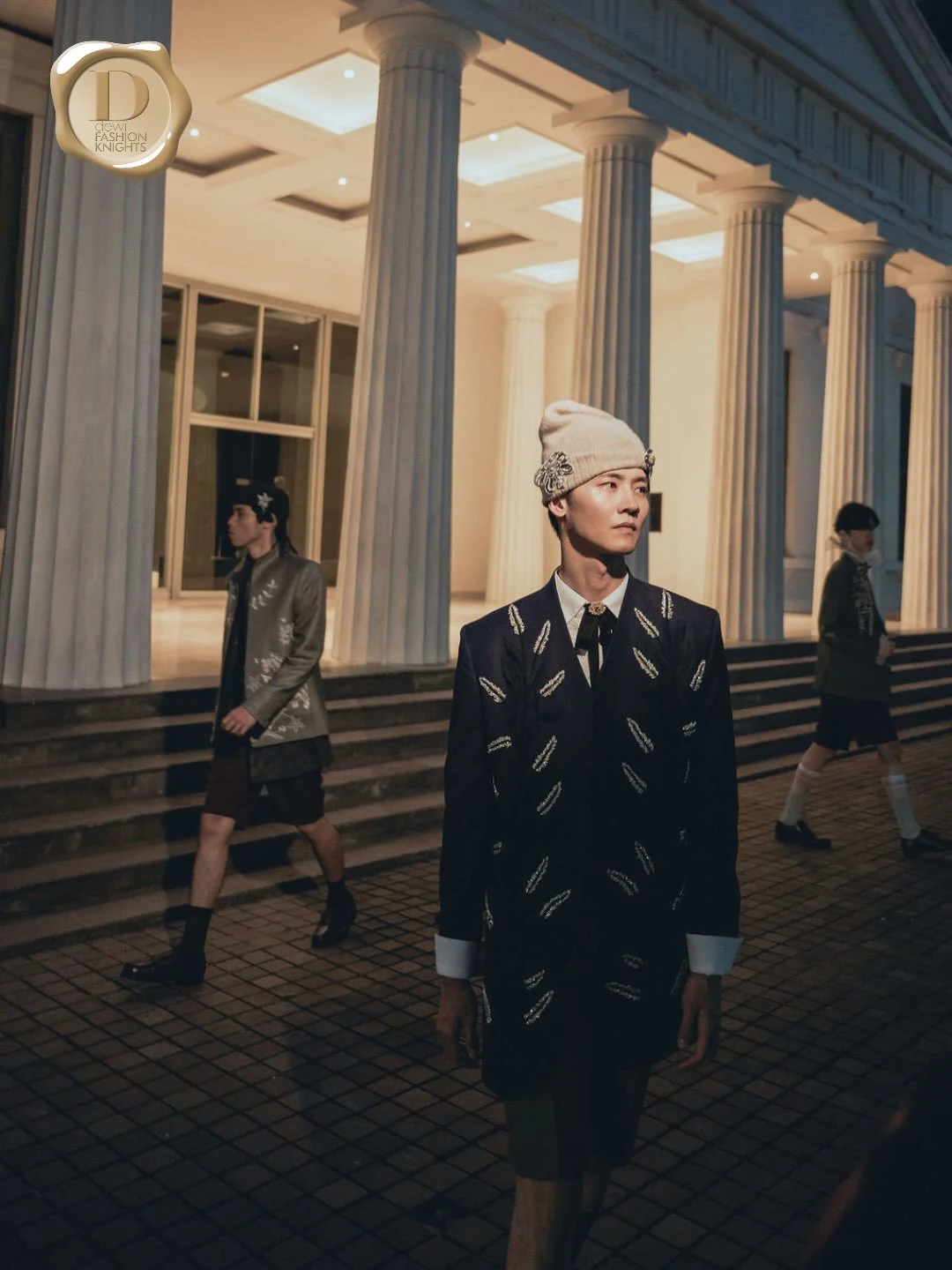
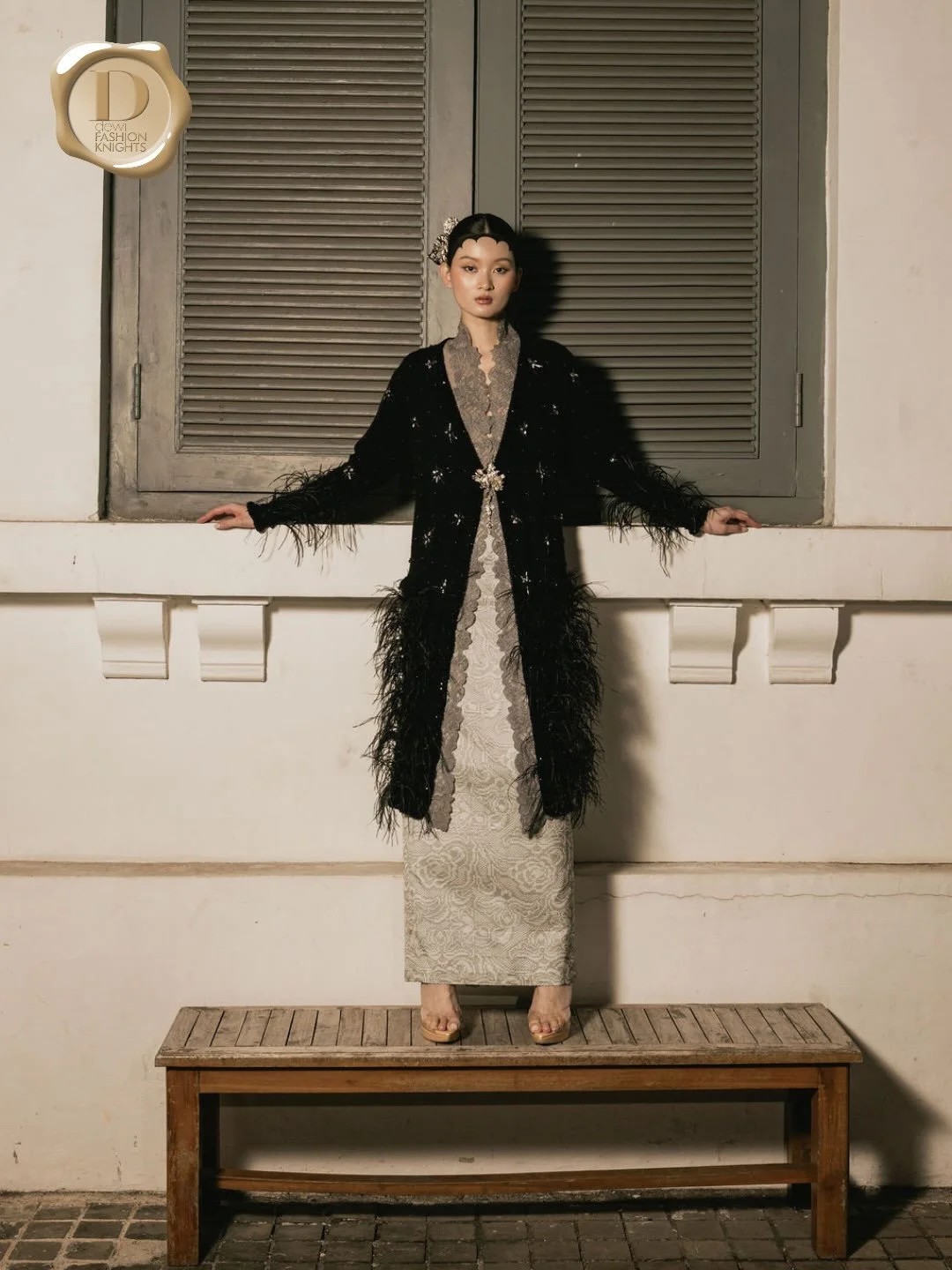
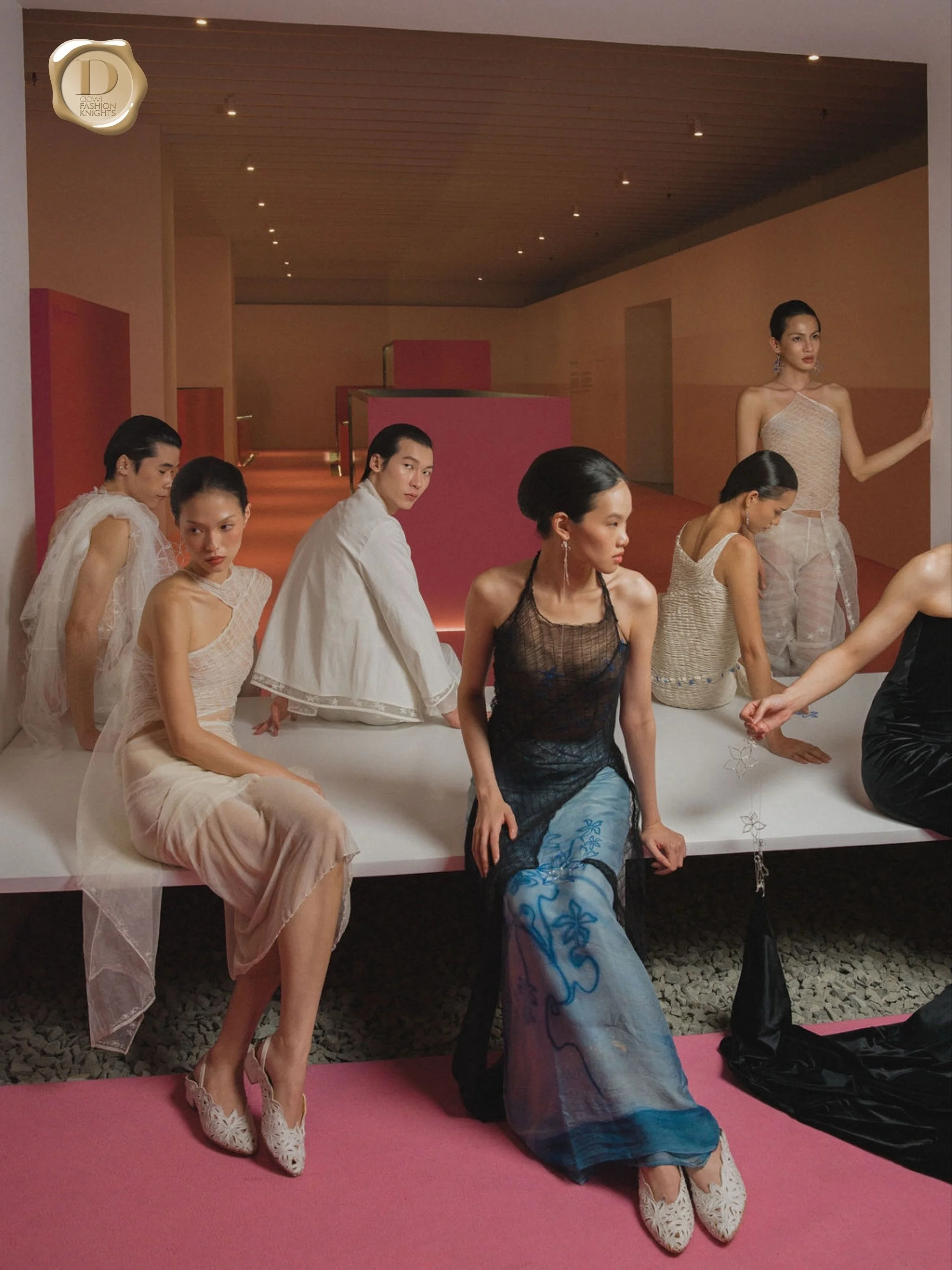
Collections presented at Dewi Fashion Knights: Hian Tjen: Anyar; Studio Jeje Homme: Wahyu Keprabon; Sebastian Gunawan: Laras Rupa; ANW: The Study of Light, Refraction, and Shadow. Photos by Derai Studio. Images courtesy of Dewi Magazine.
A key highlight this year was Dewi Fashion Knights (DFK), which brought JFW to a close. For the first time, the showcase took place at Museum Nasional Indonesia, a separate venue from the main stage at City Hall, Pondok Indah Mall 3. Titled 35 Years of Dewi: Nurturing Vision, Celebrating Creativity, it featured Hian Tjen, Sebastian Gunawan Signature, Stella Rissa, ANW and Studio Jeje Homme. Departing from the conventional runway format, DFK incorporated exhibition-style displays with models as living mannequins, inviting audiences to encounter the garments from a different perspective.
While a runway offers a fleeting view of clothing in motion, this format lets audiences examine its construction and details more closely. JFW explored a similar approach in 2024, when designer Toton Januar presented his 2025 collection through an exhibition at a separate venue, the InterContinental Jakarta Pondok Indah, instead of a live runway show. This DFK presentation builds on that idea, with the stillness of the living mannequins drawing attention to how the garments sat on the body, from their silhouettes to the way the fabrics fell.
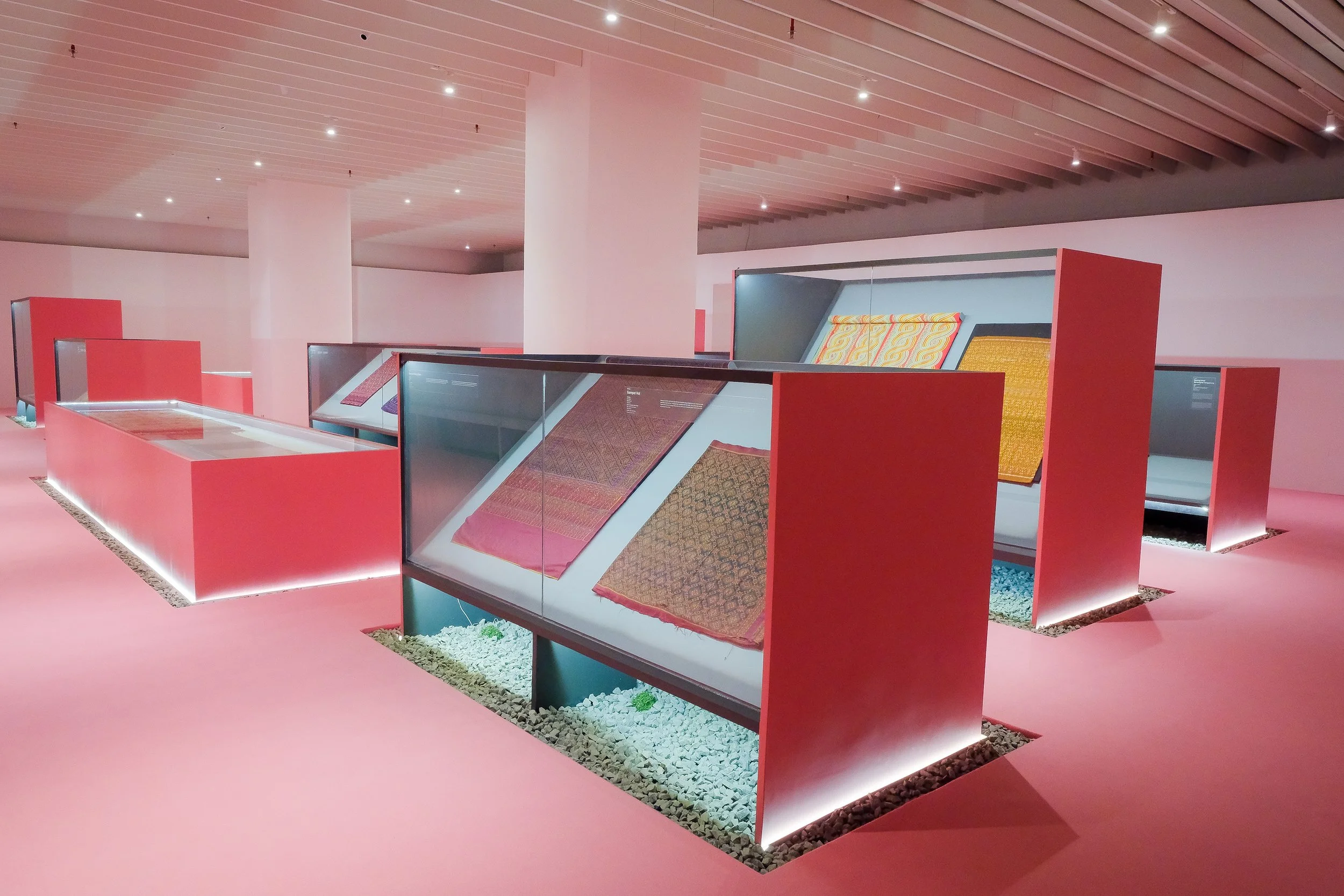
Waves of Weaves at Museum Nasional Indonesia. Image courtesy of Dewi Magazine.
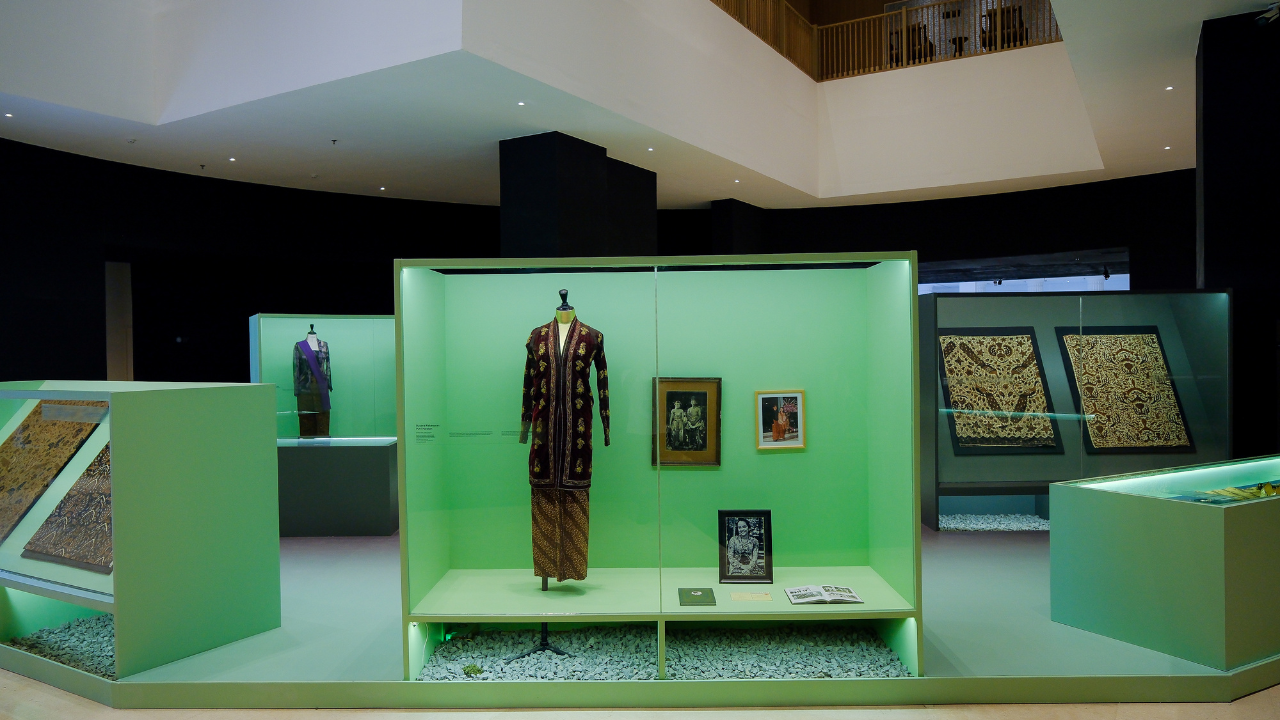
Suwung: A Space of Her Own at Museum Nasional Indonesia. Image courtesy of Dewi Magazine.
The showcase also coincided with the opening of two exhibitions at the museum: Waves of Weaves, which explores shared textile heritage across Southeast Asia, and Suwung: A Space of Her Own, featuring personal belongings and garments associated with Gusti Nurul, daughter of Mangkunegara VII, a nobleman known for his role in preserving Javanese culture. Both exhibitions remain open to the public until January 2027.
The exhibitions complemented the DFK presentation by placing its contemporary collections alongside wider perspectives on textile heritage and the history of dress. Hian Tjen's Anyar, for instance, drew on Songket Sambas, a traditional textile from West Kalimantan. Meanwhile, the Javanese cultural references explored in Suwung offered a point of connection with Studio Jeje Homme's Wahyu Keprabon, which drew on a Javanese concept of divine favour and royal legitimacy, translating its associations with authority and nobility into contemporary menswear.
Exchanges and Collaborations
This year's JFW brought together more than seasonal collections, with presentations that drew on different creative disciplines and cultural references. Among them were an exchange between Indonesian and Australian designers, and a collaboration that brought fashion and moving images together.
The Australia-Indonesia Creative Exchange Program connected Indonesian and Australian designers through a series of professional exchanges and showcases. The programme first brought Studio Jeje and ANW to Melbourne in February, where designers Angelita Nurhadi and Astrid Nadia Wiradinata presented their work as part of the Melbourne Fashion Festival, in collaboration with RMIT University. It culminated at Jakarta Fashion Week 2027 with the Australian Runway Showcase, featuring both designers alongside Australian label SHIYO by Shiva Yousefpour. Across the two stages, the designers engaged with different cultural and professional settings, extending the exchange beyond a single showcase.
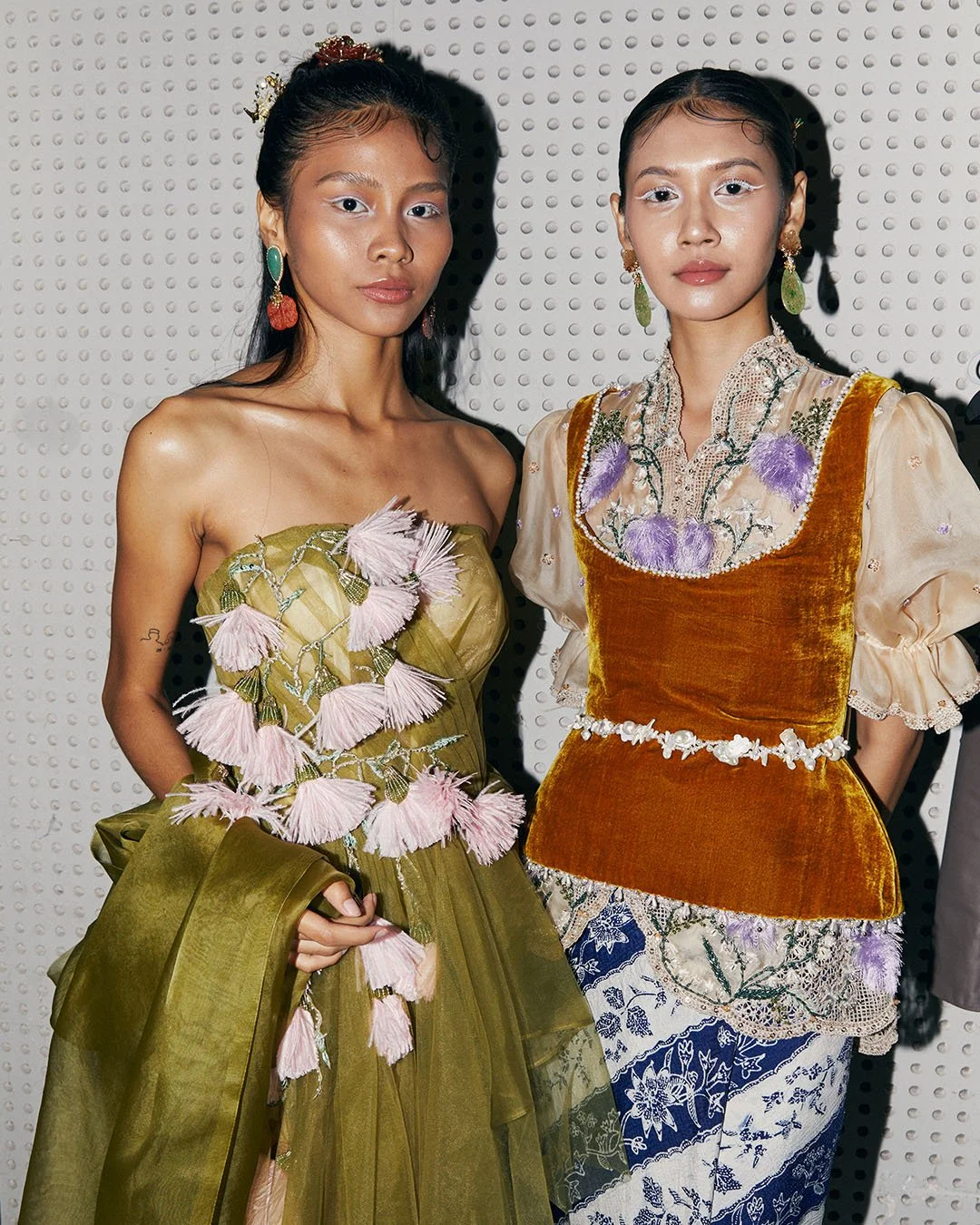
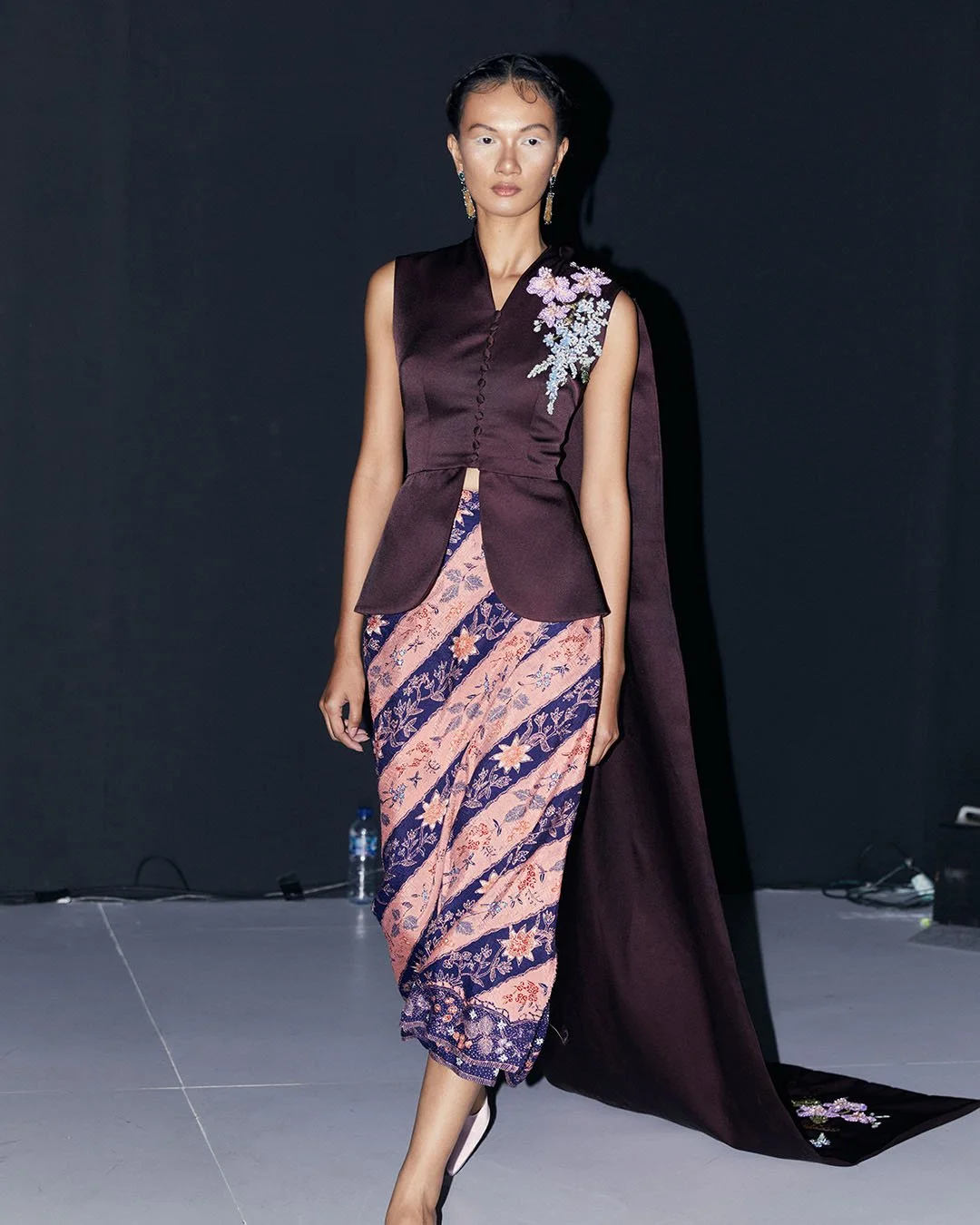
Hands by Jeje: Buketan collection, presented at the Australia-Indonesia Creative Exchange show. Photo by Torik Danumaya. Image courtesy of the designer.
The two designers approached the showcase through distinct design perspectives. Studio Jeje unveiled Hands By Jeje: Buketan, a collection from the label's bespoke line, highlights Peranakan Pesisir dress traditions through kebaya silhouettes, batik motifs, and elaborate floral embellishment signature to the label. The Peranakan batik motifs were developed in collaboration with Batik Rosethree, while references to Australian flora and fauna added another dimension to the collection.
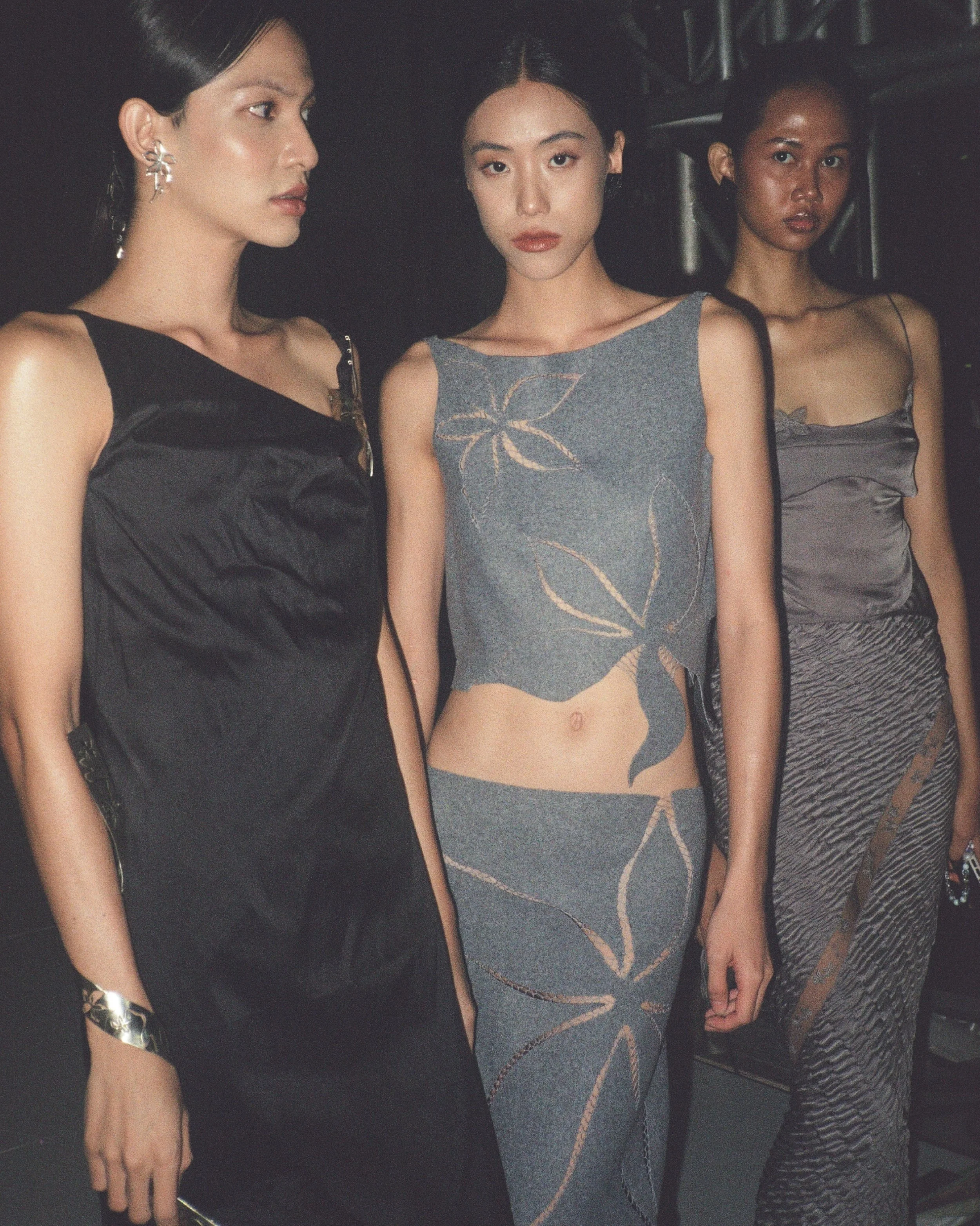
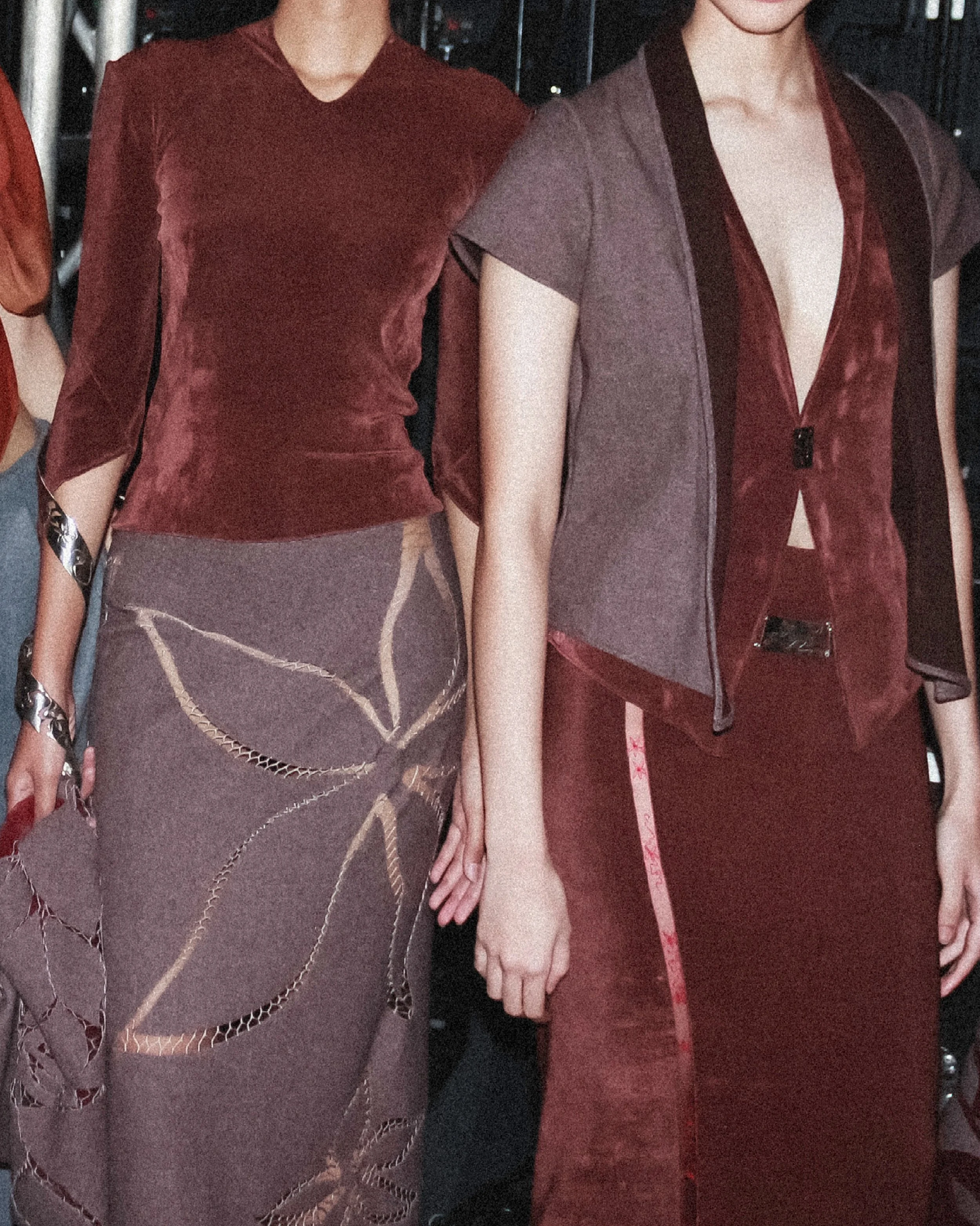
ANW: Open Wound collection, presented at the Australia-Indonesia Creative Exchange show. Image courtesy of the designer.
ANW’s Open Wound collection brings together Peranakan dress references with a reworking of the traditional baju bodo, alongside its material explorations through sculptural forms, openwork techniques and a distinctive metal waist ornament. Their respective approaches reflected different forms of cultural exchange, from collaboration with textile practitioners to the reinterpretation of dress traditions and material references.
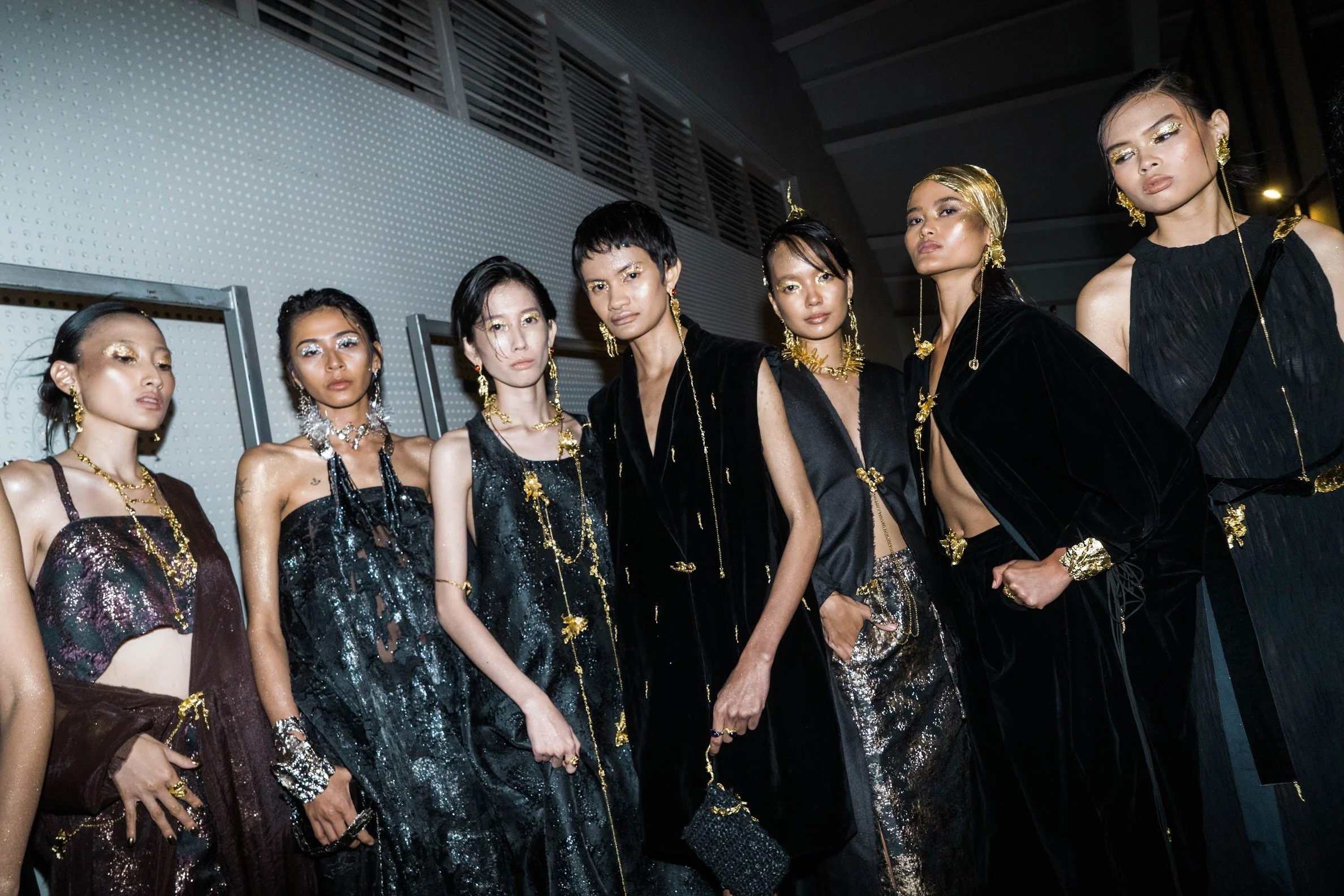
Gelap Ruang Jiwa: Riuh Dalam Senyap collection, presented at the MAGNUM: Crafted for Pleasure show. Image courtesy of the designer.
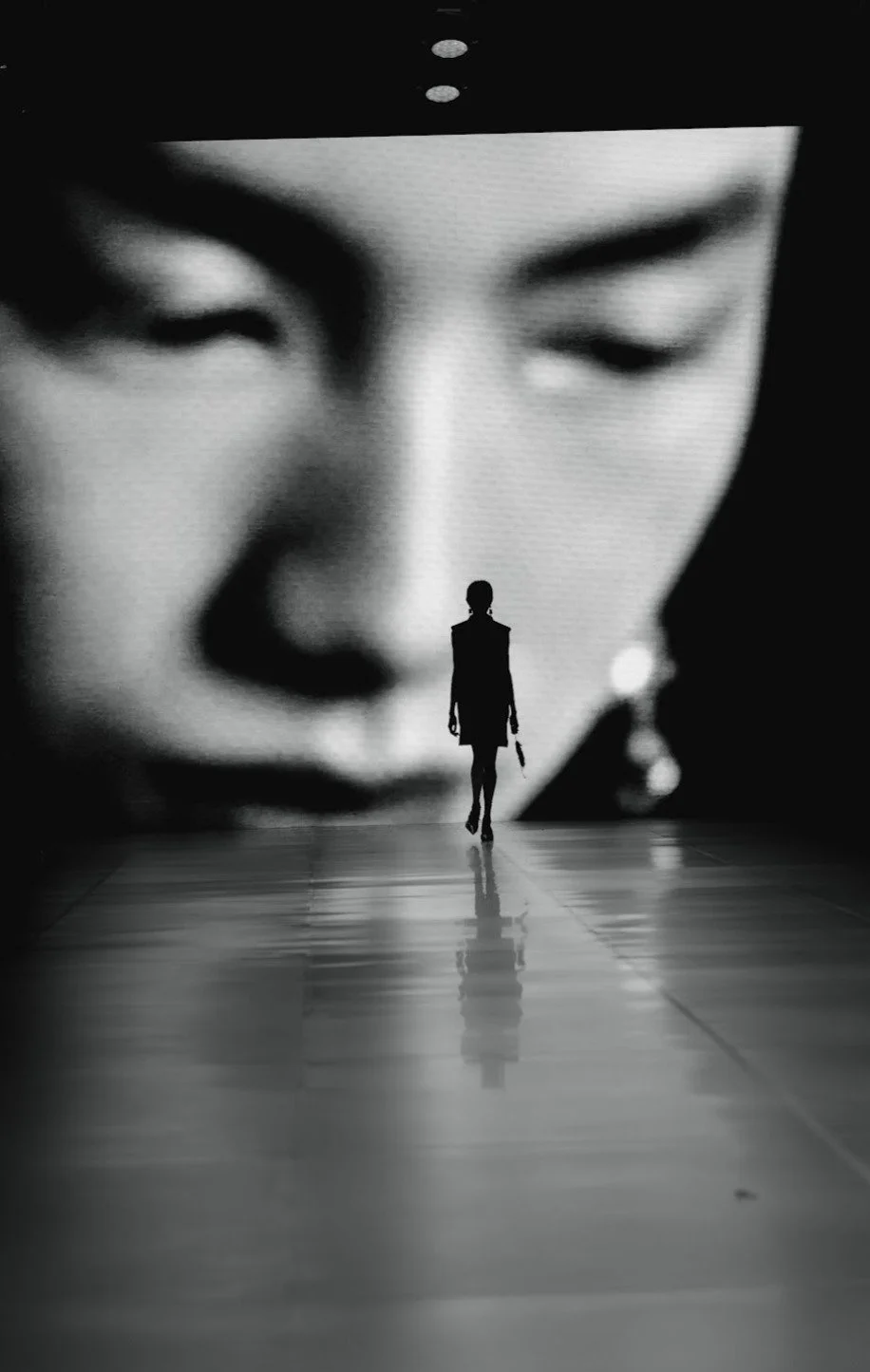
Gelap Ruang Jiwa: Riuh Dalam Senyap collection, presented at the MAGNUM: Crafted for Pleasure show during Jakarta Fashion Week 2027. Image courtesy of the designer.
Gelap Ruang Jiwa introduced another kind of exchange, between disciplines, through its collaboration with multidisciplinary artist Dani Huda for Riuh Dalam Senyap, presented as part of the MAGNUM: Crafted for Pleasure show. The Indonesian jewellery label's sculptural pieces, including oversized cuffs, statement necklaces and irregular metallic clasps, were set against dark, restrained silhouettes. Alongside them, Huda's black-and-white fashion film moved between close-ups of the models' faces and textural surfaces, using light and shadow to create an atmospheric visual setting. The jewellery stayed at the forefront, while the film extended the collection's visual language, drawing attention to the relationship among the body, texture and adornment.
An Evolving Fashion Week
Together, these developments point to how Jakarta Fashion Week is expanding the ways fashion is interpreted and experienced. Dewi Fashion Knights adopted a hybrid presentation format, building on earlier experiments with alternative settings. Gelap Ruang Jiwa's collaboration with multidisciplinary artist Dani Huda brought jewellery and moving images together, while the Australia–Indonesia Creative Exchange Program connected Indonesian and Australian designers through showcases in Melbourne and Jakarta.
The runway and seasonal collections remain central to JFW, but they are no longer the only ways audiences encounter a designer's work. Through exhibitions, creative collaborations and exchanges across cultural contexts, this year's event showed how fashion can be experienced in different forms, offering audiences a closer look at the ideas and practices behind the collections.