
A Room of APARA’s Own
Filipino womenswear label APARA Studio opens its first space with Collection 14
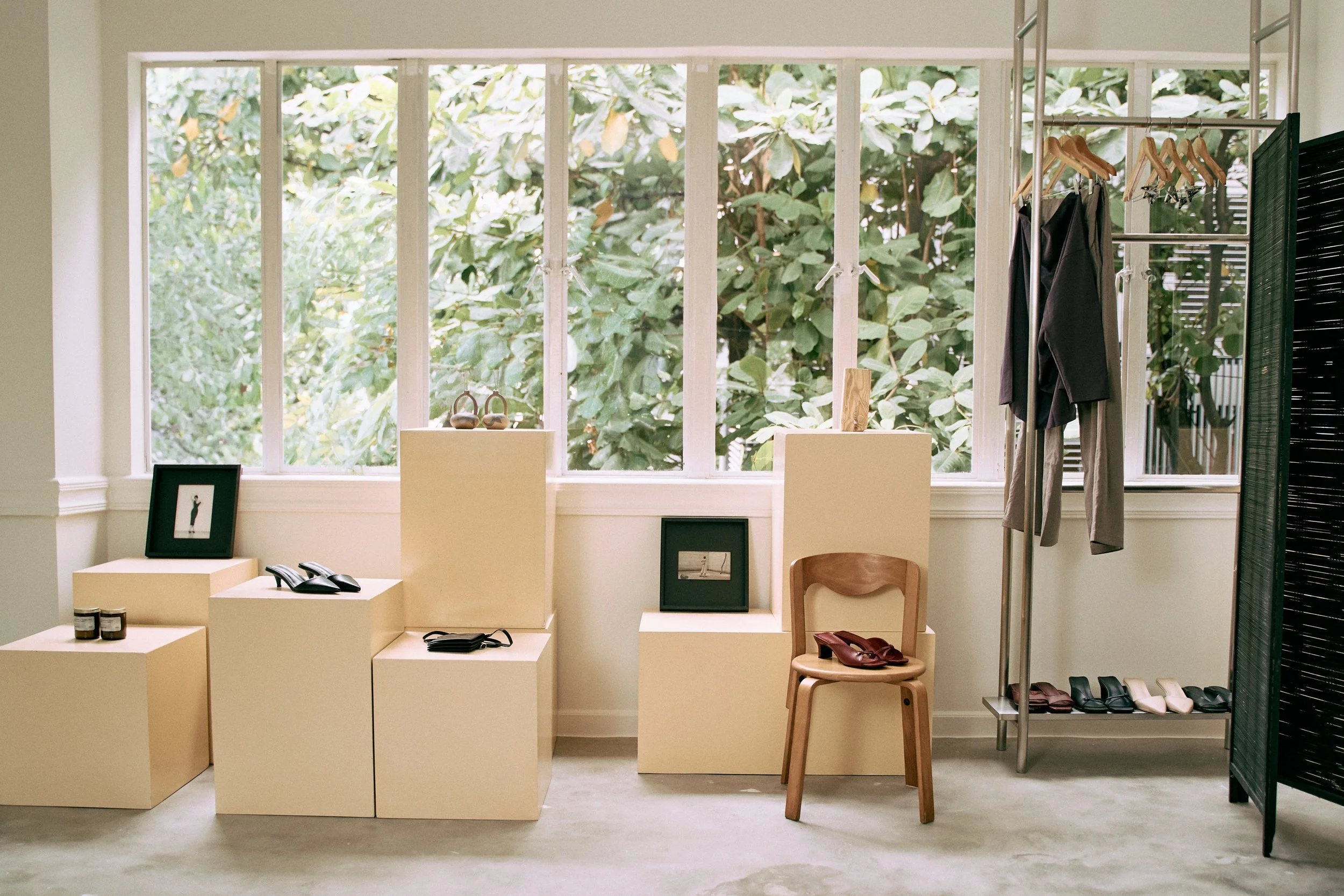
The APARA flagship store. Image courtesy of APARA.
On the afternoon of 27 May, APARA presented Collection 14 in a sunlit corridor of the YMC Building along Chino Roces Extension. Guests were seated in a single row along one side of the hallway. The hair and makeup were minimal: skin left mostly bare, with a faint sheen and little else. The music was kept low enough that one could hear the heels meet the parquet, and the faint swish of a skirt as each model passed. Eight models walked in turn, in pieces rendered in aubergine, slate and deep brown. For a flagship opening, it was an unusually quiet affair, in keeping with the way the brand prefers to work.

The APARA founders, Ariana Coronel-Go, Eya Uy and Nana Uy. Image courtesy of APARA.
APARA was founded in 2021 by childhood friends Ariana Coronel-Go, Eya Uy and Nana Uy. In under five years, working in small batches and with little fanfare, the label has quietly built a world of its own, and this opening marked its first permanent home, presented alongside Collection 14, its largest collection to date.
“From the beginning, APARA was not just about clothing,” Eya says. “It was about creating a way of thinking, creating and dressing rooted in thoughtful design, craftsmanship, timelessness and the beauty of things made with simplicity and purpose.” The collection fleshes out that thinking. Ten pieces pair new silhouettes with reworked signatures and trade the label’s usual neutrals for something deeper: aubergine, chocolate, slate and a flash of cobalt blue. Wardrobe foundations such as the strapless dress and the midi skirt return in new cuts and materials, joined by two footwear styles, a kitten heel and a pointed-toe mule. The ten pieces were created from a small yet considered repertoire of design choices. A strapless top in soft suede-touch fabric drops to an asymmetric hem, a long-sleeved cowl top, boat-necked and scoop-backed. The layered skirt, cotton twill lined in charmeuse, fastens open, half or closed by its front zip, according to the wearer’s mood.
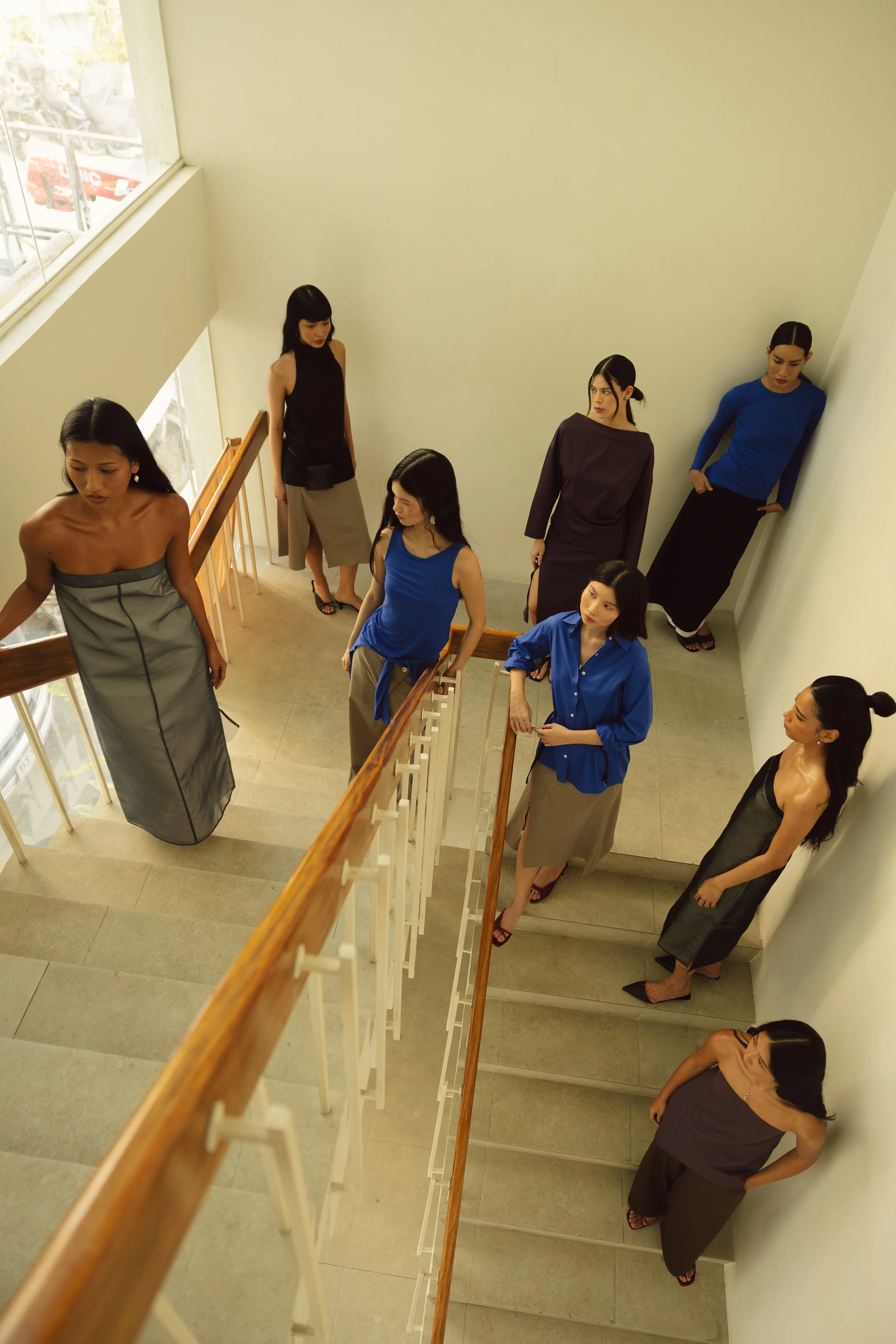
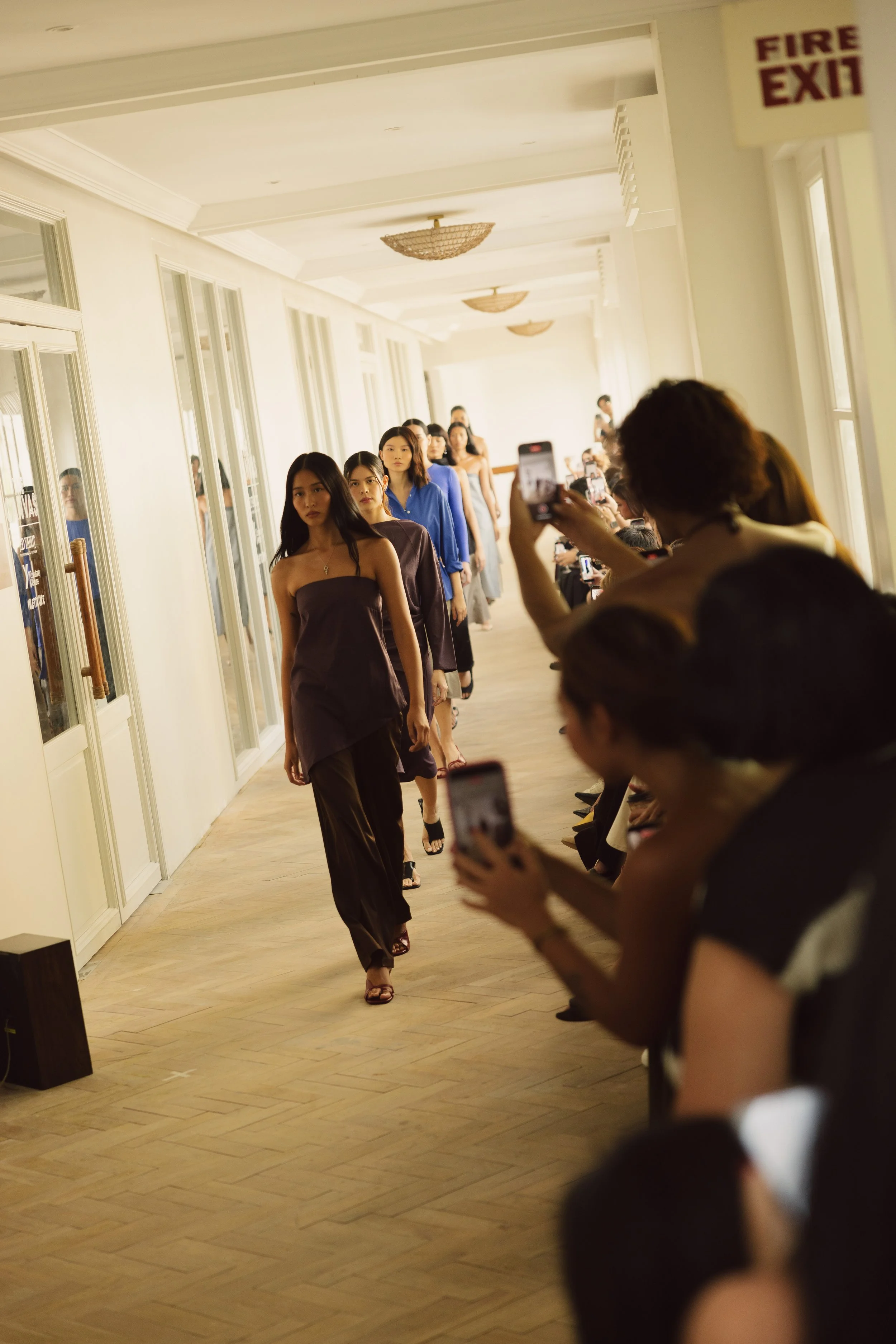
APARA Collection 14 looks. Photos by Joseph Pascual. Images courtesy of APARA.
The brand’s intention shows in how they are made. “We start with a vision of the collection: the key fabrics and colourways we will be working with, and what we could possibly create with these textures,” Eya says. Each piece passes through several iterations, and because the clothes are designed for modular, repeated dressing, the cut and the hem demand the most time. The materials are sourced across Asia, while the production, shoes included, is done locally in the Philippines.
The space is the clearest articulation of the brand’s thinking. Conceived with the architect Brian Ver, the room follows the same principles as the garments: narra parquet, brushed steel, blackened wood, a palette as spare as the clothes. Along one wall, their signature strapless dress hangs against a brushed steel panel like a framed artwork. The founders were drawn first to the room’s light. “We fell in love with the space when we first came across it because of its wide windows that open up to the most beautiful natural light, with trees casting soft shadows throughout the day,” Eya says. Objects the founders have collected over the years sit alongside work by friends and longtime collaborators: scented goods by SAANSAAN, jewellery by PRANCA, ceramics by Mikee Naval.
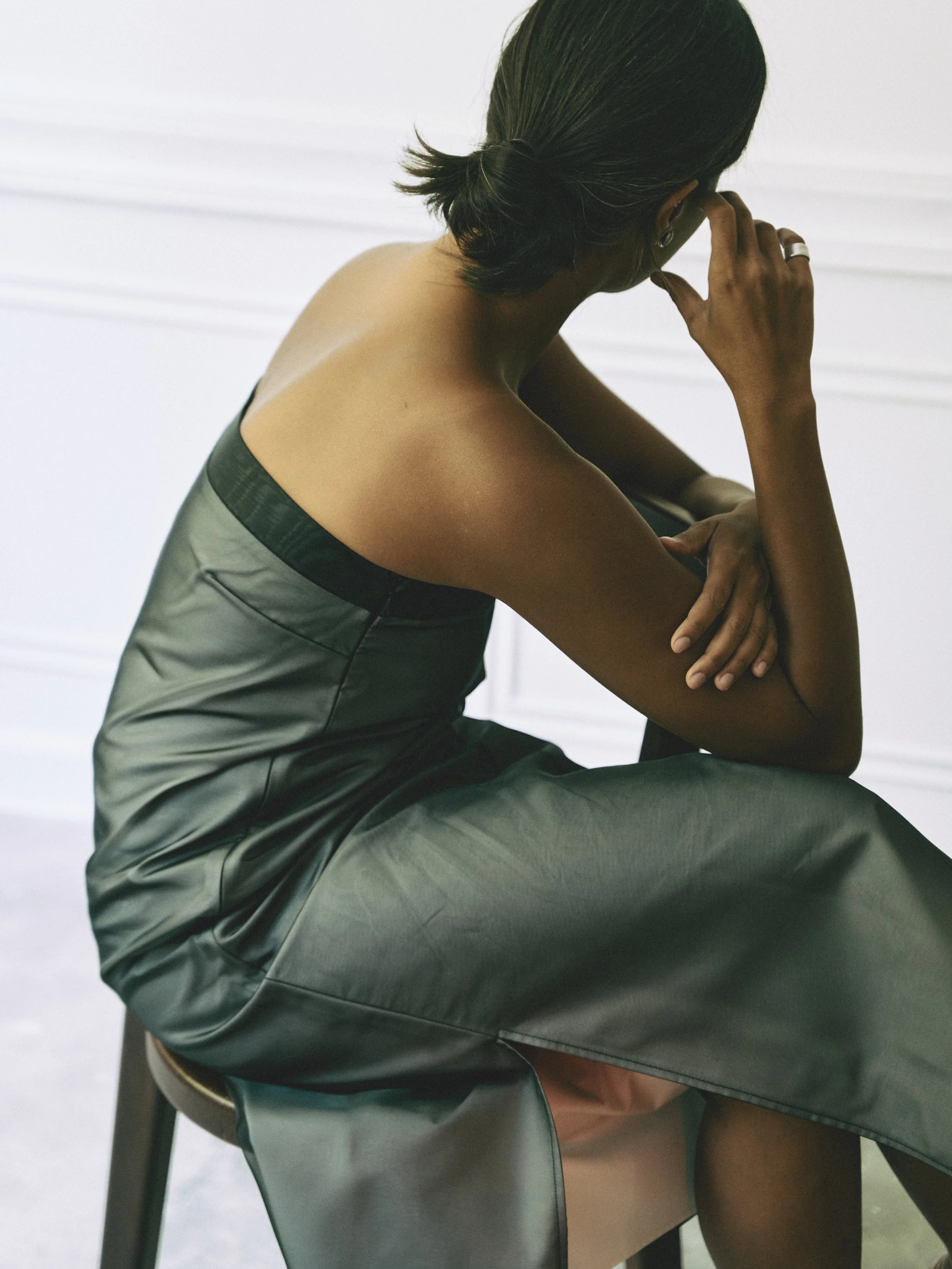
The sheer overlay dress by APARA. Image courtesy of APARA.
If there is a woman the room is built for, the founders have a clear picture of her. “The APARA woman is thoughtful, confident, and quietly discerning,” Ariana says. “As a Filipina, she values craftsmanship, intentionality, and pieces that have meaning beyond trends. She is deeply connected to her culture yet has a global perspective.” She could live in Manila, Singapore, Hanoi, Seoul or Paris, Ariana adds, and would be drawn to the same things in each: quality over quantity, longevity over novelty. One garment is designed to see her through the whole day. The same cowl top, worn centred to a meeting and slipped off one shoulder by dinner, makes the case.
Their muse spans cities, and the founders want APARA to reach just as far. “Our ambition is to build APARA into a modern Filipino design house that is recognised not only for well-designed pieces, but for a distinct point of view,” Ariana says. The aim, she explains, is to demonstrate that a brand from the Philippines can contribute meaningfully to the global conversation on design and enduring quality, and to reach leading retailers without compromising its Filipino roots.

The sheer overlay dress by APARA. Photo by Gab Villareal. Image courtesy of APARA.

The pointed toe mules by APARA. Photo by Gab Villareal. Image courtesy of APARA
Musing about what success would look like to the team, Ariana says, “Real success is when customers return season after season because the pieces have become part of their lives.” She elaborates, “It is when our products are kept, passed on, and still feel relevant years later.” For all the fanfare that comes with an opening, what the brand cares about is what comes after: the quieter life the clothes will have once they leave the room, settling into the days of the women who keep them.
The APARA Studio flagship is at Unit E, 2F YMC Building A, 2320 Chino Roces Extension, Barangay Magallanes, Makati City.
To learn more, follow @apara.studio on Instagram.