
Fashion & Books: The r y e bookshop
Shenali Wijesinghe, female authors and stretching time
Fashion & Books is a monthly column where we speak to Southeast Asian creatives about the fashion and books they read, love and collect. This series dives into the ties between the worlds of fashion, the literary arts and independent publishing in and around the region.
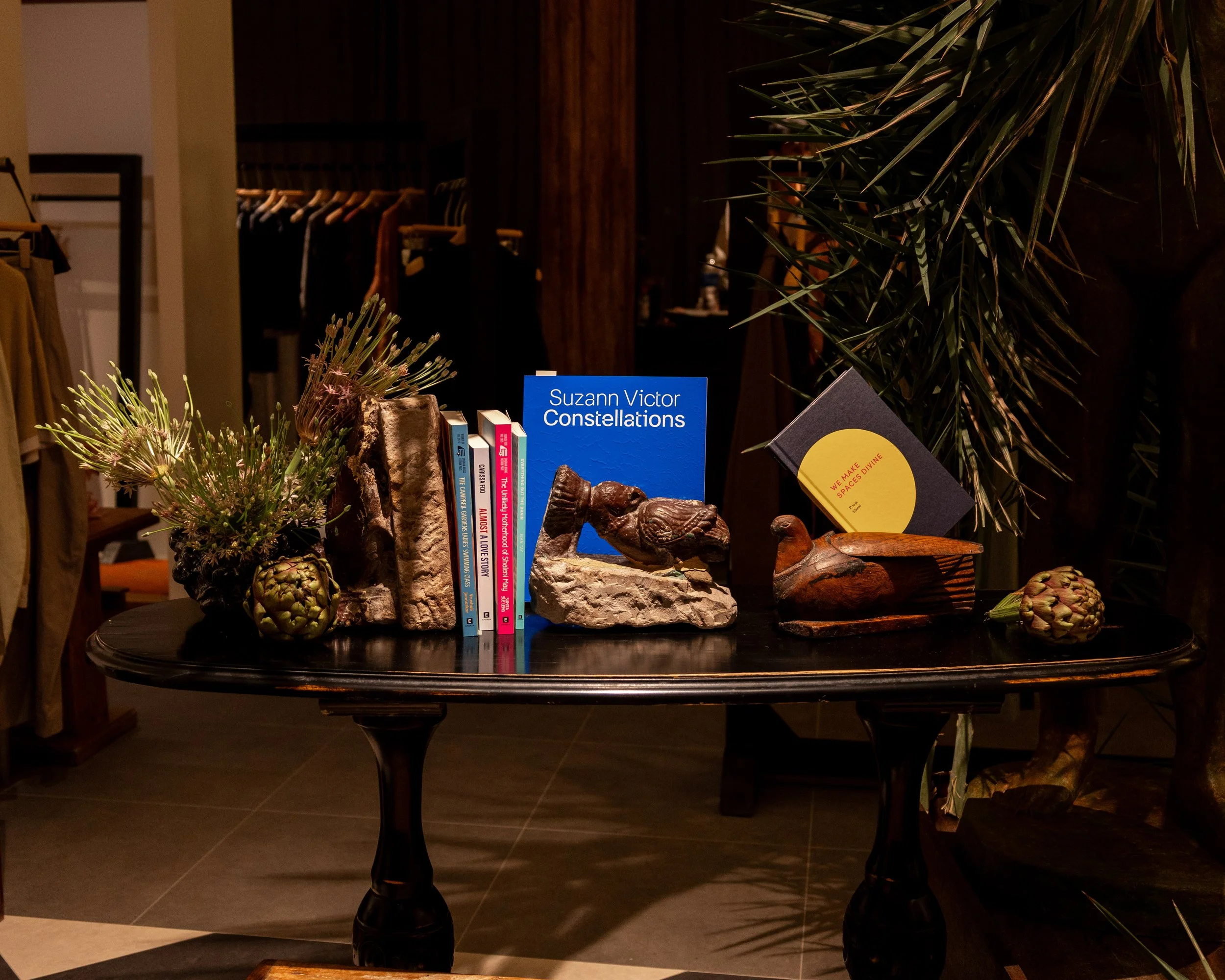
The r y e bookshop housed sixteen different local titles, with florals by Fawn World. Photo by Isabell Hansen. Image courtesy of r y e.
For two weeks in March, the r y e boutique in New Bahru brought together the tactile medium of clothes and the imaginative realm of literature, celebrating the female voices that shape our bookshelves. Featuring titles from publishers Epigram, Ethos Books, and Afterimage, alongside prints from STPI, the space transformed into a temporary bookshop, inviting lovers of both clothing and books to gather, linger and read.
“These are books that the r y e home carries,” says Shenali Wijesinghe, who leads the brand’s marketing and communications. She explains that the selection came together organically, guided by the sensibilities of the reader r y e embodies.
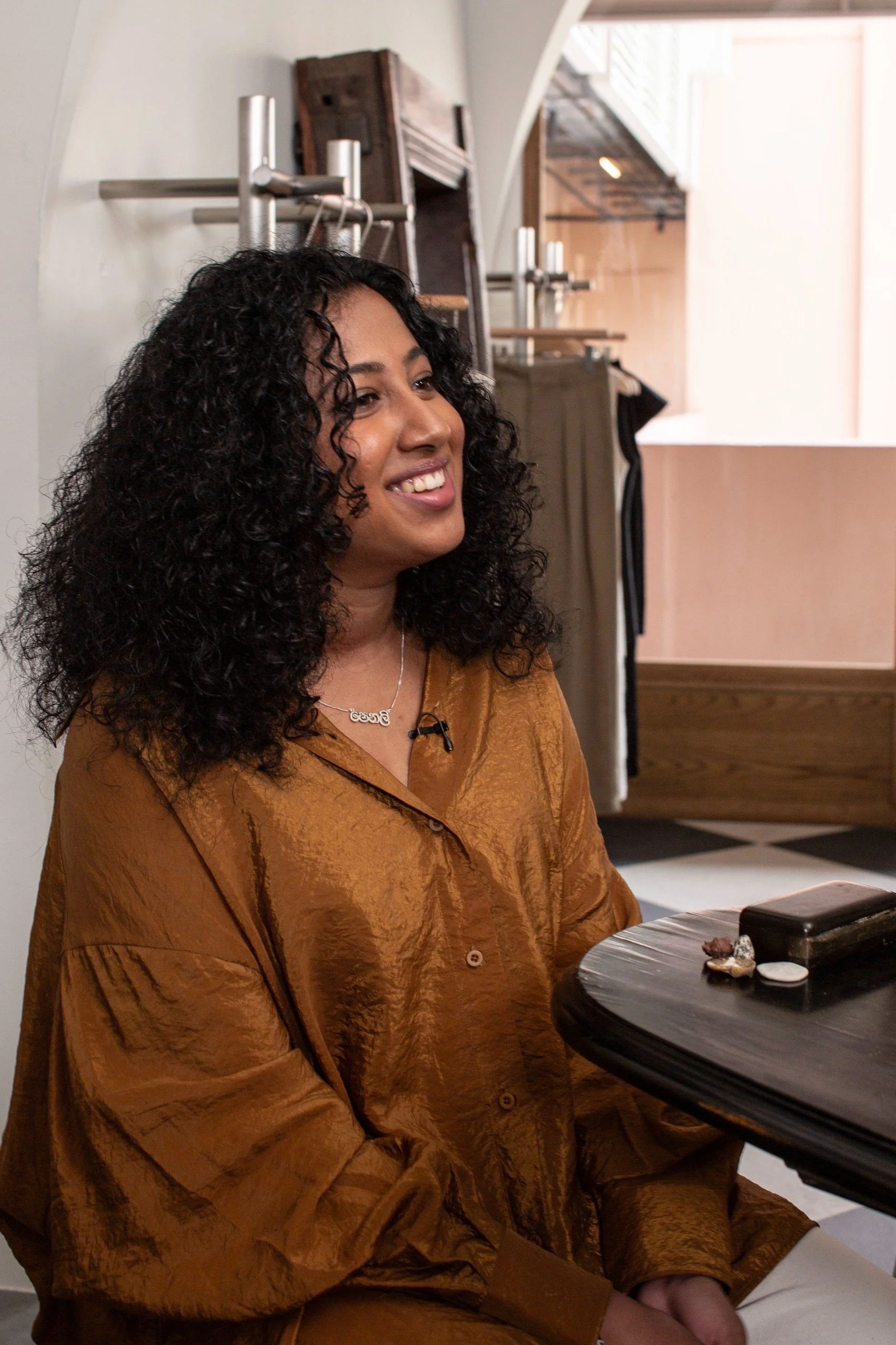
Shenali Wijesinghe. Photo by Isabell Hansen. Image courtesy of r y e.
Shenali fondly recounts the event that brought together female authors and curious readers on the first evening of the bookshop’s inhabitance. It was a tender repository of female strength conveyed through the written–and spoken–word. Supported by the r y e team and Chloe Chee of Epigram, Shenali hosted a panel of three female authors, Carissa Foo, Sunita Sue Leng and Nisha Mehraj, who were joined by Rosemarie Somaiah as moderator.
Shenali emphasises that the activation was rooted in community-building as practice, which r y e places at the centre of its ethos. This was reflected in the event’s organic planning and how the team’s shared passion for literary arts brought together authors they read and respect. “I could not have done it without Chloe, who was excited about the idea and hit the ground running to make the event a reality,” Shenali says. It was a dream come true for her to organise a panel that discussed what it means to write about the inner worlds of women.
Time was given for each author to read aloud from their books, bringing to life themes of motherhood, love, and arranged marriage. Carissa Foo shared an excerpt from her latest novel Almost A Love Story, while Sunita Sue Leng read from her debut, The Unlikely Motherhood of Shaleni May. Nisha Mehraj also presented an excerpt from her first novel, We Do Not Make Love Here, rounding out an intimate literary exchange among the cosy group of audience present.

Panelists, collaborators, and the r y e team. Photo by Isabell Hansen. Image courtesy of r y e.
A highlight for Shenali was to listen to the authors read their work in their own cadence and with their own expressions. “Being read aloud to is one of our earliest experiences of love. It shapes our understanding of motherhood as a formative intimacy, one that teaches us how to listen and how to feel held through language,” she continues, “So much of what women carry is shared in private, and to bring those same stories into a shared, audible space feels significant.”
The goal of the bookshop was to share the words of the authors with the r y e community and beyond, while creating a space that encourages reading in all its forms. One particular tender moment stayed with Shenali. “Carissa shared that, given her profession as a literature professor, she has a tendency to read deeply into novels and dissect them,” she recalls. “But she is often reminded that perhaps that was never what the author’s intention—and that maybe loving a book means loving it as it is.” Shenali adds, “In Rosemarie’s words during the event, if we can be free anywhere, we ought to be free in literature.”


A book exchange corner, where attendees of the evening were encouraged to drop off a book of their own and take one with them. Photo by Isabell Hansen. Image courtesy of r y e.
When reading and writing are often done in solitude, Shenali understands that a yearning for community can spark exchanges between readers and writers. An extension of the evening’s conversations calcified in the annotations left behind within a communal library, where guests and the public were invited to participate. The premise was simple: take a book, leave one in return, and inscribe notes for the next reader to discover. In these exchanges, a shared dialogue forms through handwritten notes, as readers point one another toward their next read.

Featured titles of the r y e bookshop. Photo by Isabell Hansen. Image courtesy of r y e.
Books and clothes share space with an easy intimacy, as in our bedrooms and private spaces. In the boutique-turned-bookshop, the r y e bookshop became an outward space that opened onto the inner worlds of women. Time stretched, held in the quiet act of browsing, of reading and of lingering a little longer than intended. This was a world Shenali and the team envisioned, and ultimately brought to life.
While books reach into crevices only words can fill, and clothes armour surfaces only cloth can cover, the sartorial never strays far from the literary. Both books and clothes hold within them a sense of possibility. It is the promise of discovery that begins when a page is turned, or a favourite shirt is worn.
Guided by an understanding of our minds and bodies, we gravitate toward what we read and wear. At times, we let them find us instead, and the alignment is all the more satisfying. Shenali shares that she found a message nestled in R.F. Kuang’s Yellowface, which she picked out from the communal library at the r y e bookshop. The inscription read: “This book chose you.” Indeed it had.
More about r y e here.
About the writer
Xingyun Shen is a fashion researcher, educator, and co-founder of the publishing project Clothes Press. Since 2020, she has been keeping a running list of literary quotations on clothing and dress drawn from her reading. She currently lives and works in Singapore.