
Fashion & Memory: Dear Samfu
Theresa and Trixie Chua interprets Singapore fashion history
Within Singapore’s fashion history, the cheongsam has long captured the imagination, amplified by cinema and nostalgia. Less examined, yet arguably equally important, is another garment that has clothed generations of Chinese women: the samfu, a two-piece ensemble of matching top and trousers. For sisters Theresa and Trixie Chua, founders of the Singapore-based label Dear Samfu, it represents not just revival, but reclamation: a love letter to inherited memory.
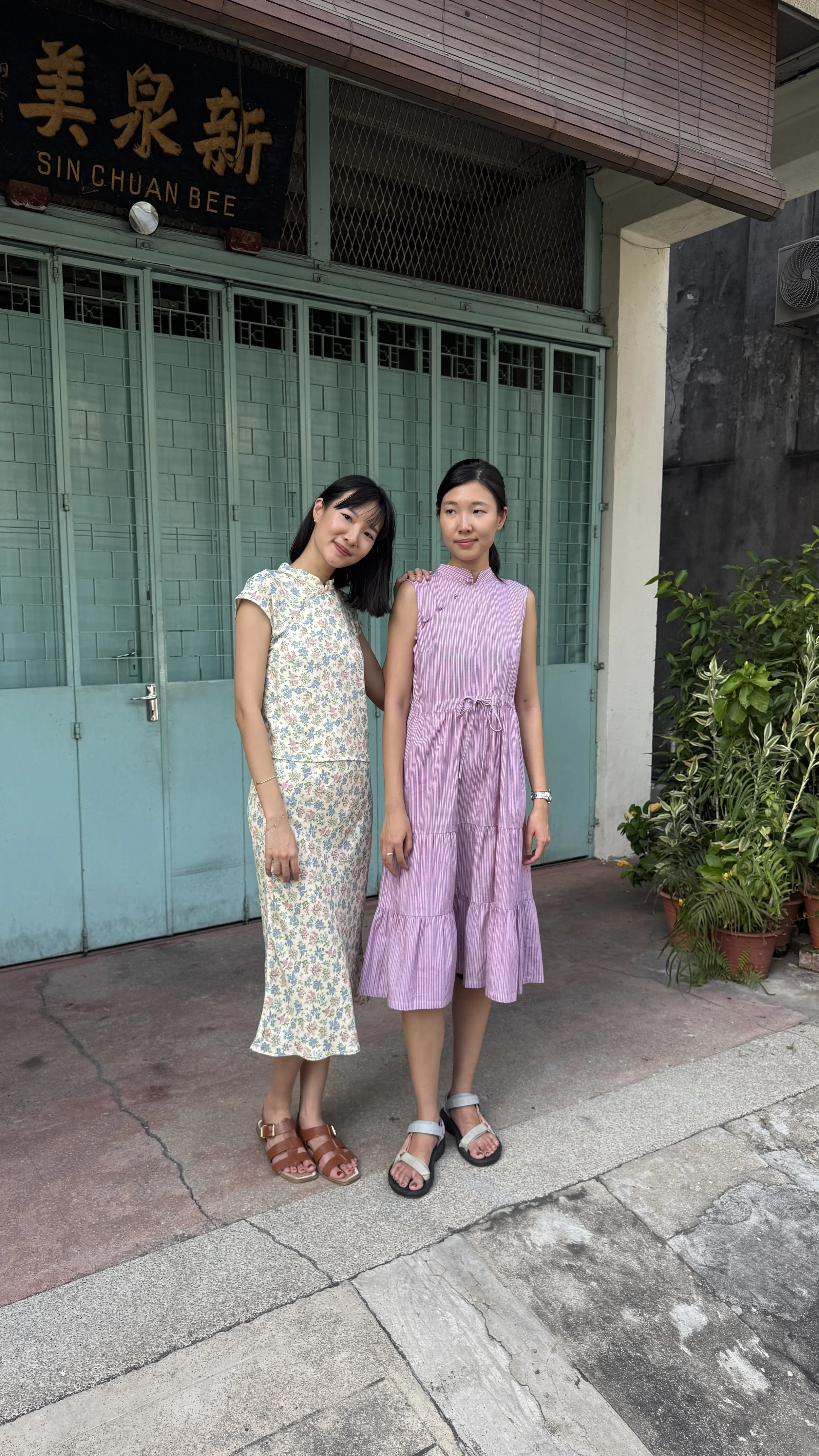
Theresa and Trixie Chua. Image courtesy of Dear Samfu.
The sisters describe their upbringing as “a very typical Singaporean Chinese family background”, growing up in an extraordinary multigenerational household. Raised alongside their grandmother, mother, and several aunties, they witnessed firsthand what Trixie calls the “multiple hats” of women’s labour: caregiving, managing the household, and working outside the home. On weekends, the same women cooked Teochew fishball soup, while chatting and clearing the tables for mahjong. In every context, through every task, they wore the samfu.
“Looking back, it was a blessing to be loved and taken care of by so many women,” Trixie reflects. “Our upbringing played a part in our desire to honour the colourful and purposeful lives of the women of the past generation when we decided to start our brand.”
Both sisters initially pursued conventional career paths: Theresa in architecture and Trixie in accountancy, tracks that, in retrospect, equipped them with complementary skills for what was to come. Today, Theresa directs design and production, while Trixie oversees marketing, e-commerce, and finance. Yet, the intellectual and emotional origins of Dear Samfu lie in a visit with their maternal grandmother roughly a decade ago.

Photo of the closet of Theresa and Trixie Chua’s grandmother. Image courtesy of Dear Samfu.
At the time, Trixie was a young professional caught in cycles of fast fashion consumption. Her wardrobe grew increasingly excessive, filled with clothes that held little meaning. Then she saw her grandmother’s collection of samfus–garments she had worn since her youth–still hanging in her closet.
More striking than their longevity was how they came to exist. Her grandmother described choosing fabric herself at her favourite textile shop, then bringing it to a trusted tailor. The result was clothing made with intention, designed not for a season, but for a lifetime. “To me, that felt like sustainability in its truest form,” she explains. “Clothes that are deeply loved, well cared for, and worn again and again over time.” In her grandmother’s wardrobe, Trixie also saw a relationship between maker and wearer, between a woman and what she put on her body each day.


Family photos from Theresa and Trixie Chua’s collection. Images courtesy of Dear Samfu.
When asked whether a specific image of their grandmothers stands out, the founders do not point to any one photograph. Instead, they describe a series of them, spread across family albums, in which the samfu is clearly central to their grandmothers’ lives. At their parent’s wedding, it appeared, ornate and colourful. On a holiday to Egypt, it re-emerges in a more casual form. The same silhouette, shifting between ceremony, leisure, and domestic routine.
This quiet ubiquity is precisely what distinguishes the samfu from other garments. If the cheongsam was often staged for admiration, the samfu was structured for living. “It holds cultural memory in a quiet, almost invisible way,” Theresa explains. “Many people recognise the image of the ‘Chinese grandmother’s uniform’ without realising it has a name, or a history.” Within Southeast Asia’s Chinese diasporic communities, the samfu becomes what Trixie calls a “silent archive,” a record of migration, labour, and domestic life. These are histories carried not in institutions, but on the body.
“It holds cultural memory in a quiet, almost invisible way. Many people recognise the image of the ‘Chinese grandmother’s uniform’ without realising it has a name, or a history.”
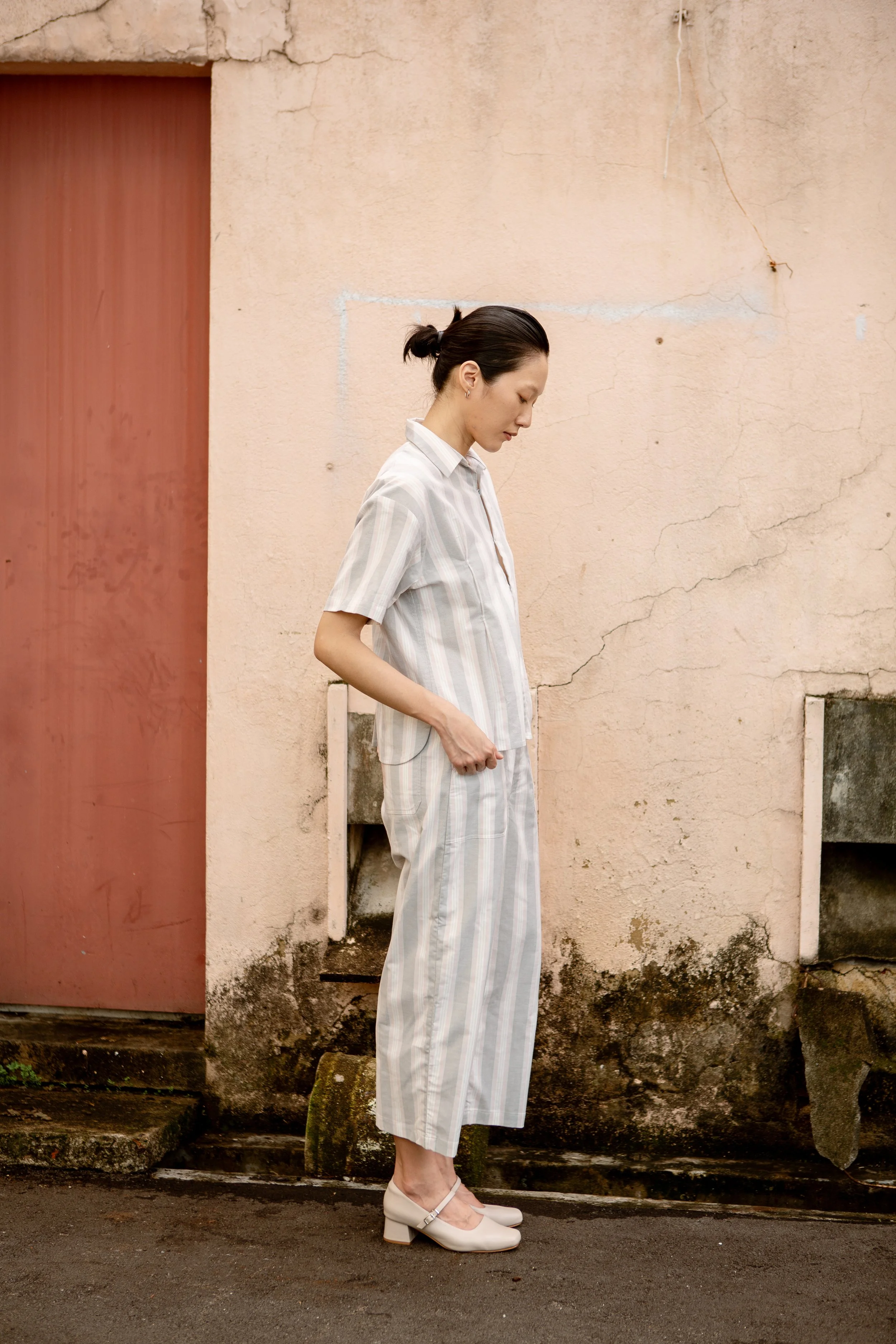
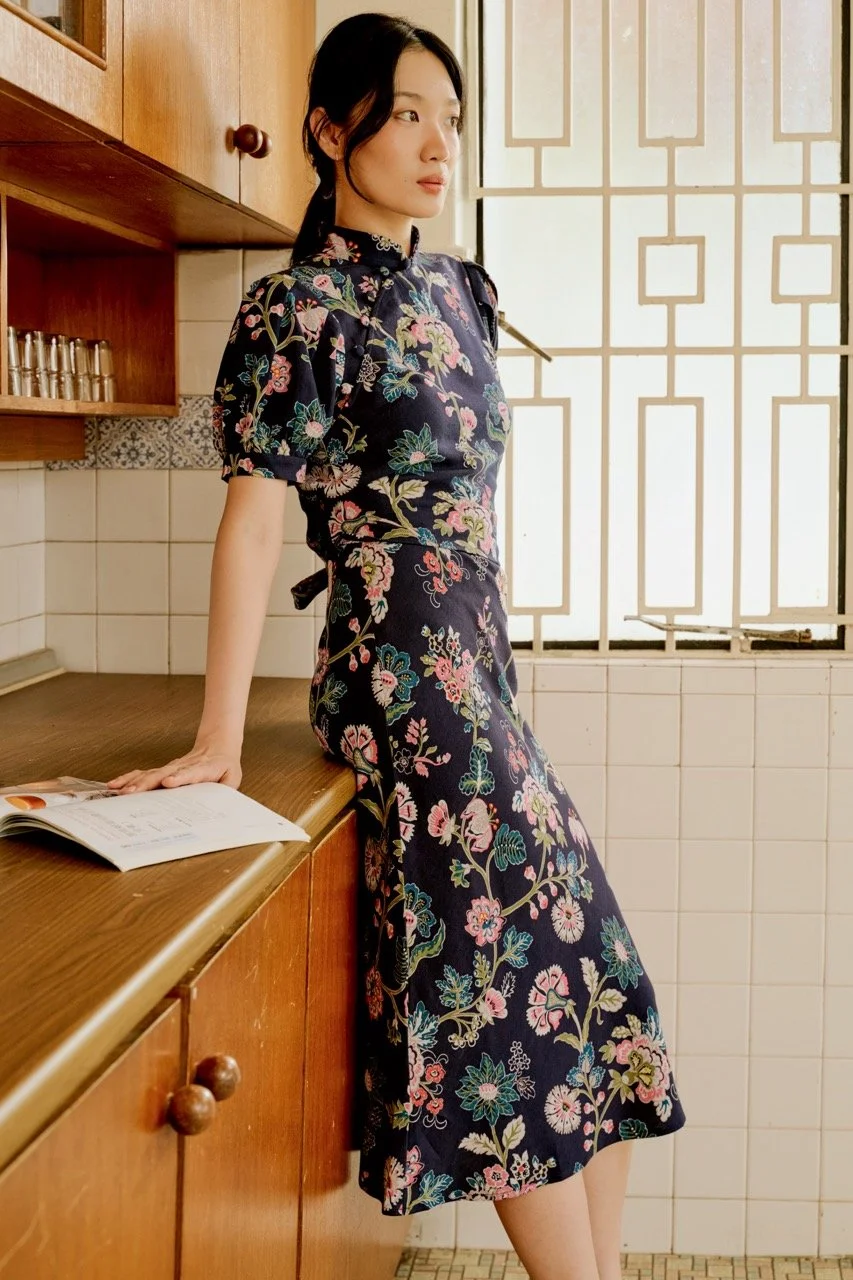
Dear Samfu pieces. Images courtesy of Dear Samfu.
The brand name, Dear Samfu, reads like a letter, addressed to a garment, a generation, and a way of being clothed that resists quick consumption. In designing each collection, the sisters envision a particular customer. “Over the years, it has become clearer to us who our wearer is,” Trixie explains. “The Dear Samfu woman wants to put on clothes that make her feel confident and empowered to take on whichever role she is assuming, and make it look effortless. She prioritises comfort and versatile pieces to navigate her daily go-abouts, but desires a tinge of uniqueness and playfulness. She, like grandma, dresses to be permanently out of season, but always in style.”
This vision carries the logic of the samfu into the present. The women of their childhood moved between cooking and mahjong, work and home, all in the same silhouette. The Dear Samfu woman does the same. “In Chinese we have a saying ‘饮水思源’, or yín shuǐ sī yuán, meaning when we drink water we remember its source,” Trixie notes. “I hope women remember the hard work and prudence that transpired from our grandma’s generation when they wear Dear Samfu.”
That impulse, to make something worth passing on, shapes not just how the sisters design, but how they produce. Dear Samfu began with deadstock fabrics, working with what already existed rather than starting from unlimited choices. The constraints became part of their creative process. As the label has grown, they have expanded to include responsibly sourced cotton, rayon, and linen, fabrics that align with their ethical commitments, while honouring the material language of the original samfu.
“The joy comes from designing with intention,” Theresa explains, “Instead of chasing trends, we focus on crafting pieces with subtle heritage details that feel timeless and wearable beyond festive seasons or special occasions.” For the sisters, this approach simply reflects what the samfu has always been: “practical, enduring, and part of everyday life.”
For Theresa, this way of designing with intention, producing with care, and honouring what came before, is part of a broader generational shift, not just in Singapore, but across Asian communities. “Especially in the West, younger generations are no longer avoiding or downplaying their roots,” she observes. “Instead, they are actively embracing them in fresh, confident ways. By weaving cultural elements into everyday, wearable pieces, brands can make heritage feel approachable — turning identity into something lived, styled, and proudly expressed.”
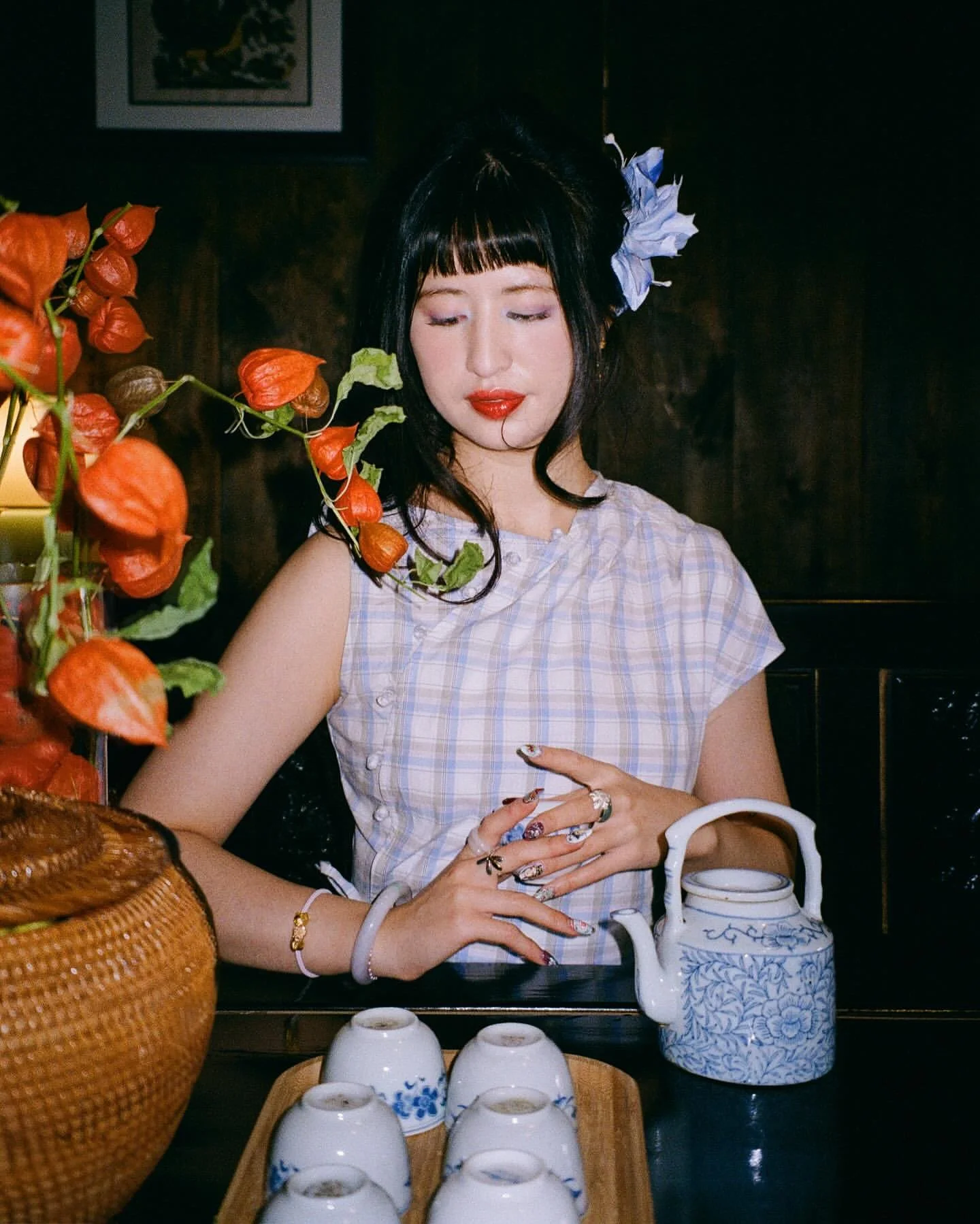
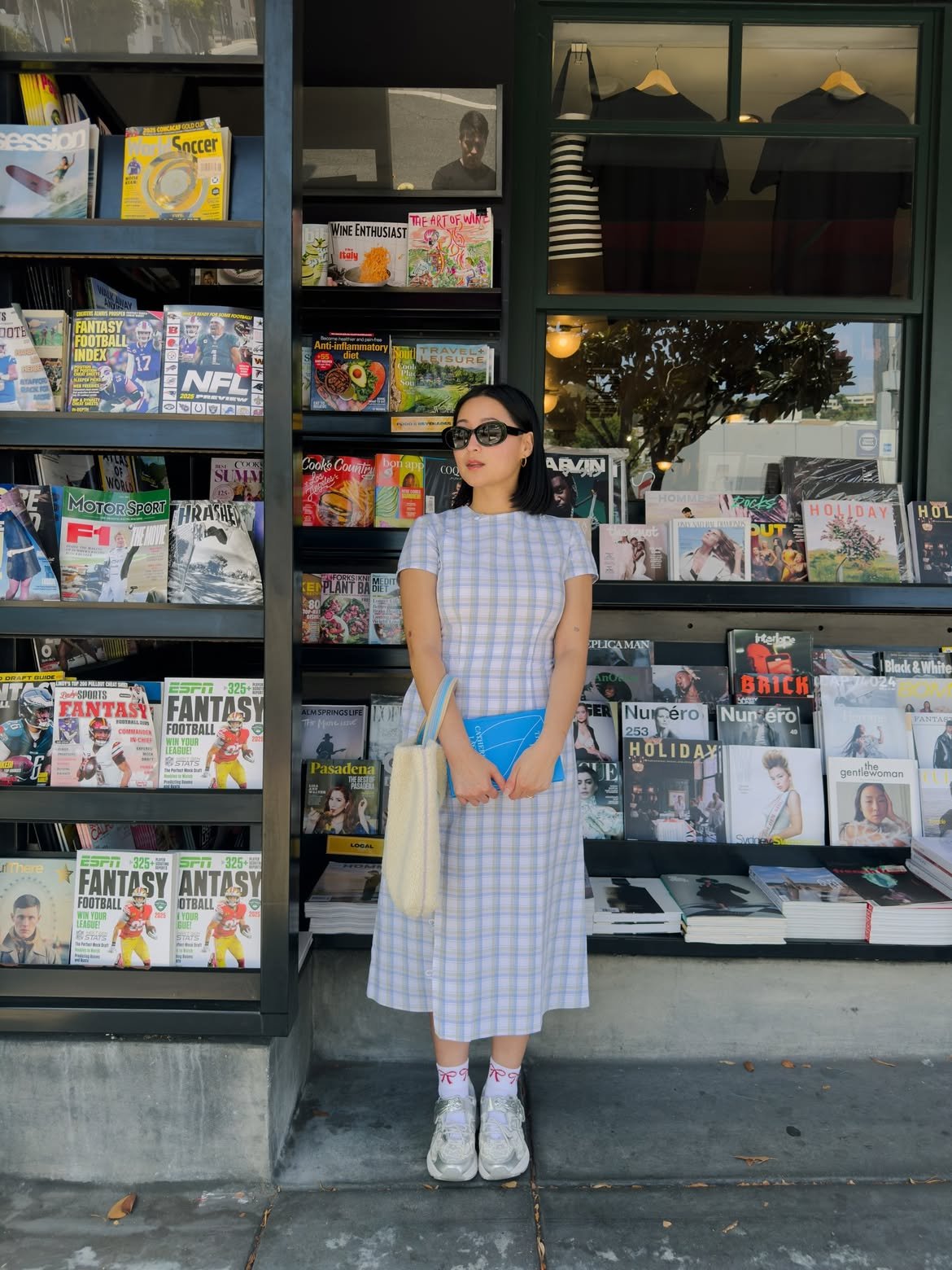
Dear Samfu pieces. Image courtesy of Dear Samfu.
Five years into the brand’s evolution, Dear Samfu is entering a new phase. Having collaborated with creatives like Sonia Tan, co-founder of Salt Salon and local artist @penne_n_paper, the brand now looks to deepen its creative partnerships. They are planning to launch Ceremony, a ready-to-wear line for weddings and milestone celebrations, from 过大礼 or guò dà lǐ, the Chinese betrothal ceremony to birthday parties. These are the occasions where the samfu once appeared at its most elaborate. In doing so, the brand returns the garment to formal contexts, reintroducing everyday wear into ritual space.
This expansion invites a question: What does it mean to inherit a silhouette shaped by migration and labour? Dear Samfu’s mission is rooted in translation, moving a garment across time and generations, while keeping its origins close.
In an industry built on forgetting, Dear Samfu insists on continuity, a conversation stitched through clothes worth remembering. As Trixie puts it, “Just like how grandma cherished her clothes, I hope they will cultivate a beautiful and long-lasting relationship with their Dear Samfu clothing as modern heirlooms to be passed on.”
Visit Dear Samfu for more.
About the Writer
Faith Cooper is the creator of the Asian Fashion Archive. She holds master’s degrees from the Fashion Institute of Technology (FIT) in New York and from Fu Jen Catholic University in Taiwan, where she researched Taiwanese fashion and cultural identity as a Fulbright Student. Faith is now pursuing a PhD in history at the National University of Singapore, focusing on the cultural history of women’s sartorial developments in mid-twentieth-century Singapore.