
Forgotten Women Writers of Lasem’s Batik Industry in the Early 20th Century
Connecting Javanese cloth to Peranakan feminist thought
This is a winning entry from the inaugural Fresh Take 2026 writing contest. For the full list of winners and prizes, click here.
Lasem is an old port city on the northern coast of Java, Indonesia, with centuries-old buildings, multicultural expressions, and a highly diverse historical heritage. Today, however, Lasem is considered a quiet, almost lifeless area due to a lack of economic activity—people merely stop by or pass through without being impressed. At first glance, Lasem is just a quiet region with no special iconic landmark. But in fact, Lasem has a long history that cannot be forgotten. Lasem was once a famous port city; even since 1,300 years ago, Lasem was a destination and stopover for spice traders from all over the archipelago.
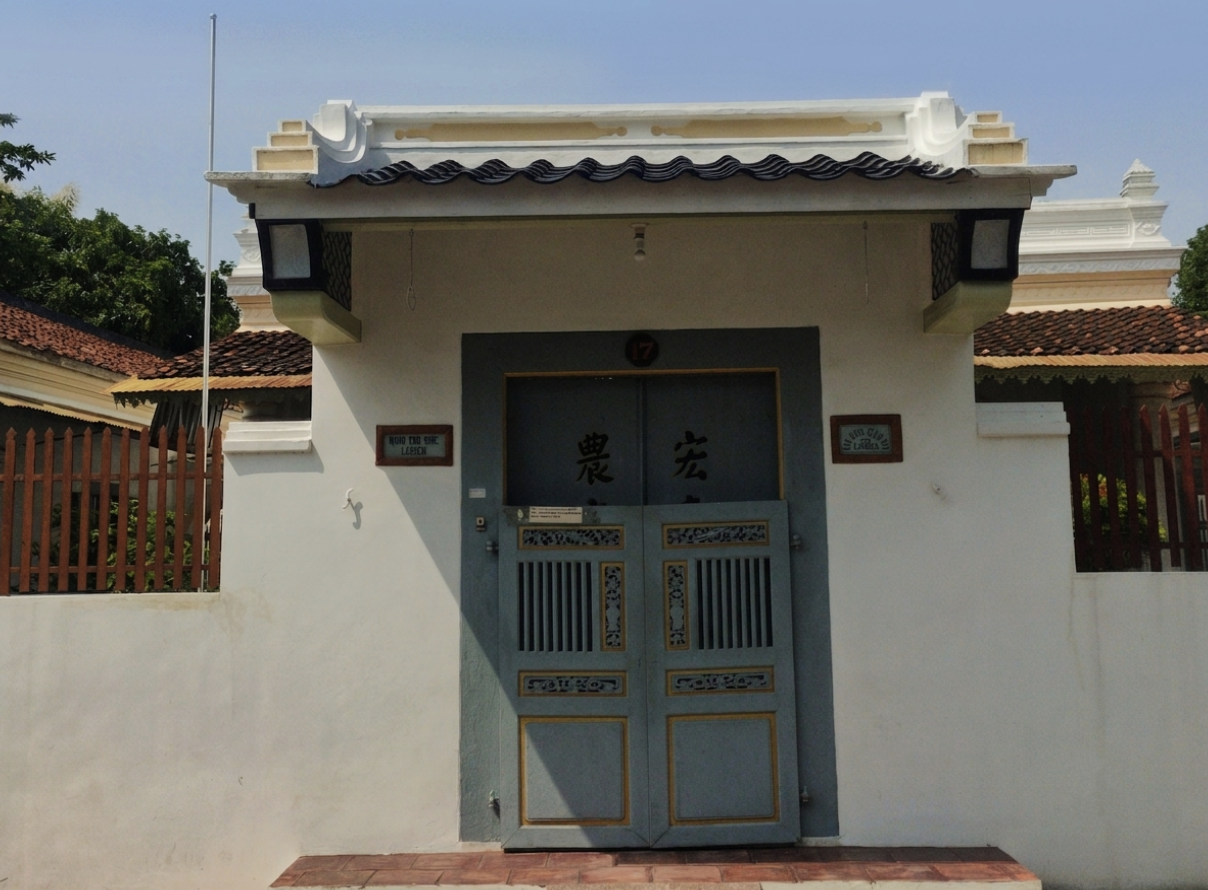
Old house in Lasem, 2025. Image courtesy by Lestari.
Lasem experienced significant acculturation with various cultures, most notably Chinese. From the 10th to 15th centuries, Chinese traders settled in Lasem and became influential in local and Javanese social life. Today, Lasem is a renowned batik city, known for its unique motifs. The batik industry was economically driven by the Peranakan community—descendants of Chinese-Indonesian intermarriage who developed a hybrid Chinese-Javanese culture. In Lasem, Peranakans dominated as producers, traders, and entrepreneurs. Their cultural traces appear in local cuisine, architecture, and batik, especially in the Lao Sam motifs fusing northern Javanese and Chinese visual symbolism. Thus, each piece of Lasem batik embodies a complex cultural network.
How Big Was the Lasem Batik Industry?
Imagine living a hundred years ago in a cosmopolitan Southeast Asian metropolis—like Batavia, Singapore, or Penang. If you walked and spent time with the women of the middle-class families around you, they would typically wear beautiful kebaya tops with lace, paired with a set of exquisitely painted batik cloth—sarong batik or jarik, as we usually call it in Java.
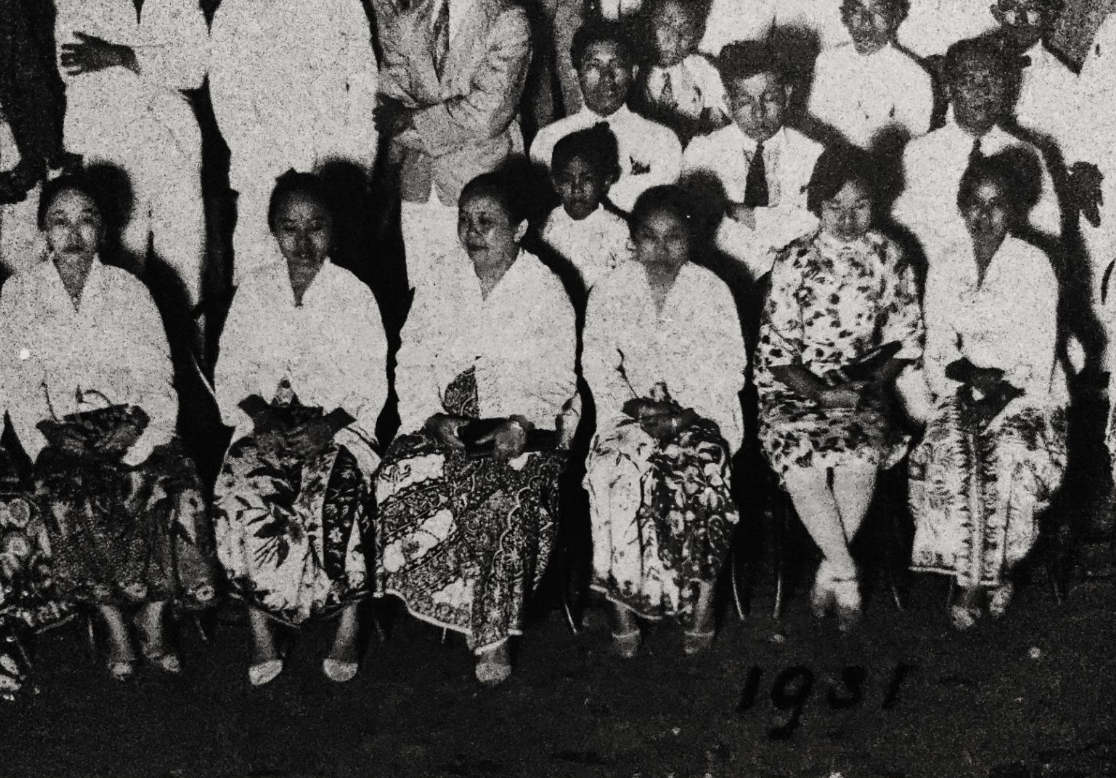
Women of the Early 20th Century Lasem, circa 1931. Personal collection of Oei family, Lasem.
Many batik clothes in the early 20th century were produced and exported from Lasem. In 1931, the Batikrapport archive reported that in Lasem alone, there were 120 batik production houses owned by Peranakan entrepreneur families. Also in that colonial report, they wrote that Lasem exported tons of batik sarongs: “De handel is hier (Lasem) levendig. Belangrijk is de uitvoer van sarongs (saroeng Lasem) die o.a. veel naar Singapore verscheept worden”. This translated to mean “especially important are the Lasem sarongs, which are shipped in large quantities to Singapore, etc.”
Trade data on Lasem batik from that era were also recorded in archives in Malay-Chinese and Dutch, particularly in 195 documents collected in the Arsip Jaringan Dagang Batik Lasem (Lasem Batik Trade Network Archives), which has been recognised as a Collective Memory of the Nation by the National Archives of Indonesia in 2024 and has been nominated for UNESCO's Memory of the World Committee for Asia and the Pacific (MOWCAP).¹
From this transnational and regional batik industry network, Lasem grew as an industrial city whose batik and production houses supported a new economic circulation in that era. A new middle class emerged in the residential areas of Lasem. The most noticeable changes occurred in the proliferation of print media and the flow of information through publications, dailies, and newspapers.
Oei Siotjia: A Female Voice from the Batik Industry
One of the most vocal Peranakan female writers in Lasem during the rise of the batik industry was a figure named Oei Siotjia. In Indonesian history, there is the famous female writer Kartini, the daughter of the Regent of Jepara, who had the privilege of receiving an education and regularly wrote with a critical tone about the injustices experienced by women—Kartini's letters were published in 1911. About four years later, Oei Siotjia published her writings, also criticising the injustices experienced by women, through newspapers, particularly in the Djawa Tengah newspaper.²
In one of her writings, in 1915 in Djawa Tengah, she wrote: "(...) ketjiwa! terlaloe ketjiwa! amat ketjiwa! bila anak prampoean tida dapet pladjaran, dan djanganlah bedaken anak anak prampoean lebih lama lagi(...)". Effectively, she wrote: “... pitiful! too pitiful! very pitiful! when girls do not get an education, and let us no longer distinguish between male and female.”
This brave statement—demanding educational rights for Peranakan women—was published in Djawa Tengah in 1915. The right to education for Peranakan women was indeed the most frequently raised keyword. Approximately more than thirty essays mentioned the obligation of parents and men to provide education for Peranakan women. The writer was very diligent in writing a series of opinions and several other opinion articles in Djawa Tengah. To date, about 30 pieces by Oei Siotjia have been collected in the form of opinion essays, spanning the period from 1915 to 1916. After June 1916, her writings can no longer be traced.
Oei Siotjia's sentences were firm and fiery. Critical phrases such as terlalu ketjiwa (too pitiful) and toelis dengan kras (write with bravery) are two of the many forms of her resistance in the newspaper against the layered oppression of Peranakan women. At the same time, they reflect how marginalised Peranakan women were at that time.
Oei Siotjia wrote amid her activities helping her parents sell batik, to voice the right to education and equality for Peranakan women of that era. She wrote: "As a village girl, I have no other work than to help my parents in the business of making batik sarongs"³

Oei Siotjia writings in Djawa Tengah. Newspaper archive source from National Library of Indonesia.
What is interesting is the emergence of young female writers who voiced issues of justice and gender equality at that time. As the daughter of a batik entrepreneur, Oei Siotjia was a young intellectual of the early 1900s who had access to education. It is clear that the emergence of the Lasem batik industry, which became a source of economic power in the late 19th and early 20th centuries, drove the emergence of a young intellectual group.
The history of women's thought, with Peranakan writers like Oei Siotjia as a central figure, was clearly caused by the history of the batik industry in early 20th century Lasem. The emergence of a middle class in Lasem—a direct impact of economic circulation due to batik trade—triggered a network of intellectual exchange, literary culture, and reading and writing through newspapers.
In the early 20th century, formal education through schools could not accommodate or prohibit women from becoming students. For this reason, the history of women's thought in that era—precisely after the publication of Kartini's letters—emerged because of literary culture. The history of the batik industry and textile culture is connected to the history of women intellectuals and the brave voices who criticised patriarchy and the oppression experienced by young women of that era.
“The history of the batik industry and textile culture is connected to the history of women intellectuals and the brave voices who criticised patriarchy and the oppression experienced by young women of that era.”
Oei Siotjia, who wrote while painting batik, managing the buying and selling of batik sarongs, and managing a batik production house, is a clear sign of a long historical trajectory: that the role of women has been very important from hundreds of years ago until now—both in the male-dominated field of intellectualism and in the economic history of Indonesia's batik industry.
Notes
Arsip Jaringan Dagang Batik Lasem Awal Abad 20 (1900-1942) – Registered in the Memory of the World program at the National Archives of Indonesia.
Djawa Tengah” newspaper (1915–1916) – The primary source for Oei Siotjia's essays and opinions. The newspaper was launched in late 1909 under the editorial direction of H.C. Goldman, and by 1914 the position was held by Tan Thwan King.
(Pikirannya Satu Gadis Tionghoa V, Djawa Tengah newspaper, 16 January 1915).
Sources
Angelino, P. De Kat. Batikrapport, deel II Midden-Java, Publicatie no. 7, Het Kantoor Van Arbeid: Landsdrukkerij Bataviacentrum, 1931.
Muljana, Slamet. Runtuhnya Kerajaan Hindu-Jawa dan Timbulnya Negara-Negara Islam di Nusantara. Yogyakarta: LKiS, 2005.
Lombard, Denys. Nusa Jawa: Silang Budaya (Vol. 2). Jakarta: Gramedia Pustaka Utama.
About the writer
Lestari is an Indonesian artist-researcher currently pursuing postgraduate studies in anthropology at the University of Tübingen, Germany. She initiates archival research and artistic publication which anchors a feminist perspective on how fashion, craft, and textile articulate collective memory, unsettle archival silences, and re-inscribe occluded pasts. Her writings have been presented in several Southeast Asian art publications.