
Su by Hand is Making Fashion with Care
Plant-dyed clothing in natural fibres from a Singaporean slow fashion label
This is an entry from the inaugural Fresh Take 2026 writing contest. For the full list of winners and prizes, click here.
After working at large luxury fashion brands for most of her career, Supei Ho now runs a brand grounded in the intangible values her clothes represent. Having seen firsthand the waste generated by the fashion industry's prevailing business model, she decided to do things differently, with clothes underpinned by quality and timelessness. We met to discuss how we can raise awareness of the process of making clothing and how to understand what makes for quality in clothing construction. When I asked her what led her to question the practices of the fashion industry, it was the sheer speed of production, followed by seeing the textile waste generated by that same speed. “It was burnout from design,” says Supei.
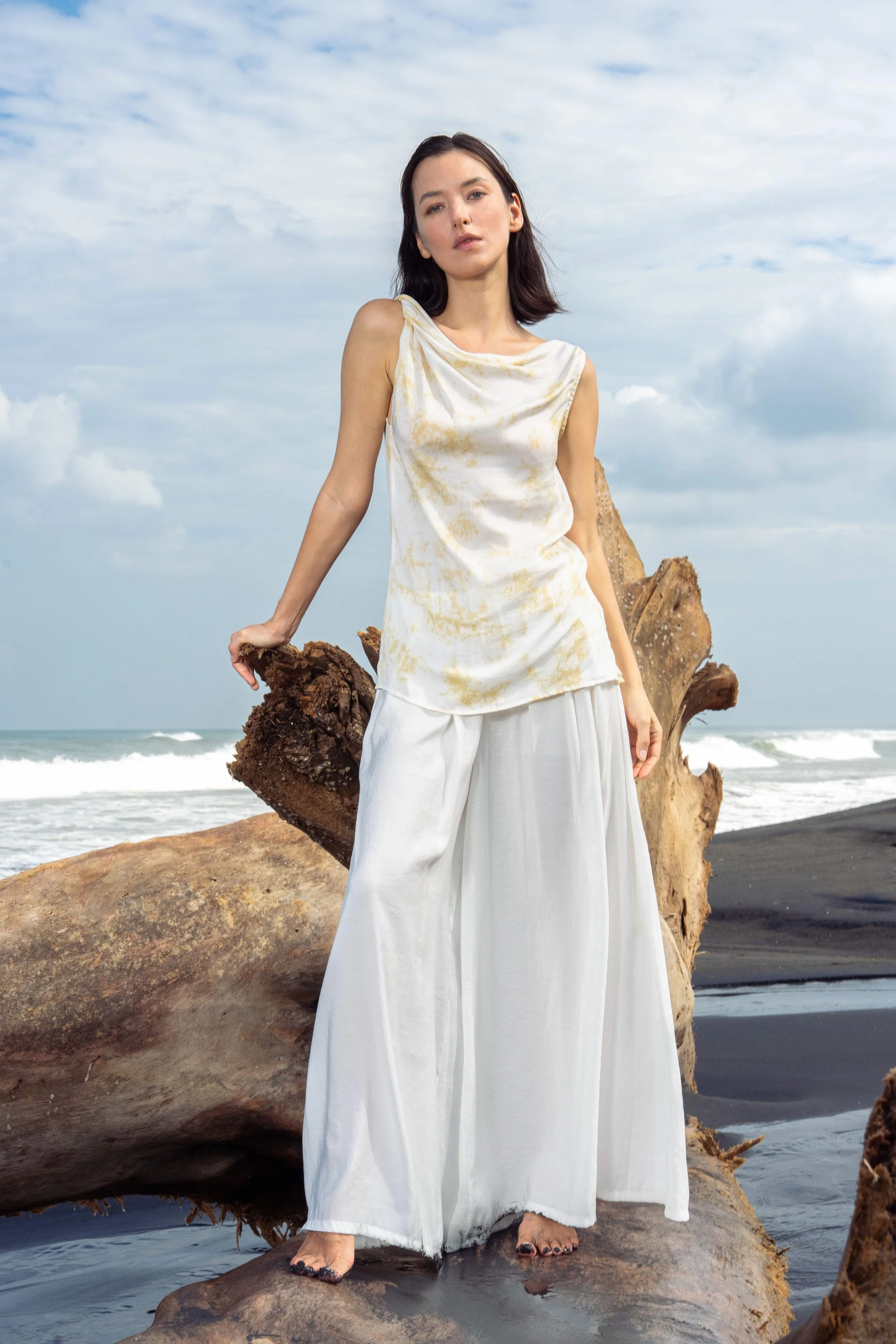
Plant-dyed Thelma top, hand-dyed with mango leaves using a drip-dye technique. Image courtesy of Su by Hand.
In the sustainable fashion scene, we often talk almost exclusively about materials, their origins and environmental impact. We think about how fibres feel on our skin and how they drape, perhaps about the composition of the fabric. The often neglected but equally important labour and construction of garments is what makes thoughtful brands stand out.
“The often neglected but equally important labour and construction of garments is what makes thoughtful brands stand out.”
This is where brands like Su by Hand flourish. “Although it's something that all of us know, people don't often stop to realise that every piece of clothing is made by hand,” says Supei. “Even your simplest T-shirt is made by hand.” The labour behind clothes is the quality that makes clothing cherished, loved and lasts longer. It instils clothes with meaning that compels us to care for them through more awareness of the process. It represents the human touch, creativity, craftsmanship and technical skills behind the garment. The name of the brand signifies this human element of working by hand, because all clothes are made by hand.

Supei Ho, founder of Su by Hand. Image courtesy of Su By Hand.
The customers of Su by Hand are concerned with the material and how breathable it is, how it feels, but also thoughtful and unique design details. “When customers are paying a certain price for their products, they are more sensitive to what is in their product”, says Supei. This expectation of quality opens the floor to questions and conversations about what goes into the product. “Once people understand the process or they get a bit intrigued about the process, then the thought process begins,” she elaborates.” It's really on brands to make customers a bit curious about what goes on behind the garment.”
This thought process is what builds a connection between clothing and the wearer. It is something Supei has noticed at events where she gets to meet her customers. When they realise she is the maker behind the brand, they become intrigued. “Behind every purchase, people are looking for a connection,” Supei observes. Being small keeps her connected to her customers, which allows for these important moments of connection. Her customers are also committed to slowness, sometimes agreeing to wait for months to receive a slowly made item to order. When I ask her how one can build a more conscious wardrobe filled with thoughtful pieces, she says, “It’s a very deeply personal journey. I believe that it's more about the relationship that you have with that one item than buying into specific brands”.

Design development process at the studio. Image courtesy of Su by Hand.
Trying to decipher what makes a garment well made can be difficult, but Supei has one tip. “A brand that really cares tells consumers how to wash the clothes. Not just selling something, but also how you can take care of it,” reveals Supei. Of course, many other technical aspects play a part too. Most of Su by Hand’s delicate pieces are made using French seams, a durable seam that takes longer to sew, for longevity. It comes down to the details of the garment, and to determine the quality of an item of clothing, Supei often turns it inside out, and uses fabrics for her lining that some of the brands she used to work for would not use as a principal material.

Louise bubble skirt in pearl white cupro lyocell. Image courtesy of Su by Hand.

Laura asymmetric midi dress with dolman sleeves and a waist ruching detail. Image courtesy of Su by Hand.
When it comes to the quality of the garments, on top of clothing construction, Su By Hand pays attention to everything from the fibres and fabric quality to the trims and design details. With a fabric selection of organic cotton, Tencel, and Cupro – made from regenerated cotton waste and using plant dyes and unique trims like raw mother of pearl buttons, Su By Hand creates exquisite pieces. Design details include bias cuts and adjustable details that allow clothes to be worn multiple ways. The brand also offers complimentary length alteration for the products, a service that has almost disappeared in the rituals of the modern consumer.
Brands that make quality clothing do not shy away from difficult processes that take a little bit more time and care. In the clothes Su by Hand creates, you can see many organic lines take shape. These might seem easy to create but are harder to produce than one might think. They require exquisite workmanship. When developing the Louise bubble skirt, Supei quickly realised she would need to work with skilled seamstresses from Singapore to enact her vision. It was not something she was able to develop from afar, but that did not deter her from trying. She stays connected to her production partners, which allows for special developments like the Louise skirt. Supei does not intend to grow faster than necessary, allowing her to prioritise care and clothing made with intentionality.
“Brands that make quality clothing don’t shy away from difficult processes that take a little bit more time and care.”
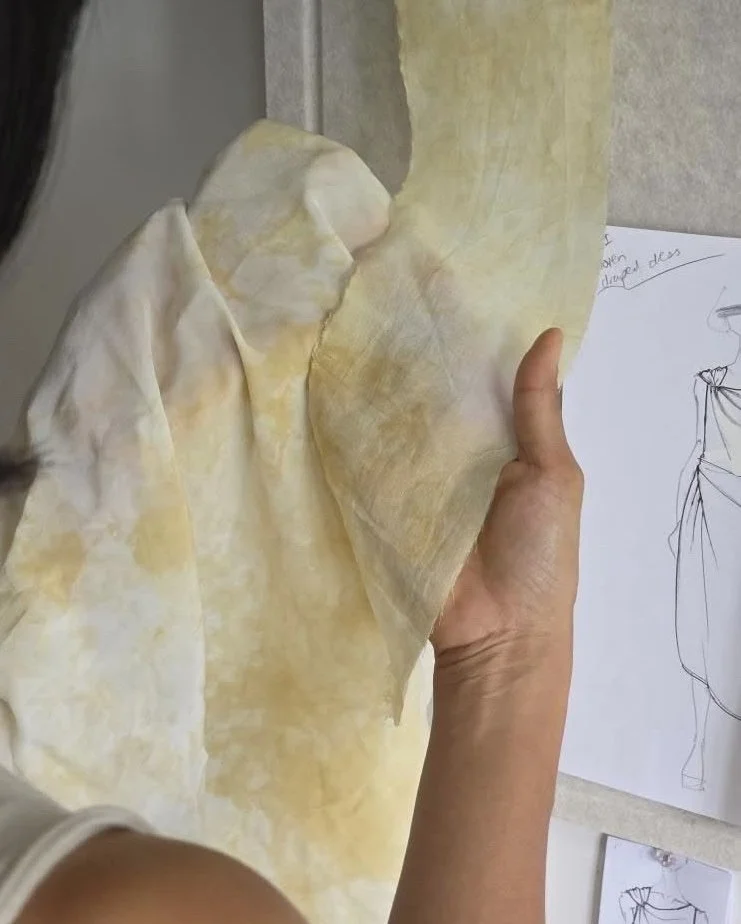
Working with natural dye fabric samples at the studio. Image courtesy of Sy by Hand.
Sustainability is not as simple as choosing a better material, as it is a field that is constantly evolving and old facts are getting debunked. “I’ve never liked prescriptive sustainability because I feel that within the industry, there are so many grey zones,” explains Supei. Commenting on the complicated nature of sustainable fashion, she says, “Honestly, sustainability also comes with age. I think it's not honest when we expect young people who are still finding their identity to be deeply sustainable because they are in that phase where they need to produce and consume”.
It is not easy to operate a fashion brand when considering the problem of overproduction and overconsumption we are dealing with, especially having been exposed to the waste firsthand. Reflecting on where she is in her work right now, however, Supei says, “I have a good balance now that I do consultancy work, where I see the problems on a macro level and I'm able to be actively involved in the industry, helping people to manage their waste.” She adds, “But then my brand is an outlet for me to use my creative inspiration because I feel that as creatives, we shouldn't feel ashamed of wanting to create”. Small brands by Su by Hand will continue to maintain a connection to the craft, a dedication to quality construction, to produce garments that stay with their wearers.
About the writer
Jennie Barck is a freelance fashion journalist and sustainability communication specialist. She specialises in material and fibre knowledge, traceability, and regenerative production processes. Working with brands to share their stories through a deep knowledge of sustainability practices in the fashion industry is Jennie’s life’s work. With an education in both Fashion Journalism and Sustainability Management, Jennie’s practice closes the gap between a nuanced understanding of fashion history and the technical understanding of textile production. Having studied and worked in Singapore, London, Milan, Helsinki and Copenhagen, Jennie brings an international perspective to everything she does. Her work has appeared in One Magazine & Luxiders.